Fiery sunsets
Wonderful views

Let yourself be embraced by the warmth of Calabria, where every glance stirs emotion, every encounter feels like a hug, and beauty surprises you at every step.
CALABRIA
O N T H E R O A D
CALABRIA
RoadCalabria
O N T H E R O A D
Italy's most authentic region!
ROADCALABRIA
CONTACTS
EXPLORE
Ideas, itineraries and places to discover, to experience Calabria on the road
Reggio Calabria Cathedral: history, earthquakes and rebirth of the Cathedral
Follow us on Instagram
Home
Itineraries
info@roadcalabria.it
Villages
What you’re looking for
CALABRIA
O N T H E R O A D
Beaches
Did you know that
A thousand years of history amid earthquakes, destruction, rebuilding and rebirth
Art, History, Culture
Useful Links
National Parks
Write to us
Trekking
Some of the images on RoadCalabria come from the 'Calabria Straordinaria' portal of the Calabria Region and are used under a CC-BY license
© 2026 RoadCalabria
In the heart of the historic center of Reggio Calabria, overlooking Piazza Duomo, stands the majestic Cathedral of Maria Santissima Assunta in Cielo, the largest sacred building in Calabria and one of the city’s most important symbols. Its history spans almost a thousand years of earthquakes, destruction, rebuilding and rebirth, perfectly mirroring the fate of Reggio Calabria itself.
The Duomo’s origins date back to the Norman era, probably between the 11th and 12th centuries, when the city began to strengthen its religious and political role in the southern Mediterranean. The ancient medieval cathedral initially had Gothic features and a monumental multi-aisled layout, enriched over the centuries by Renaissance and Baroque additions. Between the 15th and 16th centuries the great bell tower and numerous artistic decorations were added.
Over its long history, the Duomo suffered devastation caused both by Turkish raids and by the frequent earthquakes that struck Calabria. Particularly destructive was the 1783 quake, which severely damaged the medieval structure. After that earthquake the cathedral was rebuilt in late-Baroque and Neoclassical style, with a new architectural look, more elegant and theatrical.
However the hardest blow came on 28 December 1908, when the catastrophic earthquake and tsunami that devastated Messina and Reggio Calabria almost completely leveled the city. The Duomo too suffered irreparable damage, and it was therefore decided to demolish much of the old structure to build a new cathedral suited to modern anti-seismic standards.
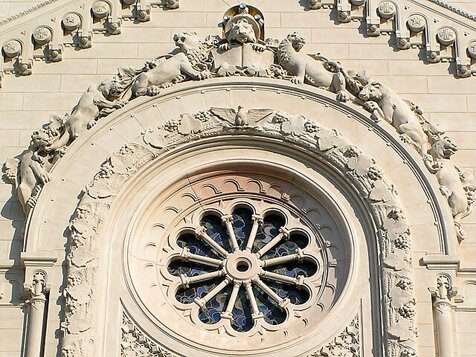
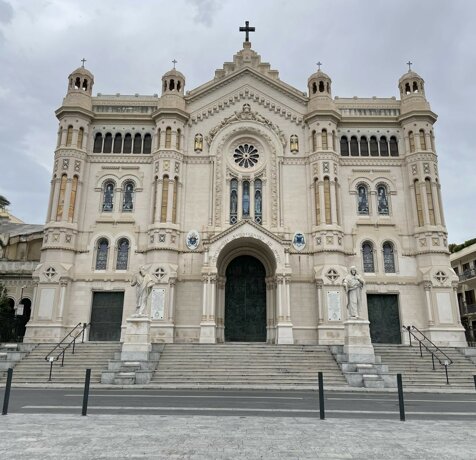
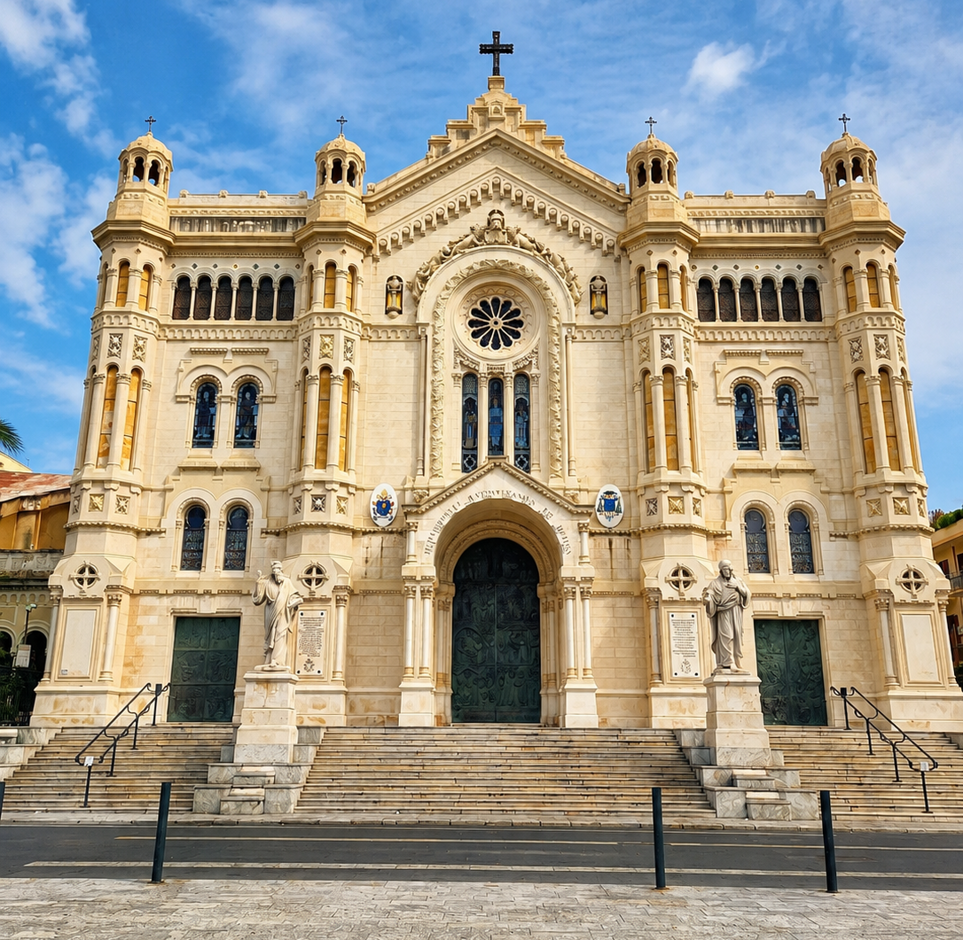
The new cathedral was designed by the Carmelite father Carmelo Umberto Angiolini and built between 1917 and 1928 in a Neo-Romanesque style with Gothic influences and eclectic Art Nouveau touches, very widespread in Reggio during the post-earthquake reconstruction. The building was consecrated in 1928 and later raised to the title of Minor Basilica in 1978.
Today the Duomo impresses with its majestic façade, preceded by a large monumental staircase and marked by three richly decorated bronze portals. The central portal recounts episodes from the life of the Assumption of the Virgin Mary, while the side ones are dedicated to Our Lady of Consolation and to Saint Paul, a figure deeply tied to Reggio’s Christian tradition.
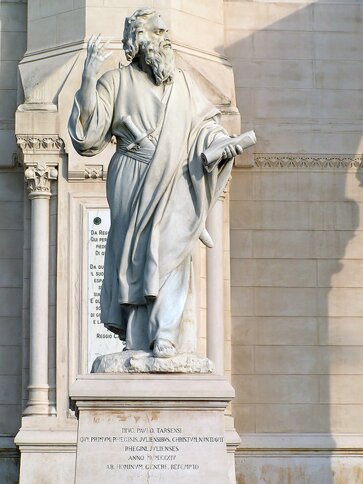
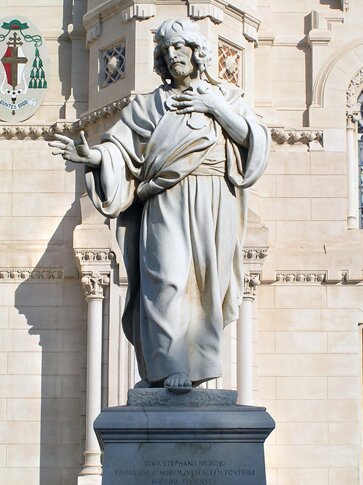
Outside the basilica, the famous statues made by the sculptor Francesco Jerace also stand out, including Saint Paul and Saint Stephen of Nicaea, the city’s first bishop, who welcome visitors on the cathedral forecourt. Jerace’s works help give monumentality and solemnity to the entire architectural complex.
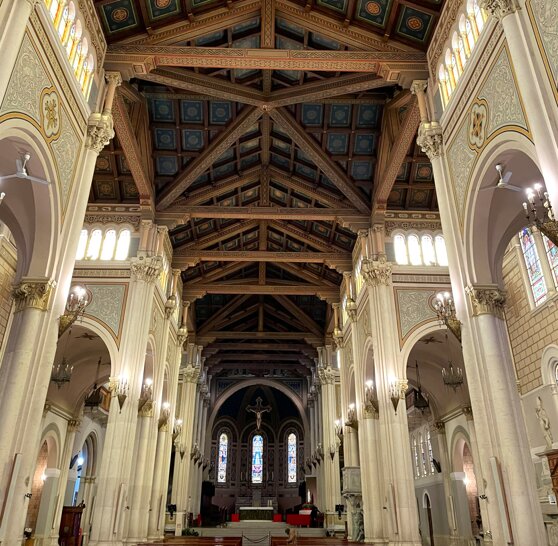
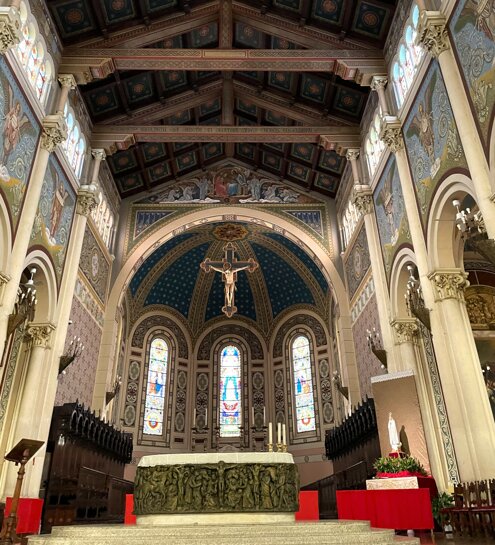
The cathedral interior has three naves marked by large columns and arches that echo medieval Romanesque, reinterpreted in a modern key. Among the most important works are the marble pulpit, precious mosaics, sacred paintings and many elements recovered from the old Cathedral destroyed in 1908.
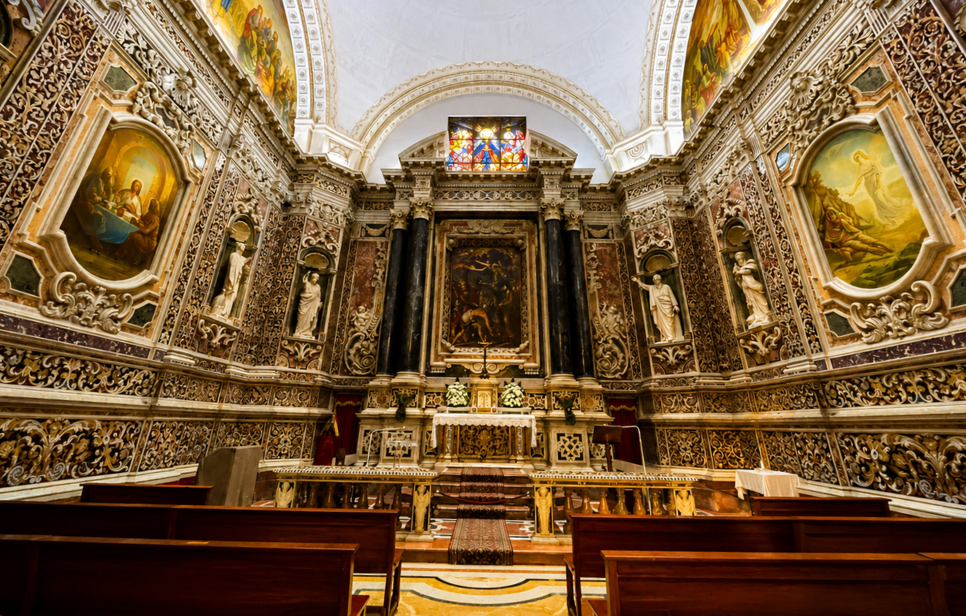
The most precious testimony of the ancient cathedral is, however, the Chapel of the Most Holy Sacrament, the only space to survive the demolition of the old Duomo. This splendid Baroque chapel, now incorporated into the new building, is one of the finest examples of Calabrian Baroque.
Inside, you can admire extraordinary polychrome marbles, artistic decorations and altars from the 18th-century cathedral. The chapel was saved after the 1908 earthquake and integrated into the new architectural design, thus becoming an ideal bridge between the city’s past and present.
Visiting the Duomo of Reggio Calabria therefore means crossing centuries of history, art and spirituality.
It is a place that tells of the city’s ability to rise again after every destruction, still preserving today the memory of its ancient greatness.
In the surroundings of Reggio Calabria

ASPROMONTE NATIONAL PARK
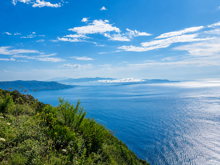
STRAIT OF MESSINA
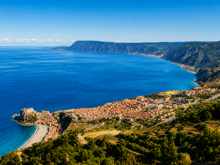
SCILLA
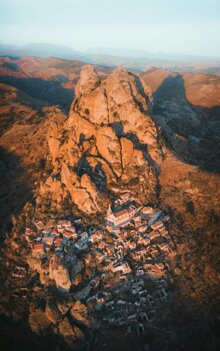
PENTEDATTILO
Want to learn more about the history and places to visit in Reggio Calabria?
Fill out the form and I will provide you for free with all the necessary info.