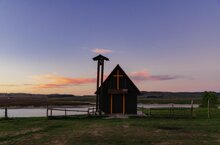
Fiery sunsets
Wonderful views

Let yourself be embraced by the warmth of Calabria, where every glance stirs emotion, every encounter feels like a hug, and beauty surprises you at every step.
CALABRIA
O N T H E R O A D
CALABRIA
RoadCalabria
O N T H E R O A D
Italy's most authentic region!
ROADCALABRIA
CONTACTS
EXPLORE
Ideas, itineraries and places to discover, to experience Calabria on the road
Follow us on Instagram
Home
Itineraries
info@roadcalabria.it
Villages
What you’re looking for
CALABRIA
O N T H E R O A D
Beaches
Did you know that
Art, History, Culture
Useful Links
National Parks
Write to us
Trekking
Some of the images on RoadCalabria come from the 'Calabria Straordinaria' portal of the Calabria Region and are used under a CC-BY license
© 2026 RoadCalabria
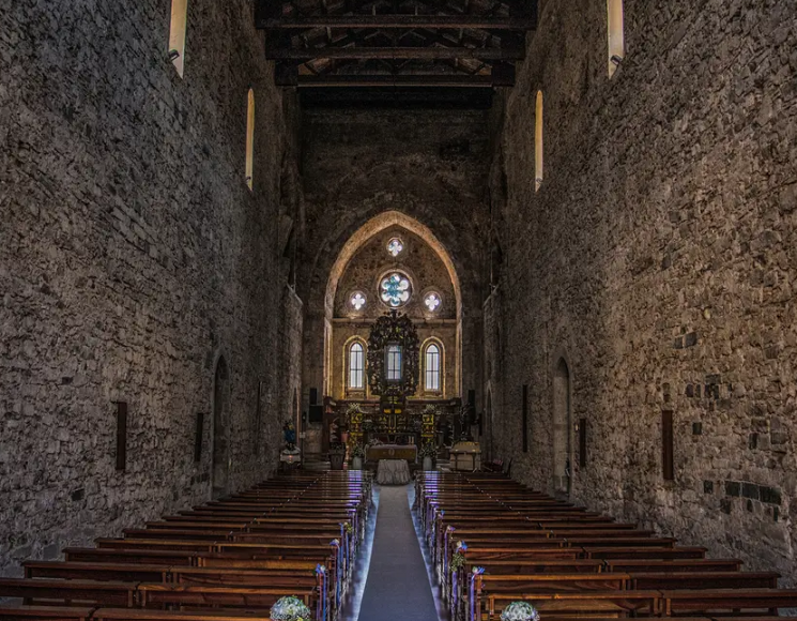
The Florense Abbey
Evocative. Monumental. Spiritual.
Photo: Calabria Straordinaria - Regione Calabria
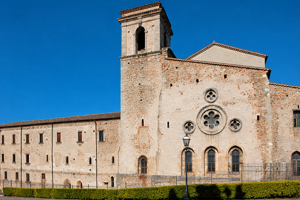
The Florense Abbey of San Giovanni in Fiore is one of the most fascinating monastic sites in Calabria and in all of European Medieval history.
It was founded in 1189 by Joachim of Fiore, a monk, theologian, and mystic of extraordinary influence, who moved his community there after his experience in the monastery of Corazzo.
Joachim was born in Calabria around 1130 and, after undertaking pilgrimages to the Holy Land, developed a new and profound spiritual vision.
His theological reflection, based on the interpretation of the Bible, revolved around the theory of the “three ages of history”: the time of the Father, the Son, and the Holy Spirit. This revolutionary concept inspired not only religious and intellectuals of his time, but also political and cultural figures in the centuries that followed.
Dante Alighieri placed him among the wise spirits of Paradise in the Divine Comedy, recognizing the greatness and originality of his thought.
Around him developed the Florensian Order, also known as the Joachimites, which combined monastic rule with a strong eschatological and spiritual tension.
The Abbazia Florense, which still today dominates the heart of the Sila, became the center of this community and one of the most important cultural hubs of medieval Southern Italy.
From an architectural perspective, the building reflects a sober Cistercian style, with austere lines and wide spaces that invite reflection.
The church, with its single nave, housed the relics and writings of the founder, while the monastic spaces—the cloister, the chapter house, the dormitories—were designed for community life and meditation.
Over the centuries, the abbey underwent restorations and transformations, yet it preserved its grandeur and its role as a spiritual and cultural center.
Joachim’s ideas had an enormous resonance in Europe: popes, sovereigns, and thinkers discussed them, some considering him a prophet, others suspecting him of heresy. His announcement of a “new Age of the Spirit” fascinated religious movements and led many to reinterpret the history of the Church in a prophetic key.
Despite conflicts with ecclesiastical authorities, Joachim died in communion with Rome, and his memory continued to grow. His thought influenced not only medieval theology but also political philosophy, offering a vision of hope and renewal. Today the Abbazia Florense stands as a symbol of that legacy: not only an architectural monument but also the guardian of a spiritual message that has crossed the centuries.
Those who visit San Giovanni in Fiore can breathe in the atmosphere of a place that shaped the cultural and religious history of Calabria. Walking through its austere naves and cloisters, one can still seem to hear the echo of Joachim’s meditations and those of his disciples. Thus, the Abbey remains a fundamental destination for those who want to understand the bond between faith, prophecy, and culture in medieval Europe. A place that tells, through stone and silence, the vision of a man capable of influencing poets, saints, and rulers.
Around the Abbey…
If you are at Florense Abbey, in the heart of the Sila, you have many opportunities to discover one of the most fascinating areas of Calabria.
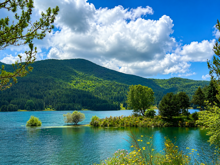
All around stretches the Sila National Park, ideal for hikes and walks through ancient woods and along its charming lakes, such as Cecita, Arvo and Ampollino.
A short distance away you can reach Camigliatello Silano and Lorica, two of the best-known places in the Sila, perfect for enjoying the mountains with nature, sport and relaxation in every season. For a more authentic experience, the village of Longobucco is worth a visit, known for its craft traditions and its bond with the land, or Palumbo Sila, surrounded by unspoiled natural landscapes.
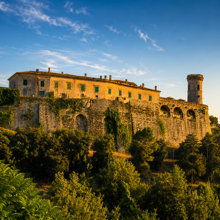
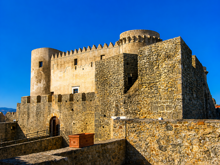
Moving a little farther downhill, you can discover some of the most beautiful villages in Calabria, such as Santa Severina and Caccuri, both rich in history, castles and medieval atmospheres.
Finally, for a touch of adventure, the Verzino Caves offer a different experience, between nature and mystery.
Do you want to find out how to include this destination in your trip to Calabria?
Fill out the form: I will help you for free to build the right itinerary for you.
In the surroundings…
SILA NATIONAL PARK
SANTA SEVERINA
SILA
LAKES
CACCURI