Fiery sunsets
Wonderful views

Let yourself be embraced by the warmth of Calabria, where every glance stirs emotion, every encounter feels like a hug, and beauty surprises you at every step.
CALABRIA
O N T H E R O A D
CALABRIA
RoadCalabria
O N T H E R O A D
Italy's most authentic region!
ROADCALABRIA
CONTACTS
EXPLORE
Ideas, itineraries and places to discover, to experience Calabria on the road
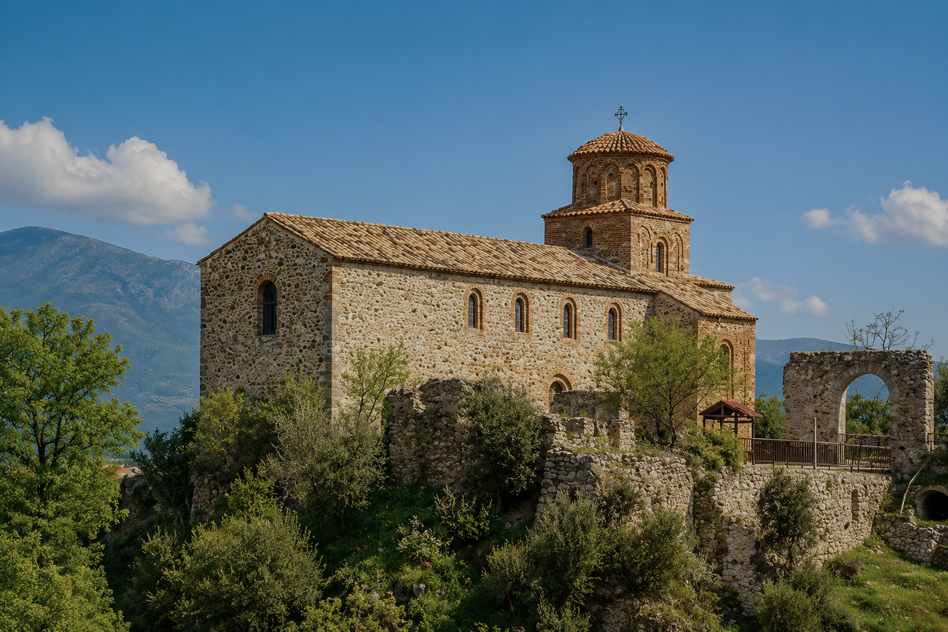
Greek Orthodox Monastery of Saint John Theristis in Bivongi
Follow us on Instagram
Home
Itineraries
info@roadcalabria.it
Villages
What you’re looking for
CALABRIA
O N T H E R O A D
Beaches
Did you know that
A place of peace and spirituality, one of the most important Byzantine sites in Calabria
Art, History, Culture
Useful Links
National Parks
Write to us
Trekking
Some of the images on RoadCalabria come from the 'Calabria Straordinaria' portal of the Calabria Region and are used under a CC-BY license
© 2026 RoadCalabria
Photo by Fiore S. Barbato - wiki
The Orthodox Monastery of Saint John Theristis is one of the most fascinating and emblematic places of Byzantine Calabria, a symbol of the Greek-Orthodox presence in Southern Italy. Set in a highly evocative natural setting, the complex combines spirituality, history and landscape, offering a unique experience to those who visit it.
Where it is located
The monastery is located in the area of Bivongi, in the Stilaro valley, in the province of Reggio Calabria. Surrounded by woods, hills and streams, it stands in an isolated and quiet place that helps create an atmosphere of recollection and contemplation, perfectly in keeping with its spiritual function.
The history of the monastery
The origins of the monastery date back to the 9th century and are linked to the figure of Saint John Theristis, a Basilian monk venerated both in the East and in the West. His name, which means “the Reaper,” is tied to a miraculous episode in tradition.
Between the 10th and 11th centuries the monastery was founded, and during the Norman era it became one of the most important monastic centers in Southern Italy, contributing to the spread of Greco-Byzantine culture.
The figure of Saint John Theristis fits into the context of the Byzantine presence in Calabria, when between the 9th and 11th centuries the area was an important center of Greco-Eastern spirituality. According to tradition, the saint lived an eremitic life in the Stilaro valley and was the protagonist of several miraculous episodes, including the one linked to the wheat harvest, from which the nickname “Theristis,” that is, “the Reaper,” derives. After his death, the place became a point of reference for the Basilian monks, contributing to the birth of the monastery.
In the Norman period, despite the shift to Western rule, Byzantine culture continued to be deeply rooted in the region, and the monastery experienced a phase of great prosperity. It became a leading religious and cultural center, with a monastic community active in copying manuscripts and spreading the Greek liturgy.
In the following centuries, however, the gradual decline of the Byzantine presence and the political and religious changes led to a slow abandonment of the complex, until its final decay in the 17th century.
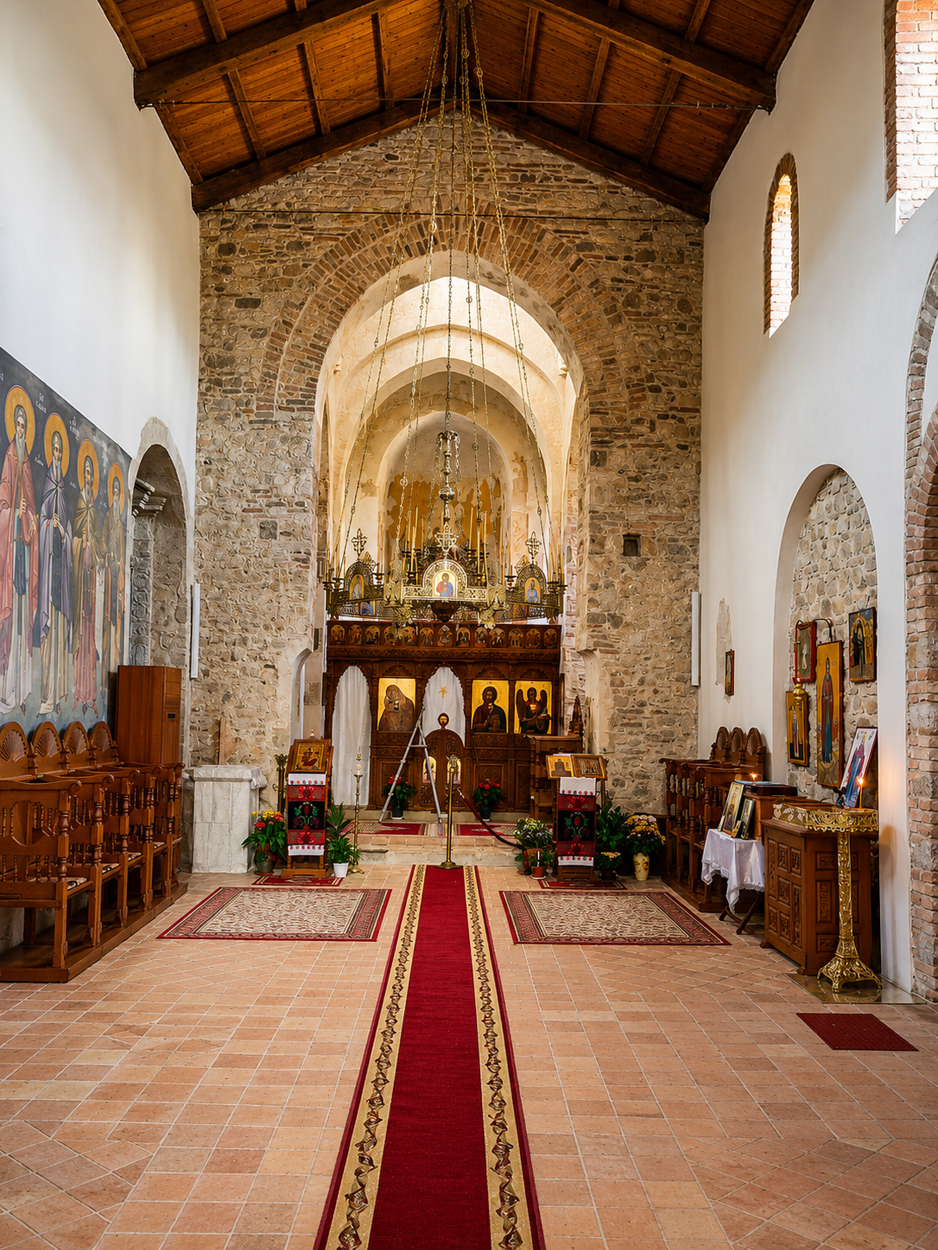
Photo by Marcuscalabresus - wiki
The monastery today
Restored during the twentieth century, the monastery returned to its original function in 1994 with the arrival of an Orthodox monastic community from Mount Athos. Today it is inhabited by Orthodox monks and represents one of the main centers of Eastern spirituality in Italy.
From an architectural point of view, it preserves an extraordinary fusion of Byzantine and Norman elements, with stone and brick masonry and a distinctive central dome.
The site is also included in the UNESCO candidacy project dedicated to the testimonies of medieval Italo-Greek culture, confirming its great historical and cultural value, which also includes the nearby Cattolica di Stilo, the village of Gerace, the Oratory of San Marco in Rossano, the Byzantine baptistery of Santa Severina.
In the surroundings…
Visiting the Orthodox monastery of San Giovanni Theristis also means having the chance to explore an area rich in nature, spirituality, and unique historical evidence. Around the village there is a succession of fascinating places, perfect for enriching the trip with authentic experiences.
A few km from the monastery, still in Bivongi, the Bivongi Waterfalls are worth a visit, a small natural corner among woods and rocks, ideal for those who love walking and discovering unspoiled landscapes.
If you are at the Marmarico Waterfalls, it is also worth exploring the surroundings, full of charming places and rich in history.
A few kilometers away you can visit the beautiful village of Stilo, famous for its Cattolica, a Byzantine jewel and UNESCO candidate.
Moving inland you reach Serra San Bruno, the heart of the Serre Regional Park, famous for its Charterhouse, one of the most important spiritual places in Calabria, set in a natural setting of extraordinary beauty. Not far away lies Mongiana, a place rich in history and nature, where it is possible to visit the charming Lake Sambuco, the Biodiversity Park and the ancient Royal Bourbon Ironworks, evidence of an important industrial past.
For those fascinated by the mysteries of history, an unmissable stop is the Megaliths of Nardodipace, imposing monoliths immersed in the woods, wrapped in an enigmatic aura and still today the subject of study and curiosity.
Returning toward the Ionian coast, you can discover other gems of the area: the village of Badolato, among the most evocative in Calabria, or the archaeological excavations of Kaulon in Monasterace Marina, evidence of ancient Magna Graecia.
Not far away, Roccella Ionica instead offers a perfect blend of crystal-clear sea and historic center, ideal for ending the itinerary between culture and relaxation.
A surprising land, where each stop tells a different story, among nature, spirituality, and ancient civilizations.
Do you want to find out how to include this destination in your trip to Calabria?
Fill out the form: I will help you for free to build the right itinerary for you.