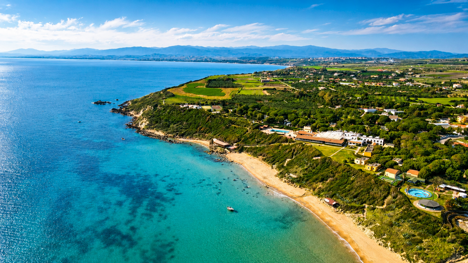
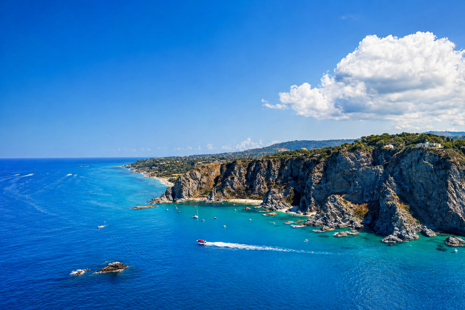
Fiery sunsets
Wonderful views

Let yourself be embraced by the warmth of Calabria, where every glance stirs emotion, every encounter feels like a hug, and beauty surprises you at every step.
CALABRIA
O N T H E R O A D
CALABRIA
RoadCalabria
O N T H E R O A D
Italy's most authentic region!
ROADCALABRIA
CONTACTS
EXPLORE
Ideas, itineraries and places to discover, to experience Calabria on the road
Scalea: in the heart of the Riviera dei Cedri, between the old town and beaches
Follow us on Instagram
Home
Itineraries
info@roadcalabria.it
Villages
What you’re looking for
CALABRIA
O N T H E R O A D
Beaches
Did you know that
A charming village amid medieval alleys, views over the Tyrrhenian Sea and wonders to explore
Art, History, Culture
Useful Links
National Parks
Write to us
Trekking
Some of the images on RoadCalabria come from the 'Calabria Straordinaria' portal of the Calabria Region and are used under a CC-BY license
© 2026 RoadCalabria
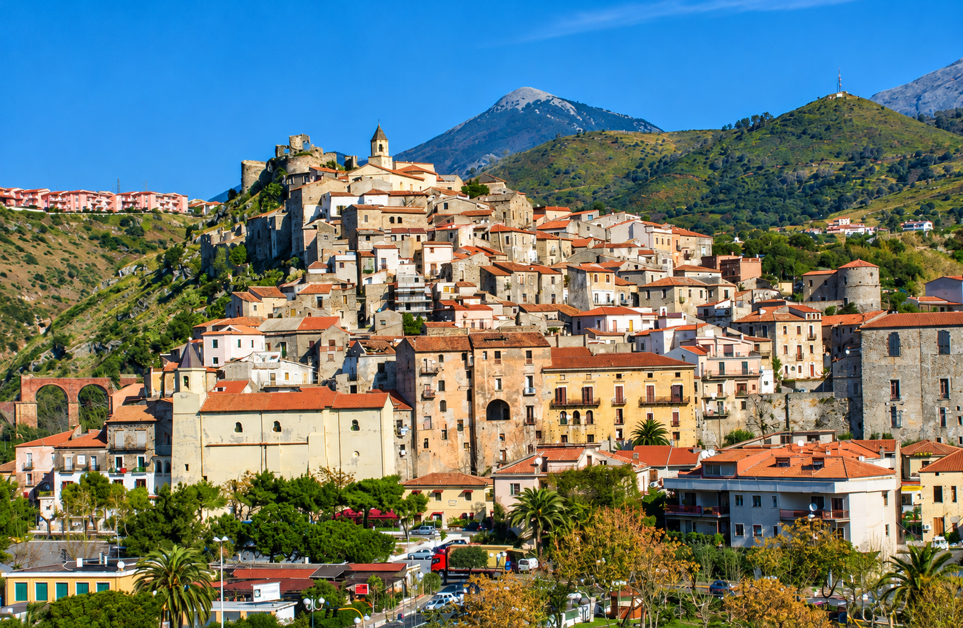
Overlooking the Tyrrhenian Sea and recognizable from afar for its historic center arranged in tiers on the hillside, Scalea is one of the best-known towns on the Riviera dei Cedri. It is a town with two souls: the modern one, developed along the sea, and the ancient one, made of alleys, stairways, arches and buildings that climb up toward the remains of the castle.
Scalea is above all a seaside destination, but it is worth moving away from the seafront: the old village in fact preserves some of the most interesting historical traces of the Upper Tyrrhenian area of Cosenza.
Where Scalea is located
Scalea is located on the Tyrrhenian coast of the province of Cosenza, in the northern part of Calabria, along the Riviera dei Cedri and not far from the border with Basilicata.
Its location also makes it an excellent base for exploring this part of the region: to the north you come across San Nicola Arcella and Praia a Mare, to the south Santa Maria del Cedro and Diamante, while heading inland the landscape changes quickly and leads to Orsomarso and the mountains of the Pollino.
Scalea is crossed by the SS18 and is served by the Scalea–Santa Domenica Talao railway station, one of the main ones on the northern Calabrian coast.
The historic centre
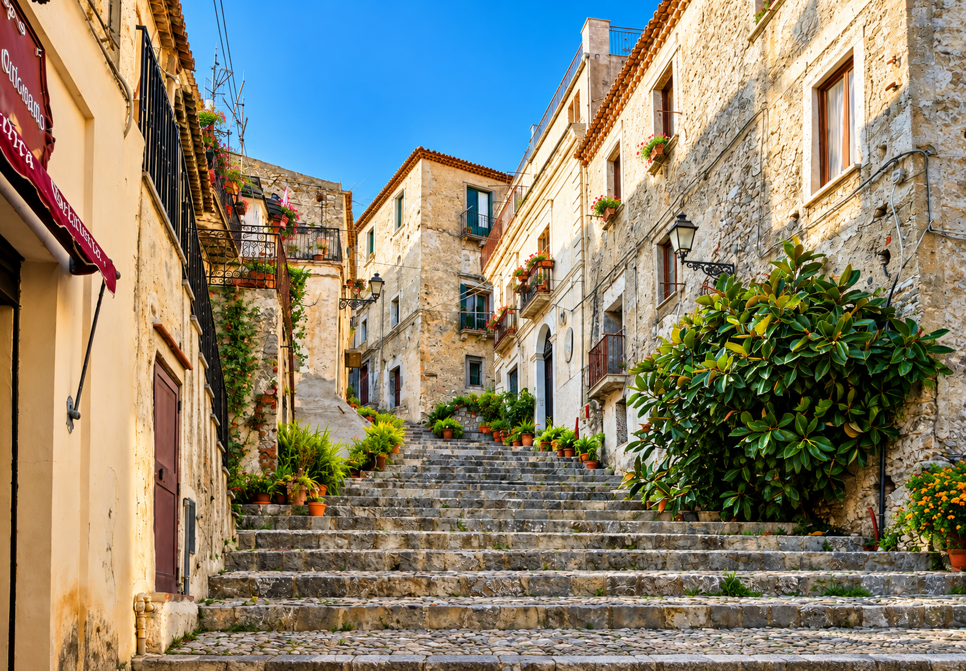
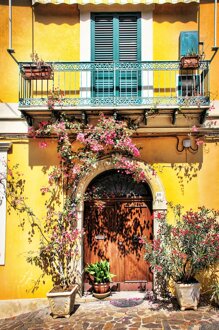
It is probably the most fascinating part of Scalea. The medieval old town climbs the hillside through narrow alleyways, stairways, arches and covered passageways, with houses built almost on top of one another. The town’s distinctive layout is also linked to its defensive role: the historic settlement was fortified and commanded a strategic view over the coastline below.
The best way to explore it is simply to walk uphill, without necessarily following a specific route. As you climb higher, beautiful views open up over the sea and the rooftops of the modern town.
At the highest point stand the ruins of the Norman Castle, built in the 11th century and subsequently modified during the Swabian, Angevin and Aragonese periods.
Talao Tower
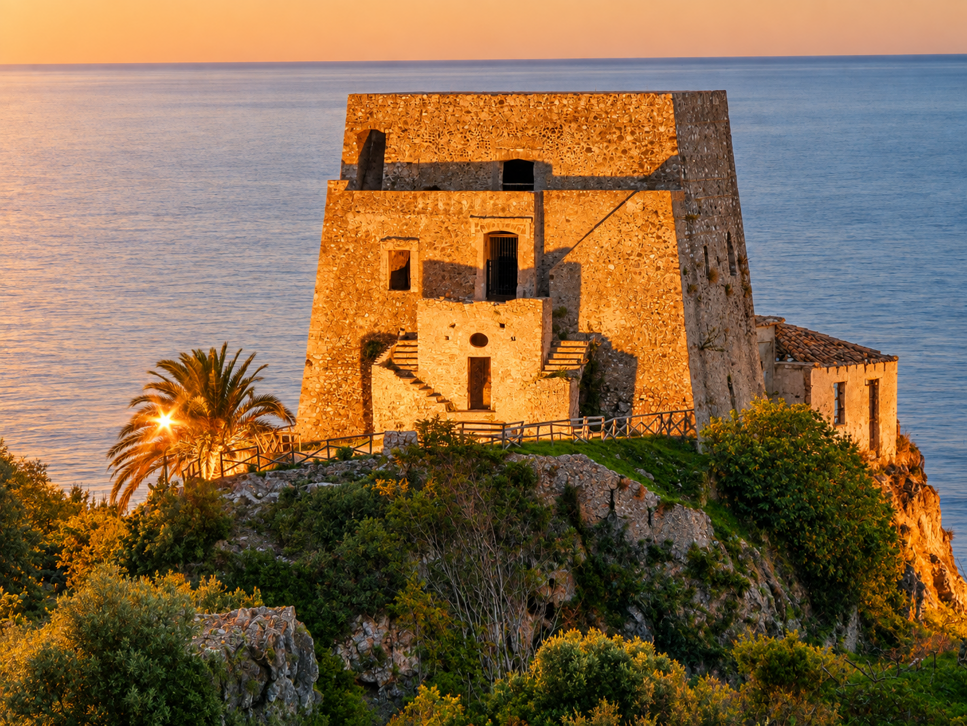
It is the symbol of Scalea. Torre Talao was built in the 16th century as part of a network of coastal watchtowers used to monitor the sea and warn of approaching pirate raids.
Interestingly, the tower originally stood on a small islet. Over time, the gradual accumulation of sand connected the rocky outcrop to the mainland, and today the tower appears to stand on a small hill overlooking the beach.
Evidence of prehistoric human presence has also been discovered in the caves beneath the rocky outcrop.
Palace of the Spinelli Princes
In the lower part of the old town stands the imposing Palazzo dei Principi Spinelli, one of Scalea’s most important historic buildings. The oldest sections date back to the Middle Ages and preserve architectural features such as a pointed-arch mullioned window, while the interiors reflect the transformations that took place over the following centuries. The palace was once the residence of the Spinelli princes and is now owned by the municipality, also housing the Municipal Library.
The Churches
While exploring the historic old town, two churches are also worth a visit: the Church of Santa Maria d’Episcopio, located in the upper part of the town, and the Church of San Nicola in Plateis, another important religious landmark.
Rather than visiting Scalea in search of individual monuments, however, the best approach is to consider the entire old town as an attraction in itself: it is above all the stairways, small arches, passageways between the houses and unexpected glimpses of the Tyrrhenian Sea that make it so fascinating.
The sea and the beaches
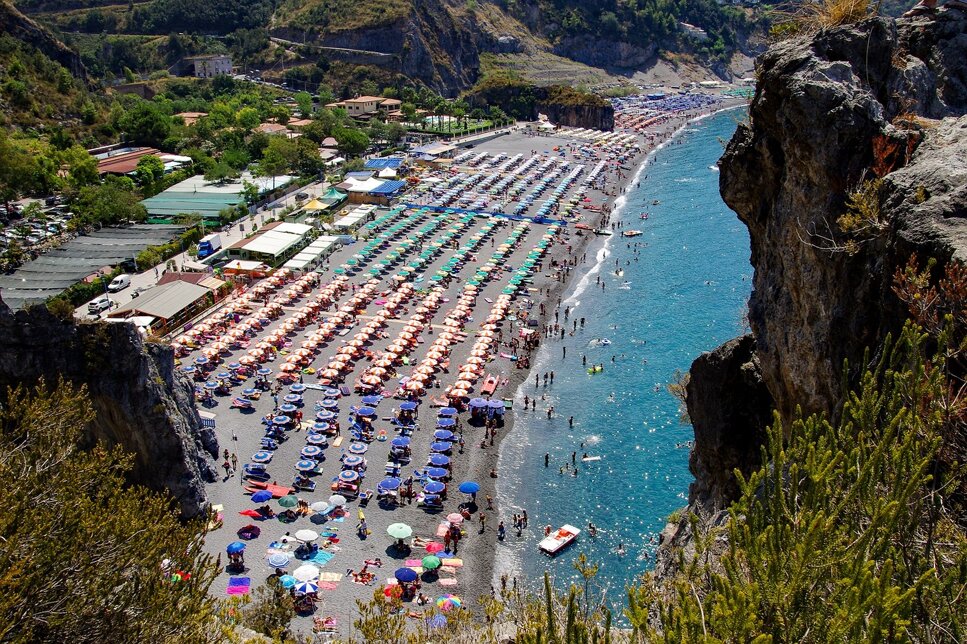
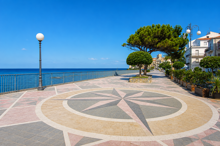
Scalea boasts a long beach stretching along the seafront, easily accessible and largely equipped with beach facilities during the summer season. The scenery becomes more picturesque as you head north towards the Ajnella area, where the sandy coastline gives way to rocky outcrops, small coves and sea caves.
This is also a stretch of coastline well worth exploring from the sea: during the summer, boat excursions offer the chance to discover more of the Riviera dei Cedri, heading towards San Nicola Arcella, the Arcomagno and Dino Island.
Why visit Scalea
Scalea can certainly be enjoyed as a seaside destination, but it truly comes into its own when used as a starting point for exploring the entire Riviera dei Cedri.
You can spend a day discovering the historic old town and relaxing by the sea, but with two or three days available, you can easily include visits to the Arcomagno, Dino Island, Diamante and some of the charming inland villages.
It is precisely this combination of sea, history, picturesque villages and nature that makes Scalea one of the most convenient bases for exploring northern Calabria’s Tyrrhenian coast.
In the surroundings
POLLINO NATIONAL PARK
SAN NICOLA ARCELLA
ARCOMAGNO
DIAMANTE
Thanks to its strategic location, Scalea is an excellent starting point for exploring the wonders of the Riviera dei Cedri. Just a few kilometres away are San Nicola Arcella, famous for the spectacular Arcomagno Bay, and Praia a Mare, with the enchanting Dino Island and its sea caves. Inland, Aieta is well worth a visit, a charming medieval village nestled among the mountains, while further south lie Santa Maria del Cedro, known for its citron cultivation and the archaeological remains of ancient Laos, and Diamante, renowned for the colourful murals decorating its historic old town.
For nature lovers, Orsomarso and the Argentino River Valley, at the foot of the Pollino mountains, offer stunning landscapes of forests, mountains and streams, just a short distance from the sea.
Do you love the sea? Discover these two itineraries!