Fiery sunsets
Wonderful views

Let yourself be embraced by the warmth of Calabria, where every glance stirs emotion, every encounter feels like a hug, and beauty surprises you at every step.
CALABRIA
O N T H E R O A D
CALABRIA
RoadCalabria
O N T H E R O A D
Italy's most authentic region!
ROADCALABRIA
CONTACTS
EXPLORE
Ideas, itineraries and places to discover, to experience Calabria on the road
The Sentiero dell'Inglese in the Calabria Grecanic Area
Follow us on Instagram
Home
Itineraries
info@roadcalabria.it
Villages
What you’re looking for
CALABRIA
A fascinating journey in the Aspromonte among ancient villages, wild nature and the traces of Edward Lear
O N T H E R O A D
Beaches
Did you know that
Art, History, Culture
Useful Links
National Parks
Write to us
Trekking
Some of the images on RoadCalabria come from the 'Calabria Straordinaria' portal of the Calabria Region and are used under a CC-BY license
© 2026 RoadCalabria
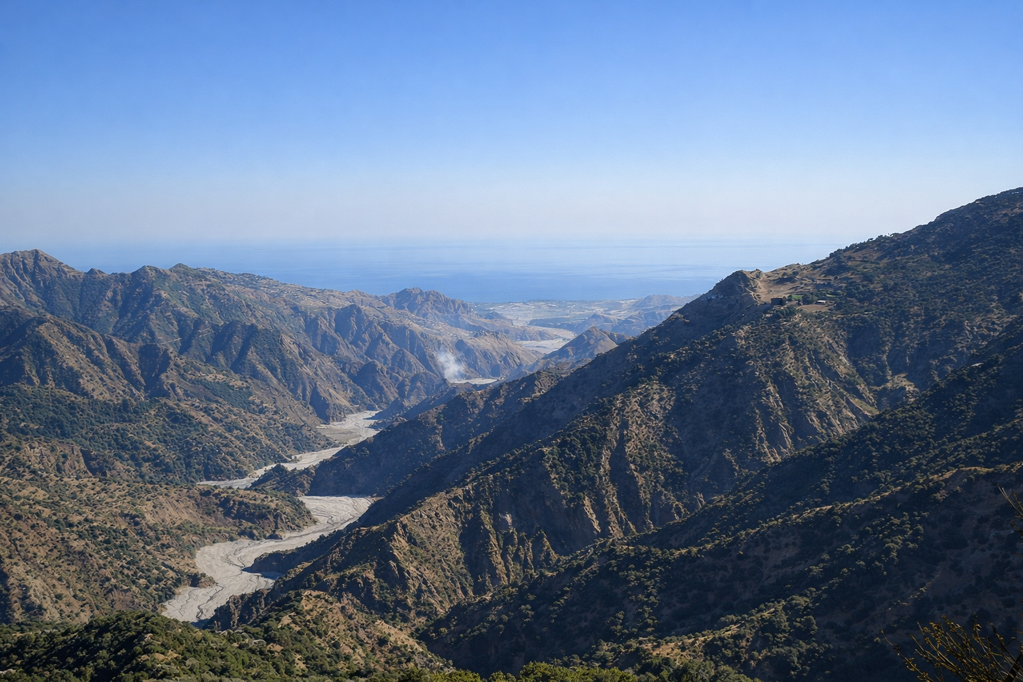
In the most authentic heart of the southern Aspromonte, among perched villages, wild valleys and views opening out to the Ionian Sea, runs one of Calabria’s most captivating routes: the Englishman’s Trail. This hiking itinerary crosses the Grecanic Calabria, a land rich in history, culture and age-old traditions.
The trail takes its name from the famed English traveller and writer Edward Lear, who in the 19th century walked through these places during his journey in Calabria. In his accounts he described, with wonder, harsh landscapes and isolated villages, home to communities that still preserved the language and traditions of ancient Magna Graecia. Today the Englishman’s Trail symbolically retraces the stages of that trip, offering visitors the chance to discover one of the region’s most authentic and evocative corners.
Where the Englishman’s Trail is located
The Englishman’s Trail runs through the Bovesia area, on the southern side of the Aspromonte National Park, in the province of Reggio Calabria. This area is also known as Greek Calabria, because the Grecanic culture still survives here, heir to the ancient Greek colonies.
The route links some of the most distinctive villages of the Aspromonte Ionian hinterland, crossing landscapes of great natural value. Between mountains, riverbeds, terraces and ancient paths used for centuries by shepherds, the walk lets you discover a Calabria far from mass tourism, where time seems to flow more slowly.
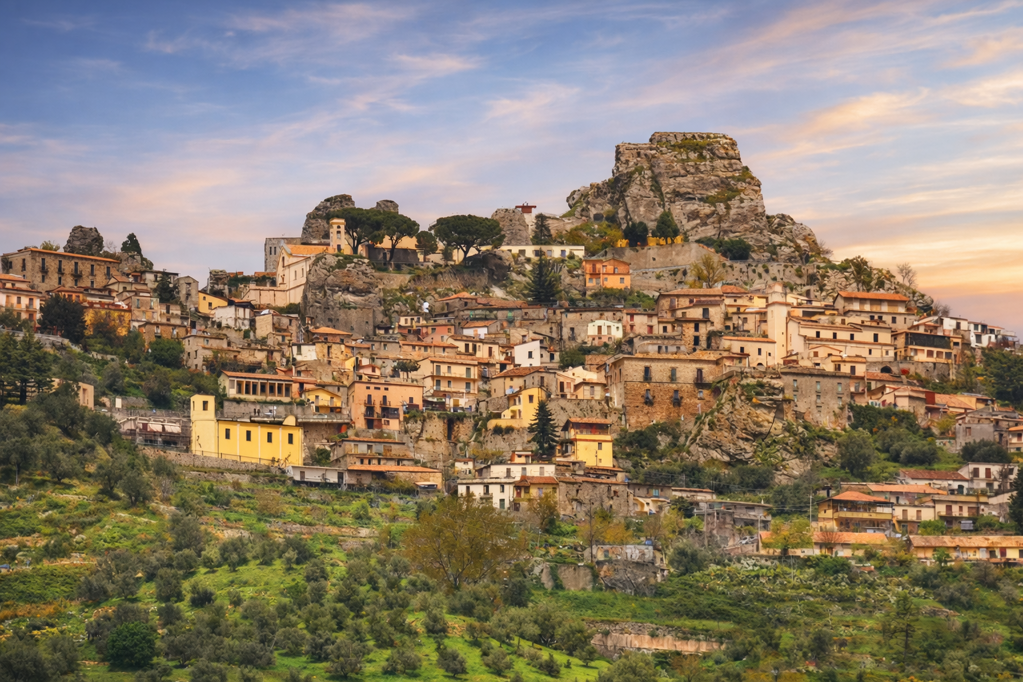
Photo of: Regione Calabria - Calabria Straordinaria
Stages of the English Trail
The Englishman’s Trail is a hiking route that crosses Grecanic Calabria for over 100 kilometers, symbolically following the traces of the journey made by Edward Lear in the 19th century.
The route is divided into several stages linking some of the most charming villages of the southern Aspromonte.
The main stages of the walk are:
- Pentedattilo – Bagaladi
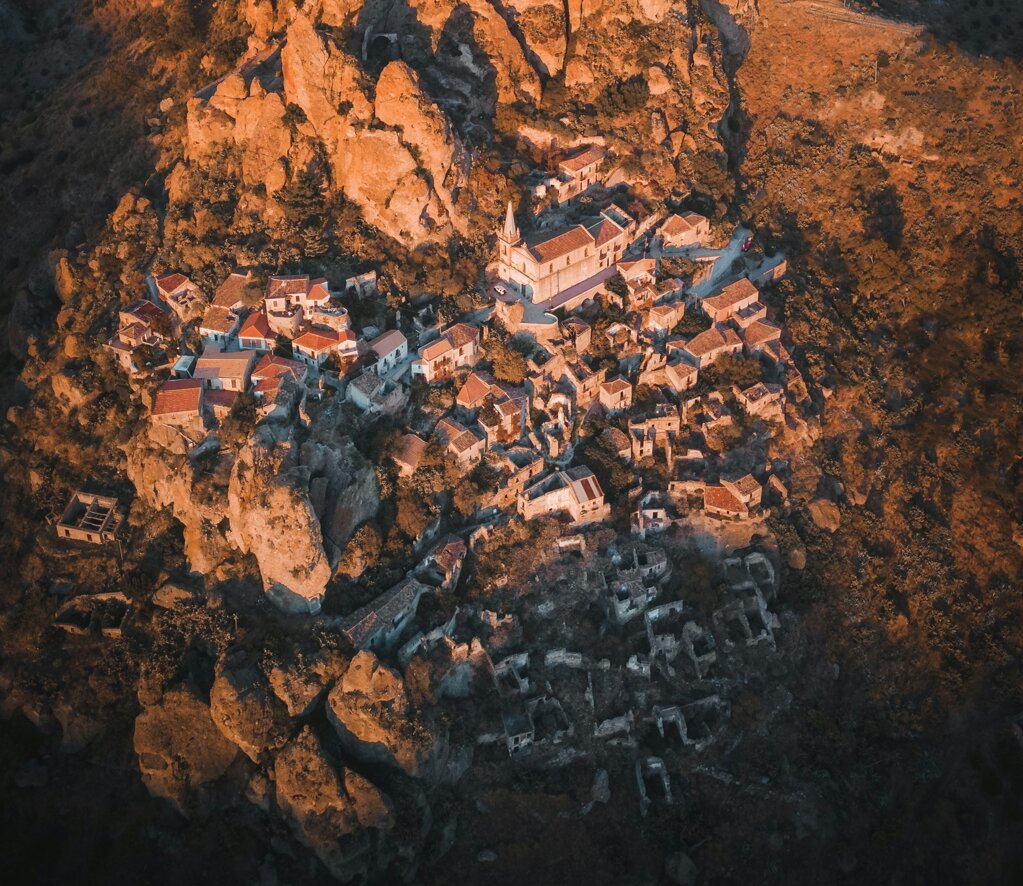
The walk starts from the evocative village of Pentedattilo, an ancient town perched on a rock shaped like a hand. From here the trail crosses olive groves and Mediterranean scrub until it reaches Bagaladi, a small center in the Tuccio valley.
- Bagaladi – Amendolea di Condofuri
This stage crosses rural landscapes and old paths among hills and riverbeds, also passing through the villages of San Lorenzo and San Pantaleone, where important evidence of the Byzantine tradition is preserved.
- Amendolea – Bova (via Gallicianò)
One of the most fascinating stages of the route: the trail climbs inland through olive groves and spectacular views to reach Gallicianò, one of the main centers of Grecanic culture, and then arrives in Bova, the cultural capital of the Greeks of Calabria.
- Bova – Monte Grosso – return to Bova
A panoramic stage that leads up to Monte Grosso, from which you can admire extraordinary views over the Aspromonte and the Ionian coast. The route then returns again to the historic village of Bova.
- Bova – Palizzi
The walk continues south across hills, valleys, and ancient pastoral tracks until it reaches Palizzi, an area famous for its medieval castle and for the production of Palizzi IGT wine.
- Palizzi – Pietrapennata
The last part of the route crosses mountain areas and wild landscapes of the southern Aspromonte, leading toward Pietrapennata, one of the most scenic points of the walk.
- Pietrapennata - Staiti
Finally, the last stage starts from Pietrapennata and reaches Staiti crossing Monte Cerasia, for a length of 12 km.
In summary:
- Length: about 110 km
- Number of stages: 7
- Area: Aspromonte National Park
- Difficulty: medium
- Recommended period: spring and autumn
- Location: Grecanic area
Landscapes and nature of the southern Aspromonte
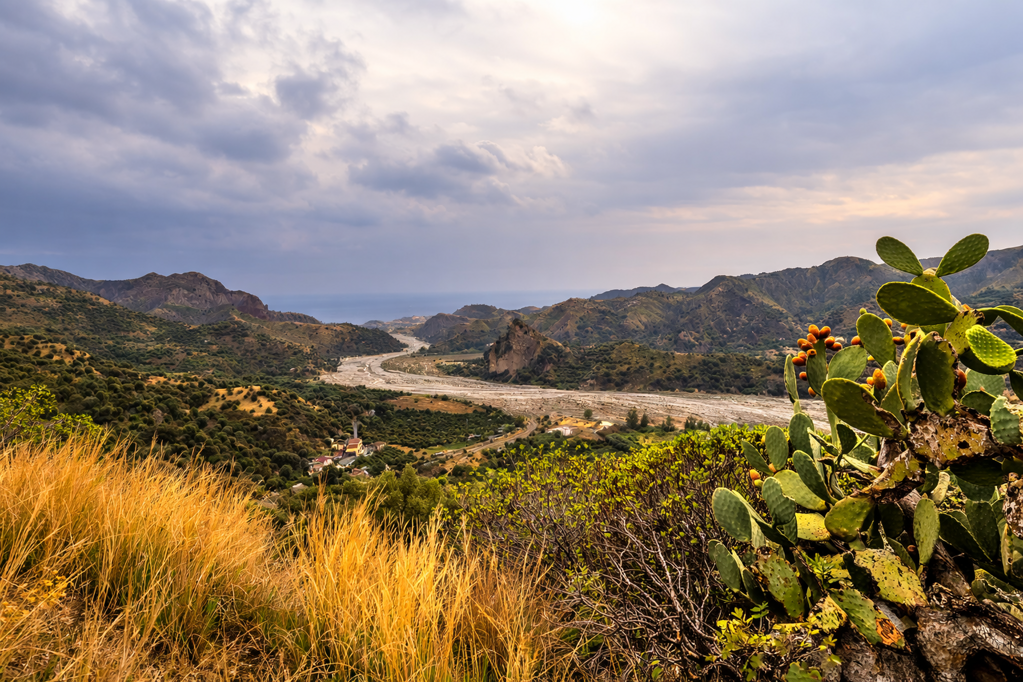
One of the most fascinating aspects of the Englishman’s Path is the variety of landscapes it crosses. The route winds through deep valleys, rocky heights, Mediterranean woods and terraces planted with olives and bergamots.
From many viewpoints you can admire the Ionian coast and, on the clearest days, even Etna on the horizon. Along the way you also come across ancient fiumare, typical Aspromonte watercourses that in winter months turn torrential and in summer become wide beds of pebbles.
These wild, evocative landscapes are the same ones that captivated Edward Lear during his journey in the 19th century.
The Grecanic villages along the route
The Englishman’s Trail crosses some of the most authentic villages in Calabria. Among them stands out Bova, listed among Italy’s Most Beautiful Villages. The town overlooks the Ionian coast from atop a hill and preserves a charming historic center made up of paved alleys, stone arches and ancient buildings.
But very evocative villages also include Pentidattilo, the ghost village par excellence, which in recent years has been repopulating with small craft activities, or even more striking is Gallicianò, one of the symbolic places of Grecanic culture. Here the Grecanic language continues to be passed down and the village retains a strong cultural and religious identity, also shown by the presence of the Orthodox church.
Walking through these communities you discover a unique reality, where traditions, language and folk music tell a thousand-year-old story.
A slow journey, a journey through culture and identity
Walking the English Trail is not only a hiking experience, but also a cultural journey. Along the way you come into contact with one of the oldest and most fascinating identities of the Mediterranean: the Grecanic culture.
This tradition includes language, folk songs, religious rites and a simple, genuine cuisine tied to shepherding and agriculture. Despite hardships and the risk of disappearing, Grecanic culture continues to live thanks to the commitment of local communities.
The English Trail is today an invitation to rediscover slow tourism. Walking through these landscapes means immersing yourself in nature, listening to the silence of the Aspromonte and meeting communities that preserve a unique tradition.
It is a journey that lets you discover the most authentic Calabria, made of ancient villages, historic paths and age-old cultures. An experience able to unite nature, history and identity, just as happened to Edward Lear almost two centuries ago.
Do you want to find out how to include this destination in your trip to Calabria?
Fill out the form: I will help you for free to build the right itinerary for you.