Fiery sunsets
Wonderful views

Let yourself be embraced by the warmth of Calabria, where every glance stirs emotion, every encounter feels like a hug, and beauty surprises you at every step.
CALABRIA
O N T H E R O A D
CALABRIA
RoadCalabria
O N T H E R O A D
Italy's most authentic region!
ROADCALABRIA
CONTACTS
EXPLORE
Ideas, itineraries and places to discover, to experience Calabria on the road
7 dream villages in the Calabrian hinterland amid history, art, culture and views
Follow us on Instagram
Home
Itineraries
info@roadcalabria.it
Villages
What you’re looking for
CALABRIA
O N T H E R O A D
Beaches
Did you know that
Seven authentic villages to discover the charm, history and most evocative landscapes of Calabria
Art, History, Culture
Useful Links
National Parks
Write to us
Trekking
Some of the images on RoadCalabria come from the 'Calabria Straordinaria' portal of the Calabria Region and are used under a CC-BY license
© 2026 RoadCalabria
Far from Calabria’s best-known seaside resorts lies a more intimate side of the region, shaped by hilltop villages, castles, stone-paved alleys, ancient churches and breathtaking views stretching from the mountains to the sea. These are places where time seems to slow down, and where centuries-old traditions, authentic flavours and traces of a fascinating history are still waiting to be discovered.
From the slopes of Aspromonte to the Pollino mountains, passing through the Sila and the hills of the Upper Ionian coast, we have selected seven dream villages in Calabria’s hinterland: Gerace, Stilo, Morano Calabro, Altomonte, Santa Severina, Rocca Imperiale and Oriolo. Seven very different destinations, perfect for discovering a side of Calabria that continues to surprise even far from its famous beaches.
1. Gerace - Middle Ages in Calabria
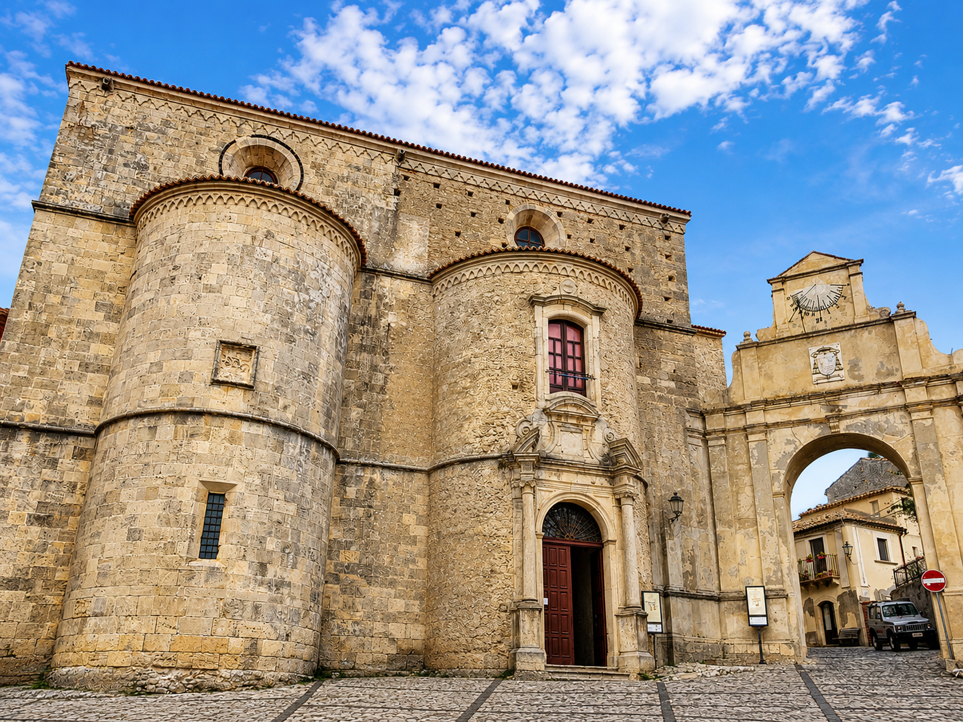
Perched on a rocky outcrop just a few kilometres from the Ionian coast near Reggio Calabria, Gerace is one of Calabria’s most fascinating villages. Its historic centre retains its medieval character, with narrow streets, small squares, arches, noble palaces and picturesque corners that seem to take you back in time.
Its most iconic monument is the majestic Cathedral of Santa Maria Assunta, one of the most important religious buildings in the region, featuring a solemn interior and an atmospheric crypt. As you wander through the village, you will also come across numerous churches, reminders of the important religious role Gerace played over the centuries. The highest part of the village is also well worth a visit, where you can explore the remains of the Norman Castle. From here, the views stretch across the surrounding countryside and, on clear days, all the way to the Ionian Sea.
But perhaps the best way to experience Gerace is simply to lose yourself among its narrow streets, admiring old doorways, balconies, artisan workshops and charming little squares. Before leaving, stop to taste some traditional specialities from the Locride area: the perfect way to round off a day in this enchanting village.
2. Stilo – Byzantine Architecture in Calabria
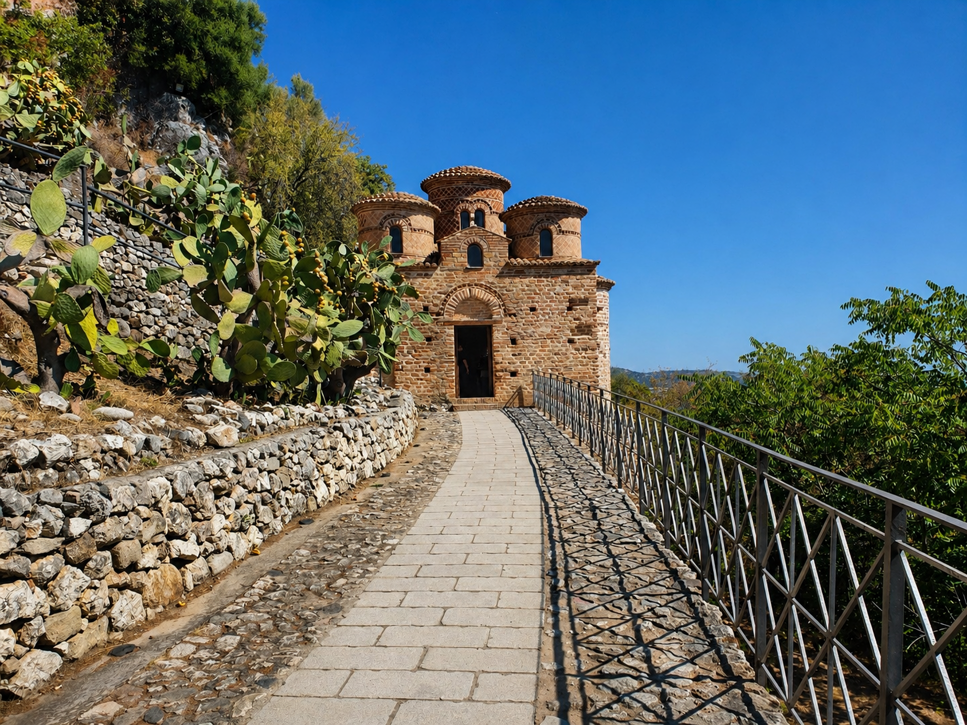
At the foot of Mount Consolino, surrounded by the landscape of the Stilaro Valley, Stilo is inextricably linked to its extraordinary Cattolica, a small jewel of Byzantine architecture in Calabria.
With its distinctive Greek-cross plan and five domes, the building overlooks the surrounding landscape from a spectacular position. Its compact size contrasts with its immense historical and artistic importance, making it one of the most iconic symbols of Byzantine Calabria.
However, the village has much more to offer than the Cattolica alone. Its historic centre stretches along the slopes of the mountain through narrow streets, stairways, churches and ancient houses. Stilo is also the birthplace of the philosopher Tommaso Campanella, whose legacy is remembered in several places throughout the village. Those who enjoy walking can climb towards the higher parts of Stilo and reach the remains of the castle, where magnificent views open up across the valley and the surrounding mountains.
Stilo is therefore an ideal destination for combining art, history, landscapes and culture in one of the most fascinating settings of Calabria’s Ionian hinterland.
3. Morano Calabro - The Pollino Nativity scene
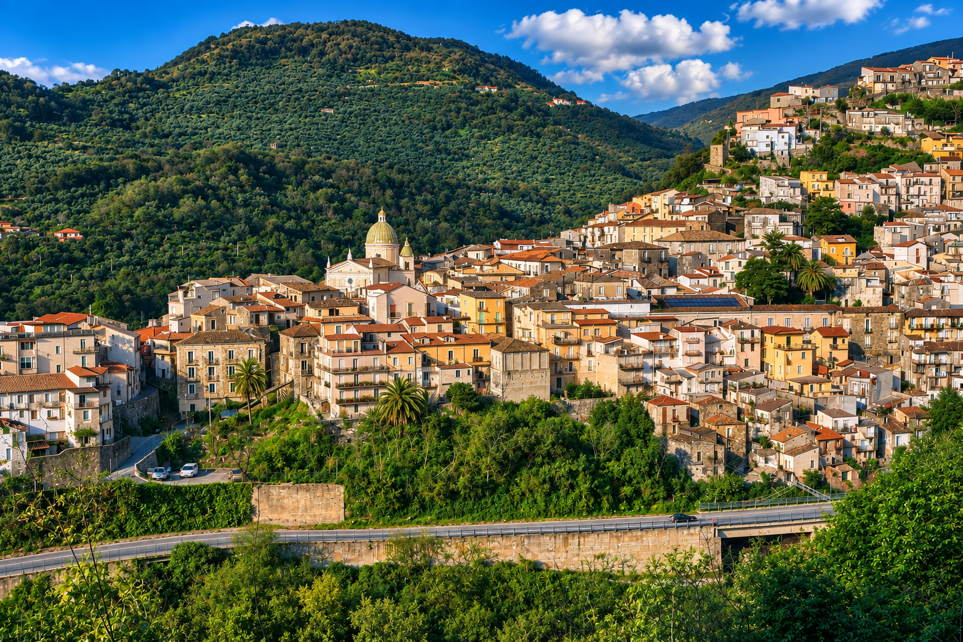
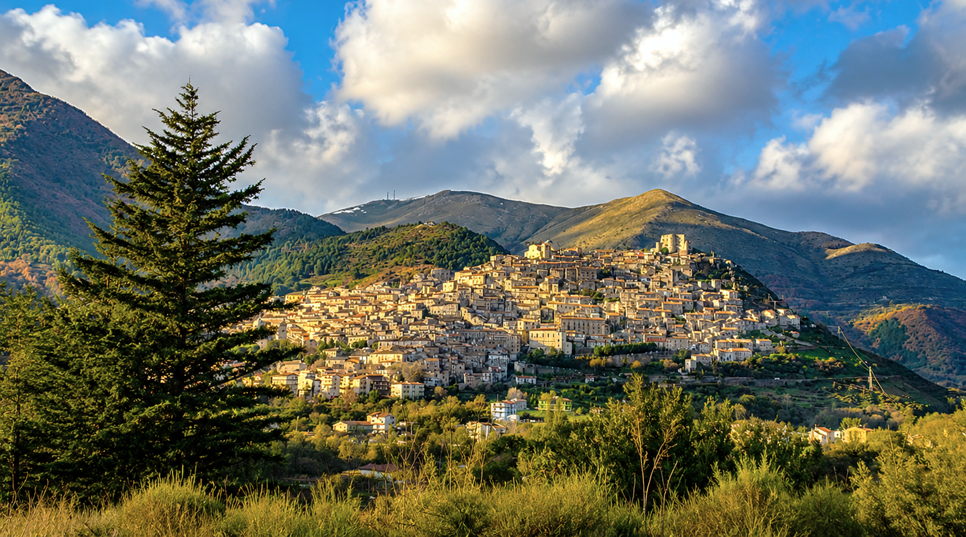
Seen from a distance, Morano Calabro looks like a small nativity scene nestled on the slopes of a hill, with houses clustered closely together and rooftops rising towards the top of the village. We are in the heart of the Pollino National Park, in a landscape dominated by the majestic mountains of the massif. Its location also makes Morano an ideal base for those who want to combine cultural sightseeing with outdoor adventures and nature excursions.
The best way to discover the village is to slowly make your way uphill through its historic centre. Narrow streets, arches, stairways and ancient palaces lead towards the highest part of Morano, where the ruins of the Norman-Swabian Castle stand. From here, wonderful views open up over the village and the Pollino mountains. Among its religious buildings, the Collegiate Church of Santa Maria Maddalena, easily recognisable by its colourful majolica-tiled dome, is particularly worth seeing, along with several other churches that preserve part of the village’s artistic heritage.
Above all, Morano captivates visitors with its atmosphere: peaceful, mountainous and authentic. It is one of those places where it is worth slowing down, sitting in a small square and simply enjoying the scenery.
4. Altomonte - Culture, Art, Cuisine
Nestled among the hills of the province of Cosenza, Altomonte is a small medieval village that captivates visitors with the elegance of its historic centre and the richness of its artistic heritage.
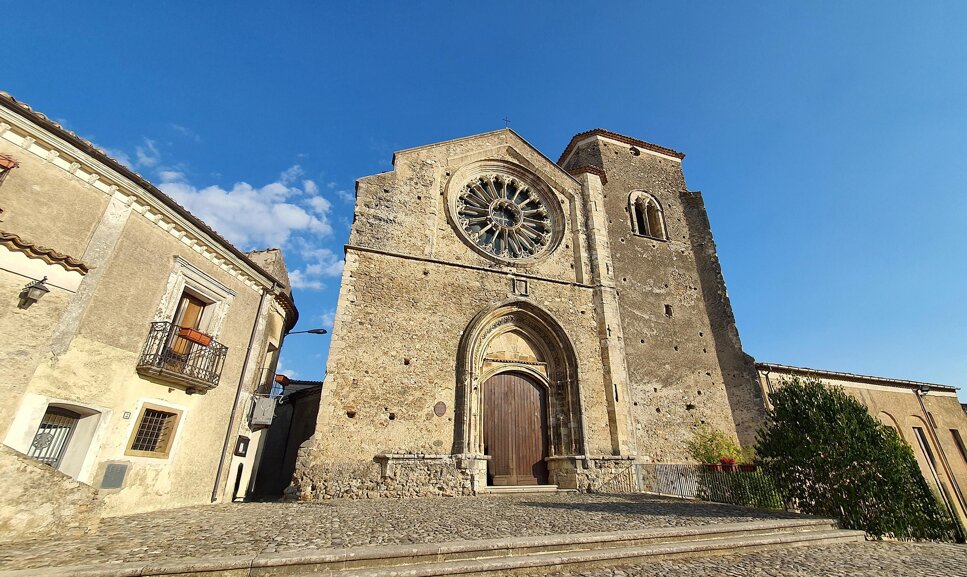
At the heart of the village stands the Church of Santa Maria della Consolazione, one of the finest examples of Gothic architecture in Calabria. Its striking presence defines the village skyline and reflects the importance Altomonte achieved during the Middle Ages.
Around it lies a compact and charming historic centre, perfect for exploring on foot through cobbled streets, small squares, stone doorways and panoramic viewpoints overlooking the surrounding countryside.
Another must-see is the Civic Museum, housed in the former Dominican complex, where visitors can learn more about the history and artistic heritage of the area.
Altomonte is also a particularly appealing destination for food lovers. Its local cuisine tells the story of rural Calabria through traditional products, recipes and flavours deeply rooted in the region’s farming heritage.
It is the perfect village for a slow-paced day spent enjoying art, leisurely walks, beautiful views and delicious local food.
5. Santa Severina - Between Sila and sea
Perched on a rocky spur overlooking the Neto Valley, Santa Severina boasts one of the most spectacular skylines in Calabria’s hinterland.
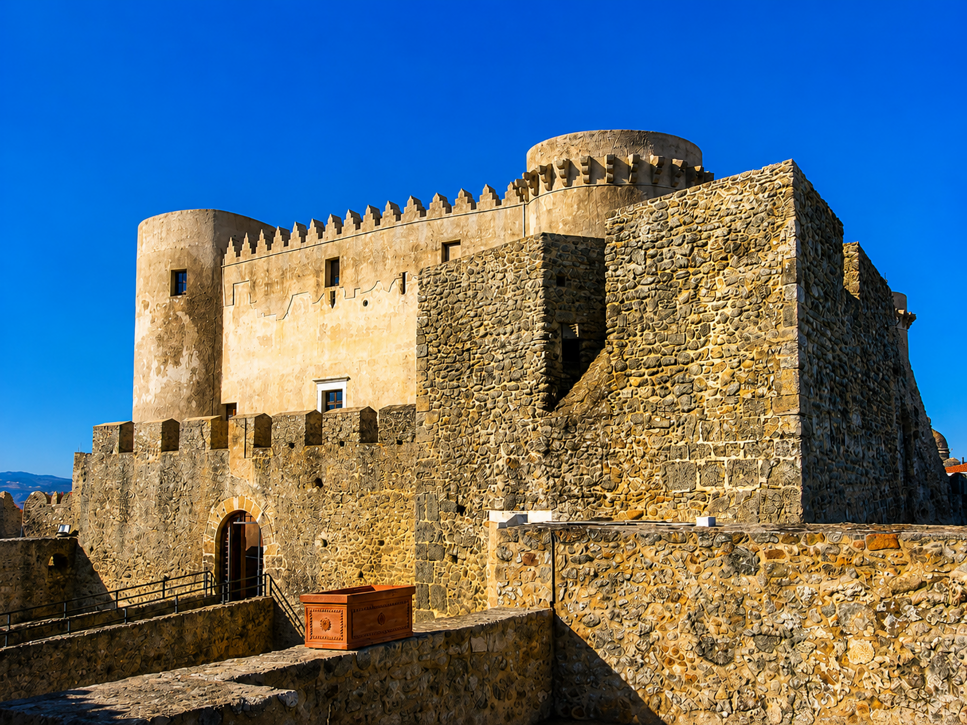
Dominating the village is the imposing Castle of Santa Severina, a vast fortified complex that tells the story of centuries of history and transformation. Exploring its rooms is like travelling through different eras, while its terraces and panoramic viewpoints offer sweeping views over the surrounding landscape. Just a few steps from the castle lies Piazza Campo, the monumental heart of the village. Some of Santa Severina’s most important buildings are gathered here, including the Cathedral and the Byzantine Baptistery, a precious reminder of the village’s ancient religious history. The historic centre is small and can be explored at a leisurely pace, wandering through narrow streets and scenic viewpoints. Santa Severina’s elevated position is one of its greatest attractions, with beautiful panoramas accompanying you throughout much of your visit.
It is an ideal destination to combine with an itinerary through the province of Crotone or a day exploring the landscapes of the Sila and the Neto Valley.
6. Rocca Imperiale – Frederick II’s Fortress
At the northernmost end of Calabria’s Ionian coast, Rocca Imperiale climbs up the hillside in a picturesque maze of houses, narrow streets and stairways, all dominated by the imposing silhouette of its castle.
The Swabian Castle, commissioned by Frederick II of Swabia in the 13th century and transformed over the centuries, is the village’s most iconic landmark. Its strategic position overlooks a vast area and offers spectacular views towards the Ionian Sea and the surrounding hills. Walking down from the castle, you can explore the historic centre, characterised by narrow streets, arches, old palaces and small churches. Wandering without a particular destination is perhaps the best way to appreciate the authentic atmosphere of the village.
Rocca Imperiale is also famous for another local treasure: its PGI lemon, an important part of the area’s culinary tradition and agricultural identity. The contrast between the hilltop medieval village and the blue waters of the Ionian Sea on the horizon makes Rocca Imperiale an especially photogenic destination.
It is an unmissable stop on a journey through the Upper Ionian area of the province of Cosenza, and can easily be combined with a visit to the nearby coastal towns.
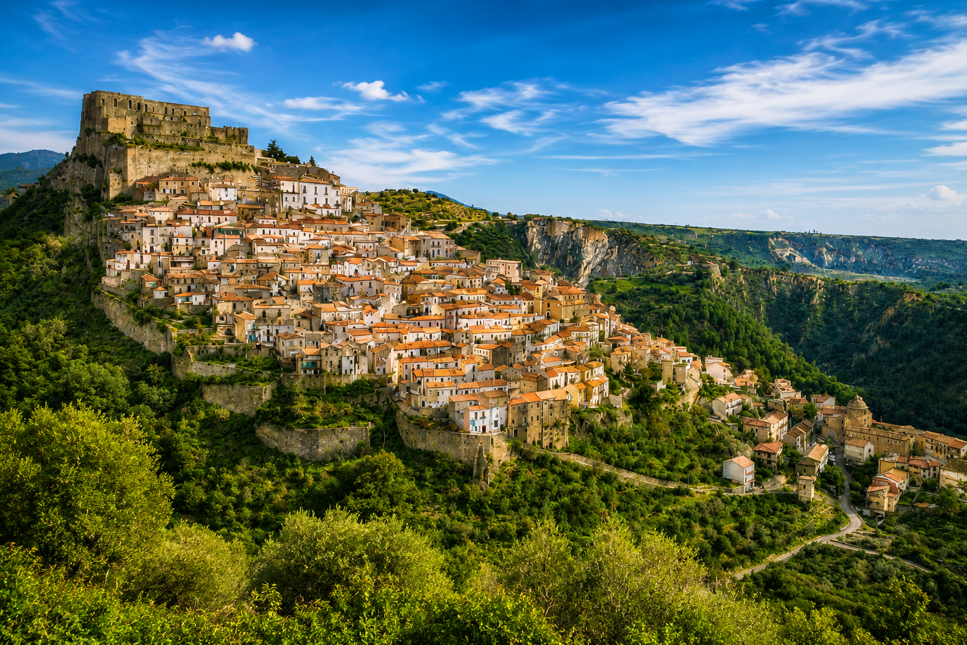
7. Oriolo - Among Ancient Alleys and Silence
Not far from the border with Basilicata, in the hinterland of the Upper Ionian area of the province of Cosenza, Oriolo stands on a rocky spur surrounded by a landscape of rolling hills and mountains.
Dominating the village is the imposing Castle of Oriolo, a medieval fortress that was later transformed and expanded over the centuries. Its towers rise above the houses and provide the perfect starting point for exploring the village.
From the castle, you can continue on foot through the historic centre, discovering narrow alleys, stairways, ancient buildings and panoramic viewpoints. The village retains the intimate atmosphere typical of Calabria’s small inland towns, far from the region’s busiest tourist routes.
Oriolo also boasts an interesting cultural heritage, telling the story of a community that developed over the centuries in a strategic position between Calabria and Basilicata. All around, the landscapes of the Upper Ionian area offer opportunities for excursions and itineraries connecting small villages, natural areas and fascinating historical sites.
Oriolo is therefore a perfect choice for travellers looking for a lesser-known, peaceful and authentic side of Calabria, where the journey becomes a true experience of discovery.
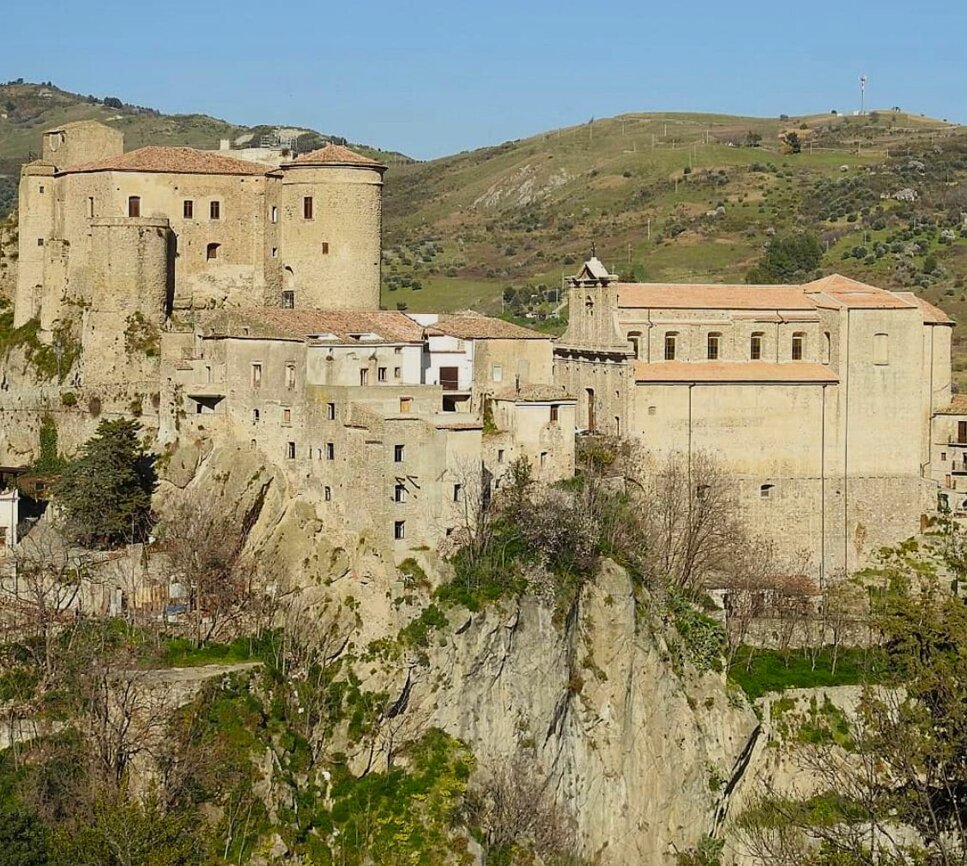
Seven Villages, Seven Ways to Discover Calabria
Gerace, Stilo, Morano Calabro, Altomonte, Santa Severina, Rocca Imperiale and Oriolo reveal seven different faces of the same region. There are villages dominated by imposing castles, towns that preserve a rich Byzantine heritage, medieval settlements overlooking the mountains and hidden gems suspended between the hills and the sea.
Visiting them means, above all, leaving the best-known routes behind for a few hours and discovering a Calabria shaped by history, silence, encounters and unexpected landscapes. You can choose one as the destination for a day trip or include several of them in an on-the-road journey through the region: each one deserves a stop and, above all, enough time to truly experience it.
Because in Calabria, sometimes all it takes is to leave the coast behind and follow a road inland to find yourself in front of a village you never expected to discover.
Do you love the villages?
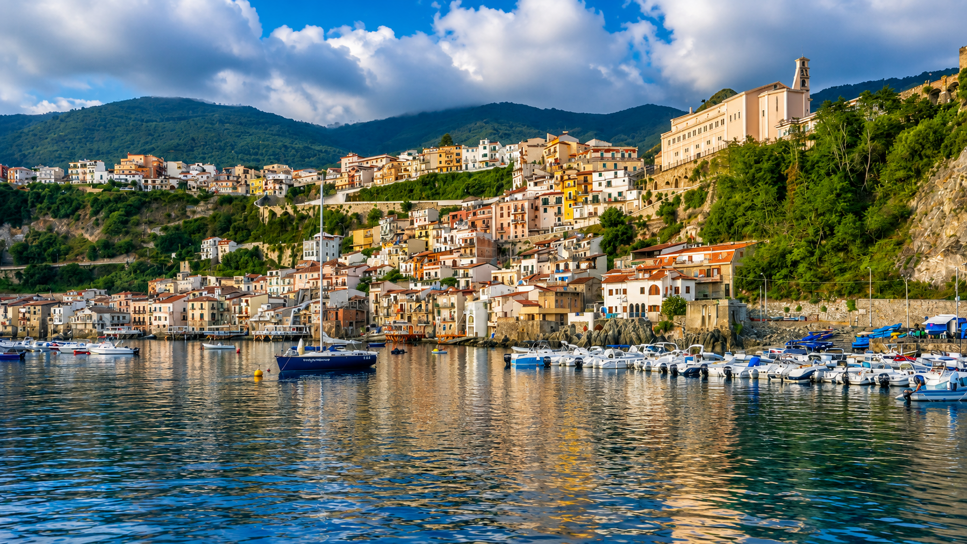
DISCOVER THE MOST BEAUTIFUL COASTAL AND INLAND VILLAGES IN CALABRIA
Do you love the nature?
Do you love the archaeology?