Fiery sunsets
Wonderful views

Let yourself be embraced by the warmth of Calabria, where every glance stirs emotion, every encounter feels like a hug, and beauty surprises you at every step.
CALABRIA
O N T H E R O A D
CALABRIA
RoadCalabria
O N T H E R O A D
Italy's most authentic region!
ROADCALABRIA
CONTACTS
EXPLORE
Ideas, itineraries and places to discover, to experience Calabria on the road
Archaeological sites in Calabria: the 5 most important and fascinating to visit
Follow us on Instagram
Home
Itineraries
info@roadcalabria.it
Villages
What you’re looking for
CALABRIA
O N T H E R O A D
Beaches
Did you know that
From Magna Graecia to the Roman Empire: discover five extraordinary archaeological sites
Art, History, Culture
Useful Links
National Parks
Write to us
Trekking
Some of the images on RoadCalabria come from the 'Calabria Straordinaria' portal of the Calabria Region and are used under a CC-BY license
© 2026 RoadCalabria
Calabria is one of Italy's richest regions in terms of archaeological heritage. Home to dozens of remarkable archaeological sites, it tells a story spanning more than 3,000 years, from prehistoric settlements and the flourishing colonies of Magna Graecia to the Roman, Byzantine and medieval periods. Many of the most important cities of Magna Graecia were founded along Calabria's coastline, making this land one of the leading cultural and commercial hubs of the ancient Mediterranean. Today, archaeological parks, museums and excavation sites allow visitors to walk among temples, theatres, mosaics, ancient streets and dwellings that have withstood the passage of time, offering an unforgettable journey into history.
Choosing the most beautiful archaeological sites in Calabria is no easy task, as the region boasts an extraordinary wealth of historical treasures. On this page, we have selected the five sites that, thanks to their historical significance, size, state of preservation and cultural value, are considered must-see destinations for anyone wishing to discover Calabria's ancient past.
From the legendary wealth of Sybaris to the majestic Sanctuary of Capo Colonna, passing through Locri, Scolacium and the remarkable Roman Villa of Casignana, here are the five archaeological sites that best tell the millennia-old story of Calabria.
Archaeological Park of Sibaritide - Sibari (CS)
The Archaeological Park of Sybaris, located on the plain of Sibari in the province of Cosenza, is one of the most important archaeological sites in southern Italy. This was the location of the ancient city of Sybaris, founded by Achaean settlers around 720 BC, and renowned as one of the wealthiest and most powerful cities of Magna Graecia. Its extraordinary prosperity was so legendary that the word "sybarite" is still used today to describe someone who enjoys luxury, comfort and refinement.
Thanks to the fertile plain and its strategic position along the Mediterranean trade routes, Sybaris quickly became a thriving commercial hub. After being destroyed by the rival city of Croton in 510 BC, its ruins gave rise first to the Greek colony of Thurii and later to the Roman colony of Copia, creating a remarkable overlap of civilizations that spans more than a thousand years.
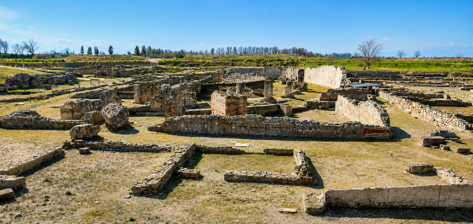
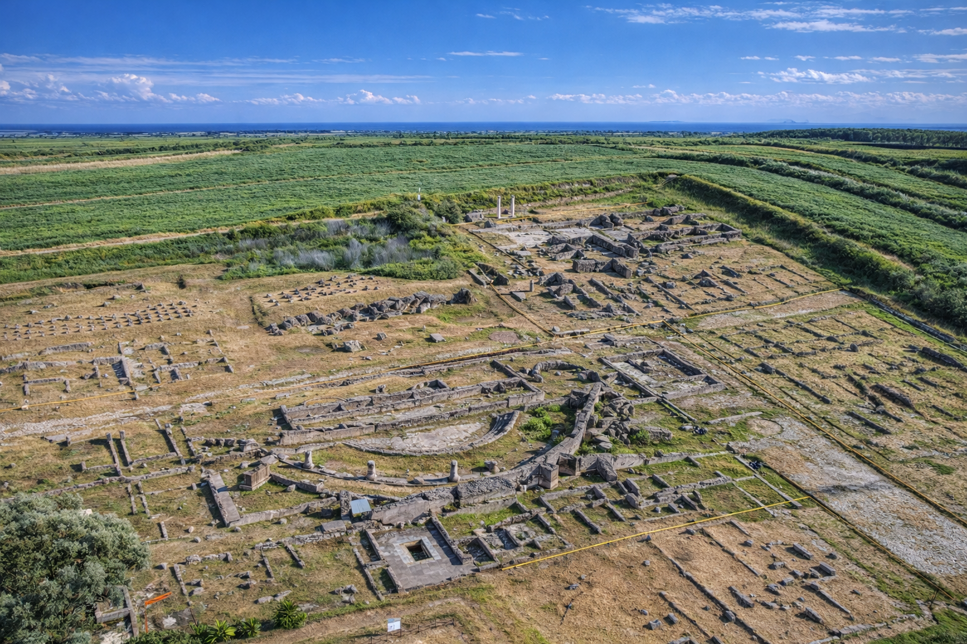
Today, visitors can explore extensive excavation areas where ancient streets, residential quarters, public buildings and impressive Roman remains reveal the city's long and fascinating history. The archaeological areas of Parco del Cavallo, Casa Bianca and Stombi offer a unique insight into everyday life in the ancient world and illustrate the evolution of the settlement through successive historical periods.
Adjacent to the excavations is the National Archaeological Museum of the Sibaritide, home to thousands of artefacts uncovered during decades of archaeological research, that help bring to life the extraordinary wealth and importance of ancient Sybaris.
For archaeology enthusiasts, this is arguably the most comprehensive archaeological experience in Calabria, offering the rare opportunity to discover the remains of three different cities built on the same site over the course of more than a millennium.
© Calabria Straordinaria - Regione Calabria
Archaeological Park of Scolacium - Roccelletta di Borgia (CZ)
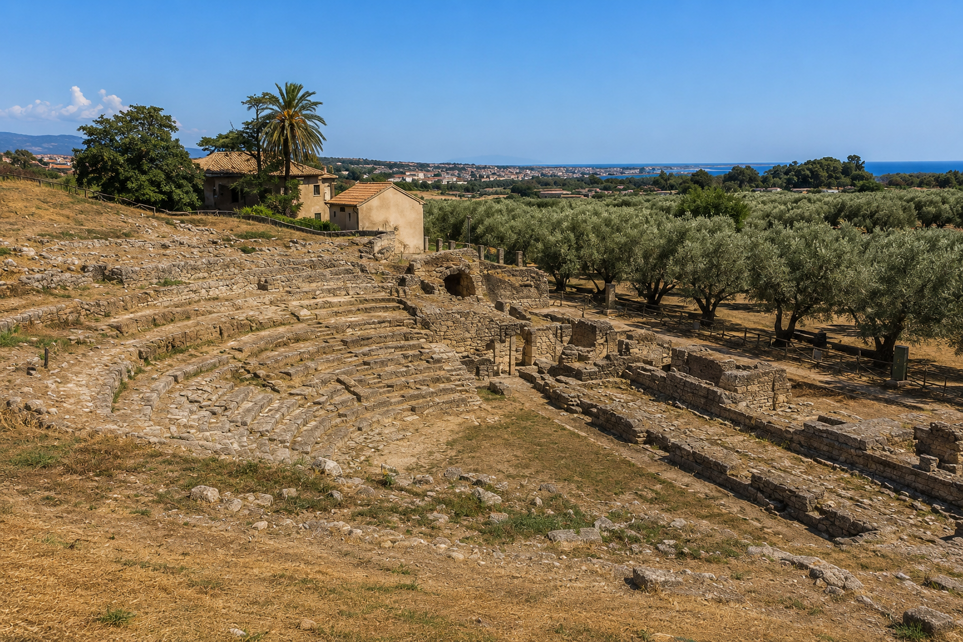
Located in the municipality of Borgia, just a few kilometres from Catanzaro, the Archaeological Park of Scolacium is one of Calabria's most fascinating archaeological sites. Its unique appeal lies in the extraordinary combination of Greek, Roman and medieval remains, all set within a beautiful centuries-old olive grove that creates one of the region's most picturesque historical landscapes.
The ancient city of Skylletion was founded as a colony of Magna Graecia between the 6th and 5th centuries BC before becoming the Roman colony of Scolacium, reaching its greatest prosperity during the Imperial era.
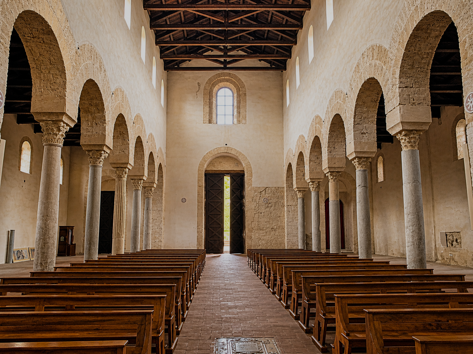
Today, visitors can stroll through the Roman Forum, admire its distinctive brick-paved streets, explore the remarkably preserved Roman theatre, perfectly integrated into the natural hillside, and discover the remains of the only known Roman amphitheatre in Calabria. Adding even more charm to the site is the imposing Norman Basilica of Santa Maria della Roccella, built centuries after the abandonment of the Roman city.
The park's museum displays an outstanding collection of statues, imperial portraits, inscriptions, ceramics and numerous archaeological finds that illustrate the site's continuous evolution from Magna Graecia through the Roman period and into the Middle Ages.
Scolacium is one of those rare places where visitors can truly experience the continuity of Calabria's history. In just a short walk, it is possible to travel through more than 1,500 years of civilisation, surrounded by one of the most beautiful historical landscapes in southern Italy.
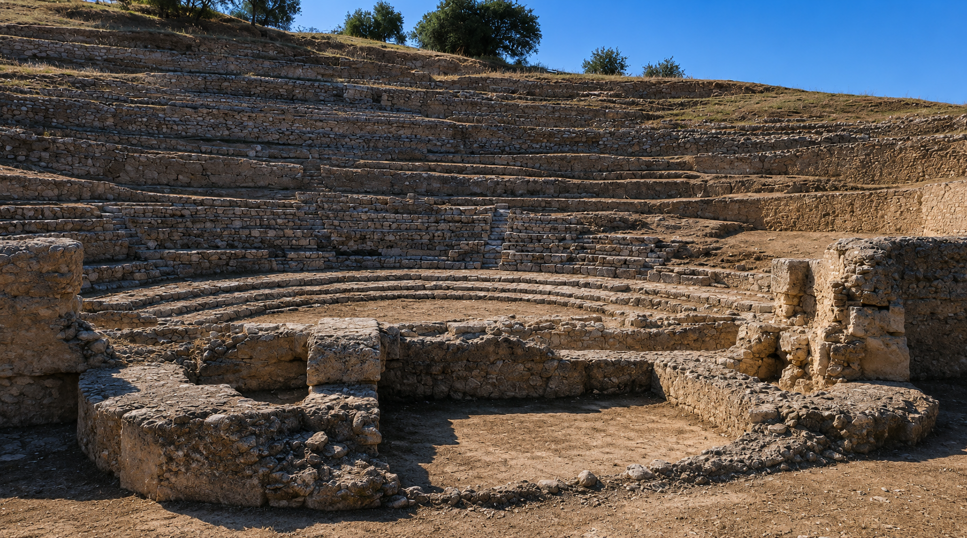
Archaeological Park of Capo Colonna - Crotone (KR)
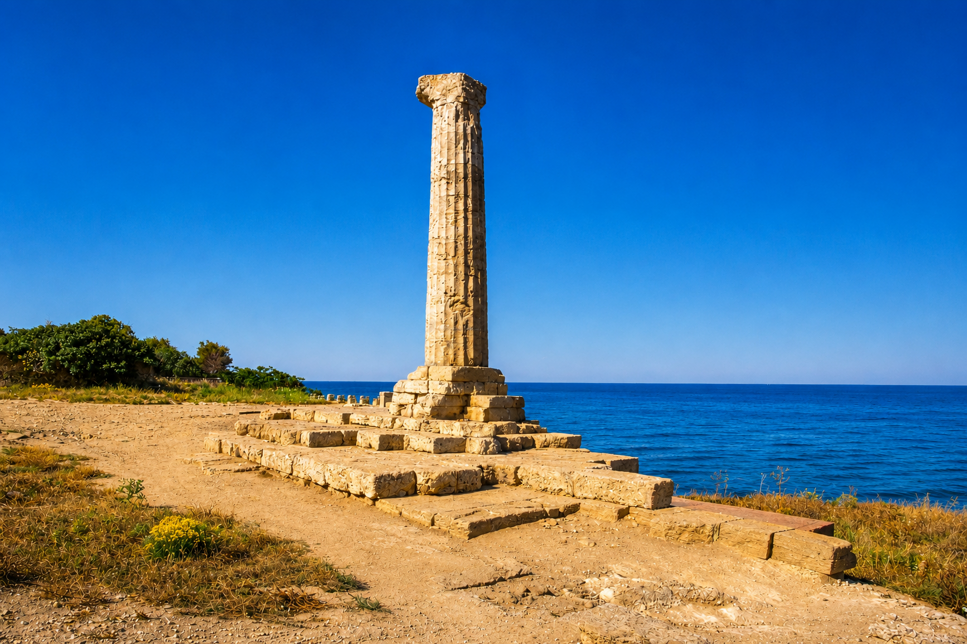
Just a few kilometres from Crotone, overlooking the crystal-clear waters of the Ionian Sea, lies one of the most iconic archaeological sites in Calabria: the Archaeological Park of Capo Colonna. This extraordinary site was once home to the famous Sanctuary of Hera Lacinia, one of the most important religious centres in all of Magna Graecia.
The park's most recognisable landmark is the single Doric column that still stands today, the last surviving remnant of the magnificent Temple of Hera. Rising alone on the windswept promontory and surrounded by the sea, this elegant column has become one of Calabria's most enduring symbols.
Covering approximately 50 hectares, the archaeological park includes the sacred area, remains of Roman walls, ancient roads, public buildings and the Archaeological Museum, which displays numerous artefacts uncovered during decades of excavations. Walking along the paths surrounded by Mediterranean vegetation, visitors can easily imagine the grandeur of the sanctuary that dominated this spectacular headland more than 2,000 years ago.
Capo Colonna is also closely connected to the history of Croton, one of the greatest cities of Magna Graecia and the place where the philosopher Pythagoras established his renowned philosophical school.
Its breathtaking coastal setting, combined with its immense historical and archaeological significance, makes Capo Colonna one of the most unforgettable places to visit in Calabria.
Archaeological Park of Locri Epizefiri - Locri (RC)
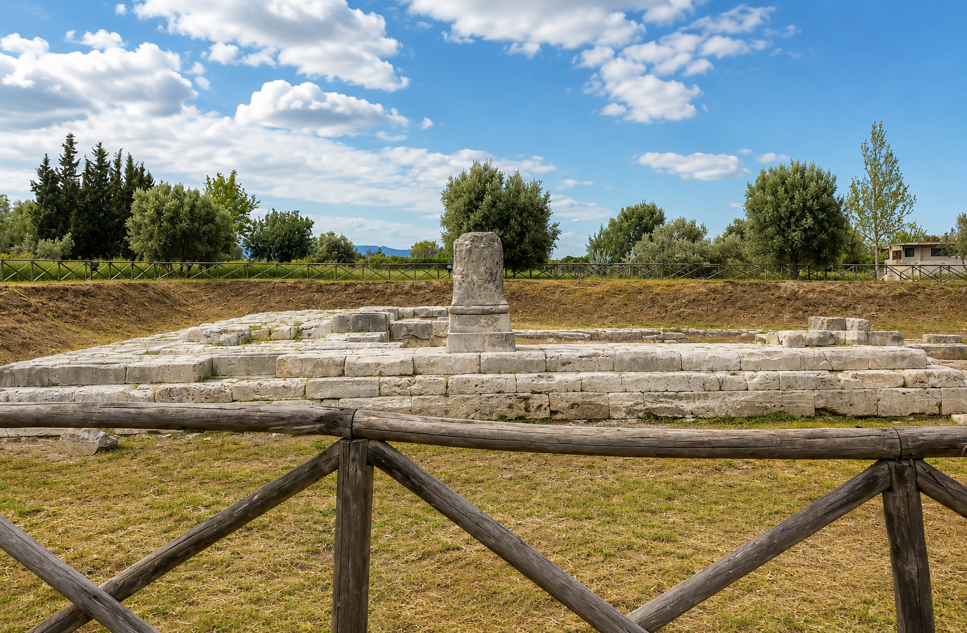
Founded by Greek settlers from the region of Locris in the 7th century BC, Locri Epizephyrii became one of the most influential cities of Magna Graecia and one of the leading cultural centres of the ancient Mediterranean. Located just outside the modern town of Locri, the archaeological park covers a vast area that offers visitors a remarkable insight into the urban layout of an authentic Greek polis. Walking through the site, you can explore residential districts, imposing defensive walls, necropolises, public buildings and important sacred sanctuaries that illustrate the city's significance over the centuries.
One of the site's greatest treasures is the Sanctuary of Persephone, famous for the discovery of the Locrian pinakes—beautiful terracotta votive tablets that are now preserved in some of Italy's most important museums.
Visitors can also admire the remains of the Greek-Roman theatre, ancient temples, impressive city walls and the National Archaeological Museum, which houses hundreds of artefacts unearthed during decades of excavations.
A visit to Locri Epizephyrii offers a fascinating journey through the city's rise during the Greek period and its continued development under Roman rule, making it one of the most complete archaeological experiences in southern Italy.
For history lovers, it is an unmissable destination, offering an exceptional opportunity to discover the evolution of a major Greek city over more than a thousand years and to experience one of Calabria's most remarkable archaeological landscapes.
Roman Villa of Casignana - Casignana (RC)
Among Calabria's lesser-known yet most spectacular archaeological treasures is the Roman Villa of Casignana, located in the heart of the Costa dei Gelsomini, in the province of Reggio Calabria. Discovered only in the second half of the 20th century following a powerful storm that exposed part of the site, the villa is considered one of the most important Roman residences ever unearthed in southern Italy.
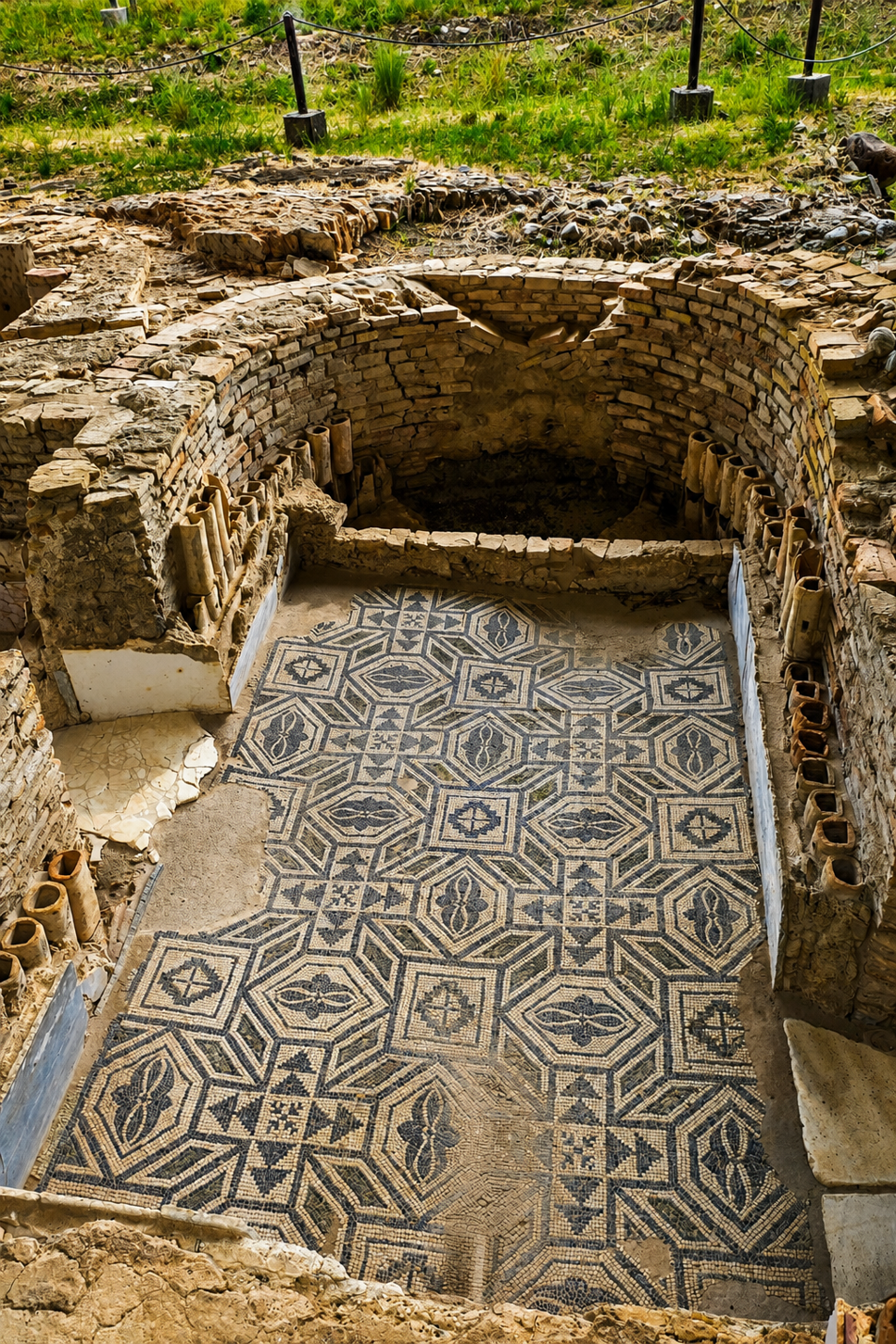
The feature that has made the villa internationally renowned is its extraordinary polychrome mosaics, regarded among the finest and best-preserved in Italy. These remarkable floor decorations depict mythological scenes, animals, intricate geometric patterns and elegant ornamental motifs, all crafted with exceptional artistic skill and remarkable attention to detail.
Built between the 1st and 4th centuries AD, the villa is believed to have belonged to a wealthy Roman aristocratic family.
Today, modern protective structures allow visitors to admire these magnificent mosaics up close while ensuring their long-term preservation, making the site enjoyable to visit throughout the year, even during the hottest summer months.
The Roman Villa of Casignana is also remarkable because much of the complex still lies buried beneath the ground and new discoveries regularly enrich our understanding of this extraordinary residence. A true hidden gem, it stands as one of the finest examples of Roman mosaic art in southern Italy and is an essential stop for anyone wishing to explore Calabria's ancient past, from the legacy of Magna Graecia to the splendour of the Roman Empire.
* * *
Love archaeology? Discover these itineraries!