Fiery sunsets
Wonderful views

Let yourself be embraced by the warmth of Calabria, where every glance stirs emotion, every encounter feels like a hug, and beauty surprises you at every step.
CALABRIA
O N T H E R O A D
CALABRIA
RoadCalabria
O N T H E R O A D
Italy's most authentic region!
ROADCALABRIA
CONTACTS
EXPLORE
Ideas, itineraries and places to discover, to experience Calabria on the road
Follow us on Instagram
Home
Itineraries
info@roadcalabria.it
Villages
What you’re looking for
CALABRIA
O N T H E R O A D
Beaches
Did you know that
Art, History, Culture
Useful Links
National Parks
Write to us
Trekking
Riace Bronzes and Archaeological Museum
Some of the images on RoadCalabria come from the 'Calabria Straordinaria' portal of the Calabria Region and are used under a CC-BY license
© 2026 RoadCalabria
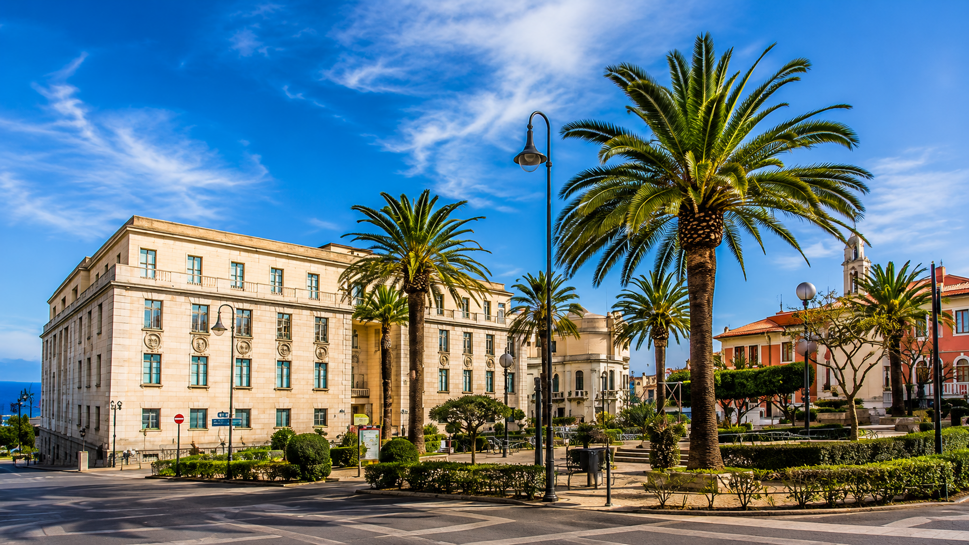
Overlooking the famous Lungomare Falcomatà, the National Archaeological Museum of Reggio Calabria (MArRC) is one of the most important archaeological museums in Italy and the entire Mediterranean. Guardian of extraordinary evidence of Magna Graecia, the museum tells thousands of years of Calabria’s history through finds ranging from prehistory to the Roman age, offering visitors a unique journey through ancient civilizations, art, wars, religious cults, and everyday life.
Today the MArRC is known worldwide above all for the presence of the famous Riace Bronzes, but its heritage is far broader and forms an extraordinary archive of Calabrian historical memory.
The museum’s origins: from archaeological discovery to the birth of the institution
The museum’s birth is closely linked to the growing attention to Calabria’s archaeological heritage that developed between the 19th and 20th centuries. In that period, numerous excavations brought to light finds from the ancient Greek colonies scattered along the region.
The museum was officially established in 1882 with the aim of collecting, preserving and enhancing the archaeological materials from excavations in southern Calabria. The original site, however, was not the current one.
The devastating 1908 earthquake, which struck Reggio Calabria and Messina, destroyed much of the city and made it necessary to completely rethink the public and cultural heritage. In the following years it was therefore decided to build a new museum headquarters.
The current building was designed by the architect Marcello Piacentini, one of the leading figures of 20th-century Italian architecture. Inaugurated in 1932, the palace was conceived from the outset as a museum structure, a rather rare feature for the time. The building features monumental lines and innovative anti-seismic criteria, born precisely after the tragedy of the earthquake. Over the decades the museum has been expanded, restored and deeply renewed up to the major reopening in 2016, after long modernization works that introduced new exhibition routes, multimedia technologies and more accessible spaces.
A museum dedicated to Magna Graecia
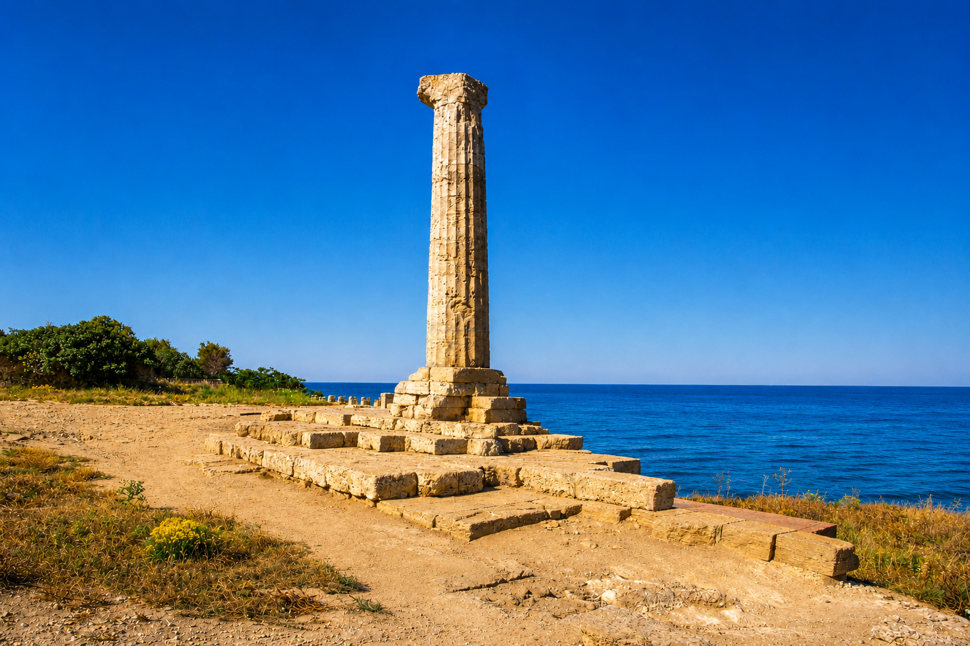
Calabria was one of the most important areas of Magna Graecia, that is, the group of colonies founded by the Greeks in southern Italy between the 8th and 7th centuries BC.
Cities such as Locri Epizefiri, Rhegion (Reggio), Kaulon, Sibari and Crotone became centers of trade, philosophy, art, and political power. The museum preserves finds from these very ancient settlements.
Visiting the MArRC means understanding how Calabria was, for centuries, one of the Mediterranean’s most influential lands.
The exhibition route: how the visit is organized
The museum is laid out on several levels following a chronological and thematic approach that guides the visitor through the evolution of Calabrian civilizations.
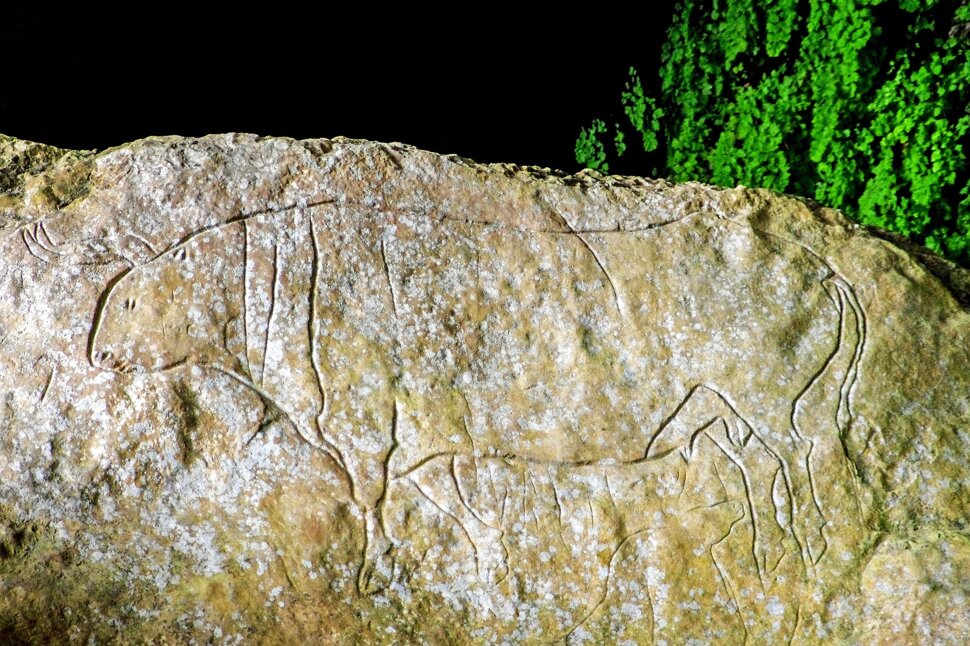
Lower level: prehistory and protohistory
The route begins with the oldest evidence of human presence in Calabria.
On display are:
- stone tools;
- Bronze Age objects;
- finds from necropolises;
- evidence of the first communities settled in the area.
This section makes it possible to see how people lived before the arrival of the Greeks.
Sections dedicated to Magna Graecia
Going up to the next levels, you enter the heart of the collection:
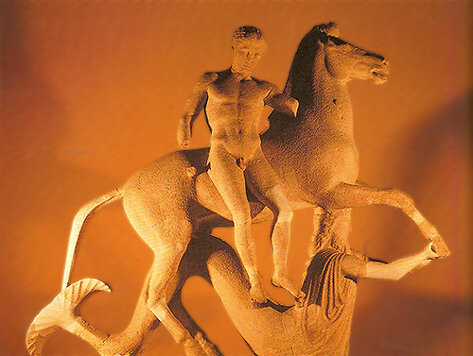
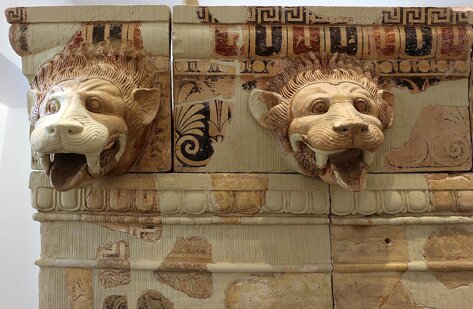
- decorated Greek pottery;
- Attic vases and ancient coins;
- statues, votive objects and inscriptions;
- armor;
- architectural elements of temples.
Especially important are the materials from Locri Epizefiri, one of the most influential centers of Magna Graecia.
Here there is room for numerous religious finds linked to the cult of Persephone and other Greek deities.
Roman era and Late Antiquity
The route continues with finds from the Roman period, including mosaics, sculptures, funerary inscriptions, household items, artifacts linked to everyday life, and much more.
These rooms tell of the shift from Greek culture to Roman rule. They tell how Rhegion, Locri Epizefiri and other once-Greek powers came under the rule of ancient Rome.
The Riace Bronzes: Calabria’s iconic treasure
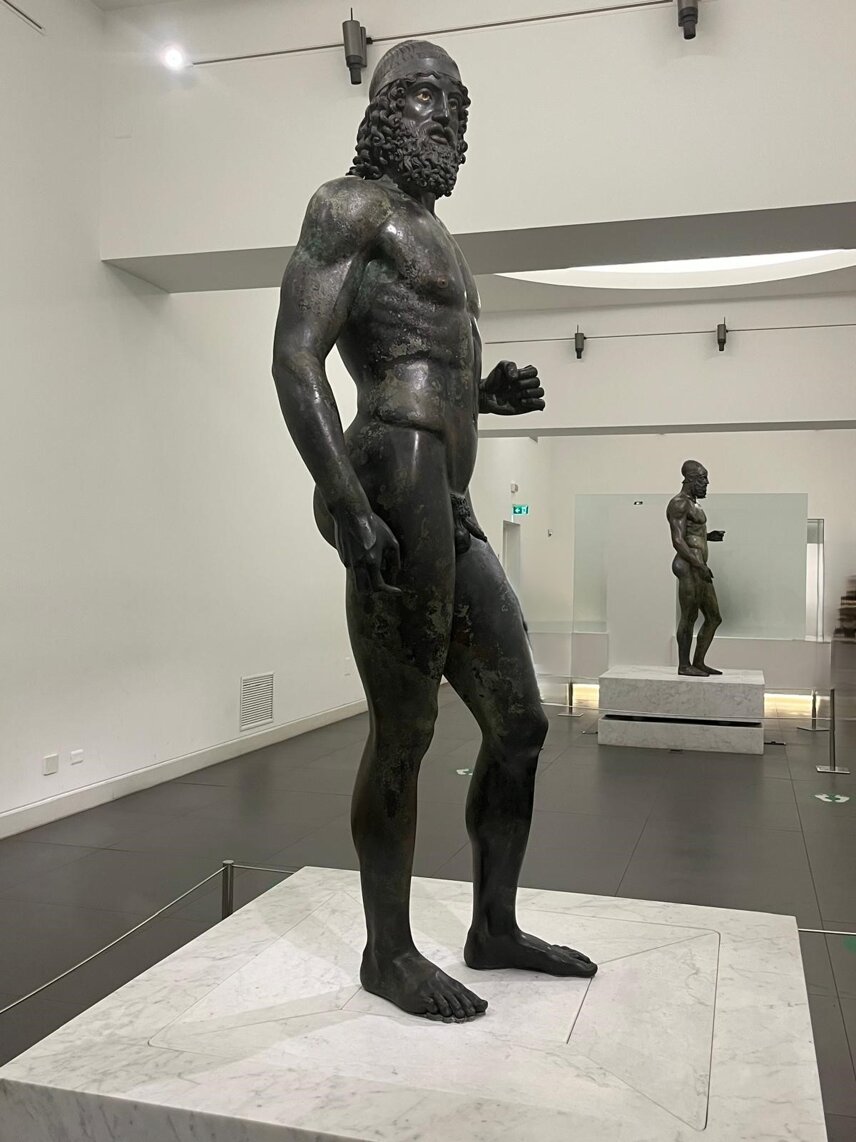
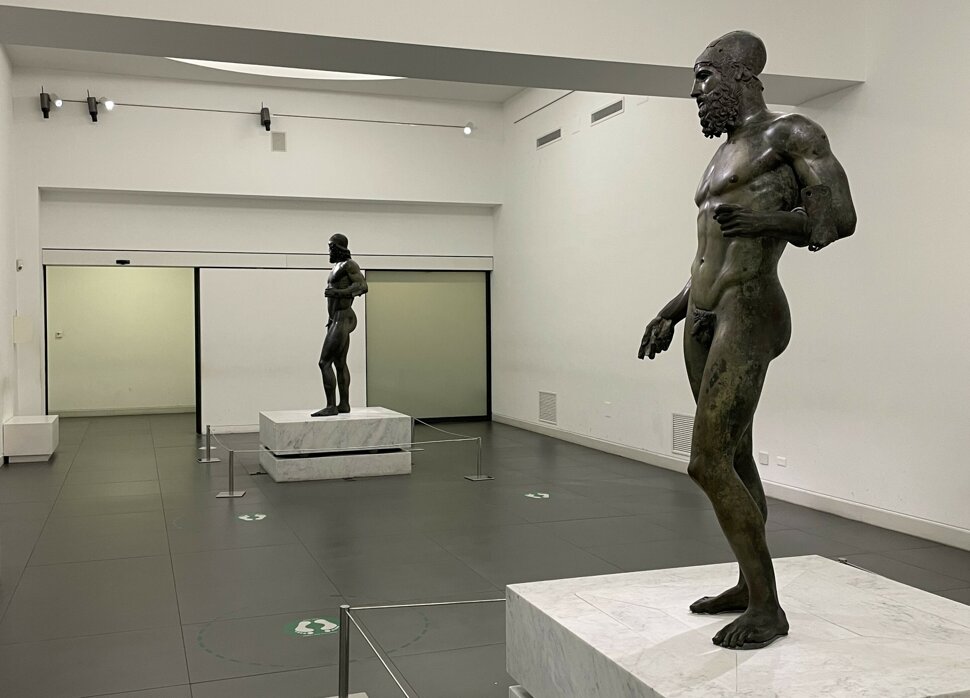
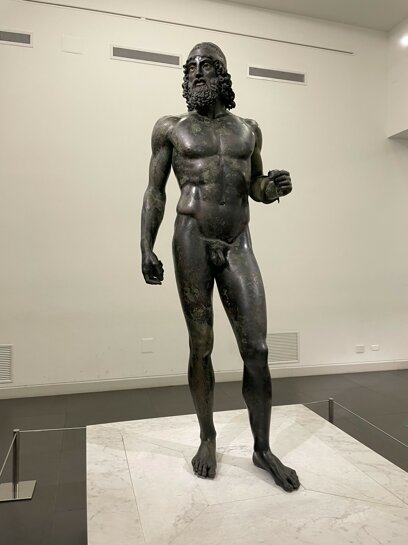
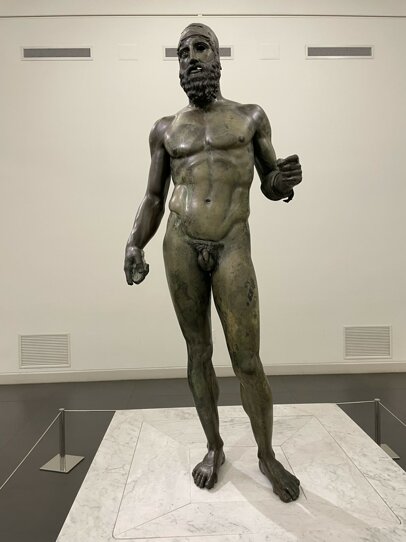
The most awaited moment of the visit is undoubtedly the encounter with the Riace Bronzes, considered among the most extraordinary bronze sculptures to have come down to us.
The two statues were found by chance on 16 August 1972 by an amateur diver, Stefano Mariottini, in the waters of Riace Marina, at about eight metres deep. The discovery immediately had international resonance.
The statues depict two life-size Greek warriors, datable between the 5th and 4th century BC, probably made by masters of classical Greek sculpture. Even today, the identity of the figures portrayed is not certain.
The most widespread hypotheses speak of mythological heroes, warriors, rulers or protagonists of epic cycles.
The Bronzes strike for their incredible technical level:
- extremely realistic musculature;
- visible veins and anatomical details;
- eyes originally made with different materials;
- copper lips;
- silver teeth.
The rendering of the human body appears surprisingly modern.
The Hall of the Bronzes and the other works
The Bronzes are kept in a special climate-controlled room, designed to ensure constant environmental conditions.
Access is through a system that limits dust and changes in humidity, confirming the enormous conservation value of the works.
The display allows the statues to be observed from every angle, highlighting details often invisible in photographs.
For many visitors, encountering the Riace bronzes is an indescribable emotion.
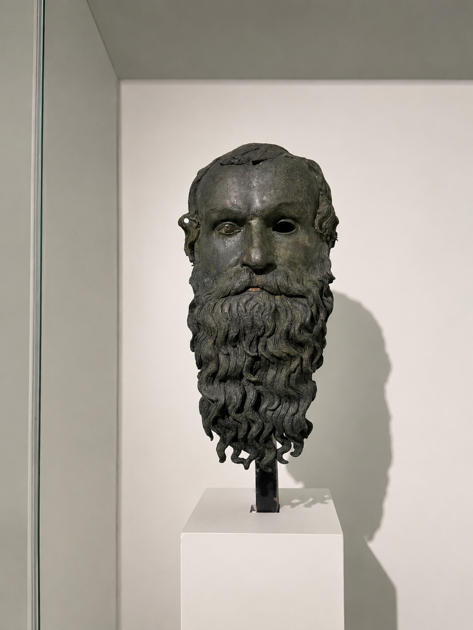
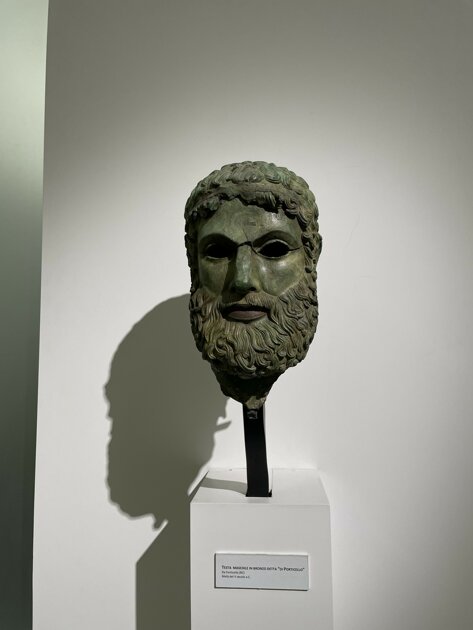
This very important room, in addition to housing the very famous Riace bronzes, also contains two other well-known finds, Head of the Philosopher and Head of Basel, what remains of two equally imposing bronze statues. In particular, it is said that the Head of the Philosopher is a depiction of the great Pythagoras.
A modern museum open to the region
Today the National Archaeological Museum is not just an exhibition space.
The MArRC hosts:
- temporary exhibitions, such as the one honoring the great Calabrian fashion designer Gianni Versace, hosted for six months between late 2025 and early 2026;
- educational activities;
- cultural events and conferences;
- initiatives for schools and universities;
- archaeological research projects.
The goal is to increasingly transform the museum into a vibrant cultural hub, able to connect past and present.
Why visit the Archaeological Museum of Reggio Calabria
Visiting the MArRC means understanding that Calabria is not only sea and scenery, but also a land that preserves some of the most important historical testimonies of the Mediterranean.
From the earliest prehistoric civilizations to the splendor of Magna Graecia, up to the thrill of standing before the Riace Bronzes, the museum offers an experience able to tell more than two thousand years of history.
It is a place where archaeology, art and identity intertwine, making the National Archaeological Museum of Reggio Calabria an unmissable stop for those who truly want to know Calabria’s most ancient soul.
Do you want to find out how to include this destination in your trip to Calabria?
Fill out the form: I will help you for free to build the right itinerary for you.
Discover the surroundings…
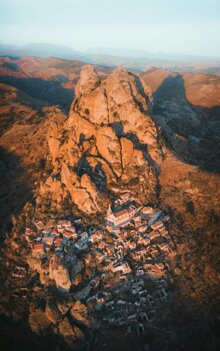
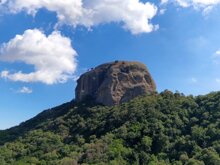
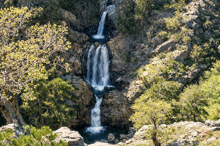
AMENDOLEA WATERFALLS
ASPROMONTE NATIONAL PARK
PENTEDATTILO
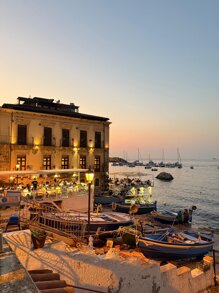
SCILLA