Fiery sunsets
Wonderful views

Let yourself be embraced by the warmth of Calabria, where every glance stirs emotion, every encounter feels like a hug, and beauty surprises you at every step.
CALABRIA
O N T H E R O A D
CALABRIA
RoadCalabria
O N T H E R O A D
Italy's most authentic region!
ROADCALABRIA
CONTACTS
EXPLORE
Ideas, itineraries and places to discover, to experience Calabria on the road
Sibari Archaeological Park: a journey into Magna Graecia among history and ancient civilizations
Follow us on Instagram
Home
Itineraries
info@roadcalabria.it
Villages
What you’re looking for
CALABRIA
O N T H E R O A D
Beaches
Did you know that
One of the most important and fascinating archaeological sites in southern Italy
Art, History, Culture
Useful Links
National Parks
Write to us
Trekking
Some of the images on RoadCalabria come from the 'Calabria Straordinaria' portal of the Calabria Region and are used under a CC-BY license
© 2026 RoadCalabria
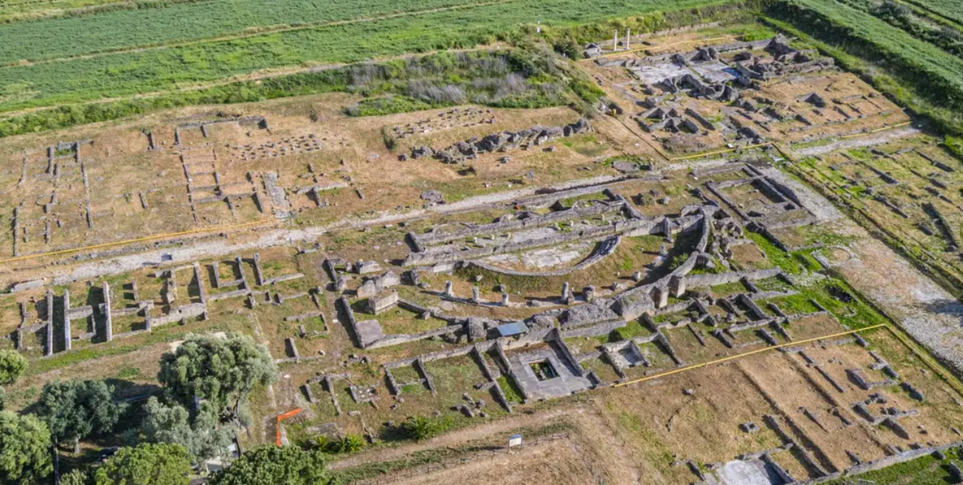
In the heart of the Plain of Sibari, where Calabria’s mountains open towards the Ionian Sea, lies one of southern Italy’s most fascinating archaeological sites: the Archaeological Park of Sibari.
Here, among the remains of ancient streets, buildings and traces of long-lost civilisations, visitors can explore over two thousand years of history and discover the remains of a city that was once synonymous with wealth, power and sophistication.
Sibari is not simply an archaeological site, but a journey through three cities and three different historical periods, revealing Calabria’s fundamental role in the Greek and Roman worlds.
Visiting this remarkable place means discovering a different side of Calabria, beyond its beaches and medieval villages: a land that played a leading role in Mediterranean history and still preserves extraordinary evidence of its ancient past.
Where the Archaeological Park of Sibari is located
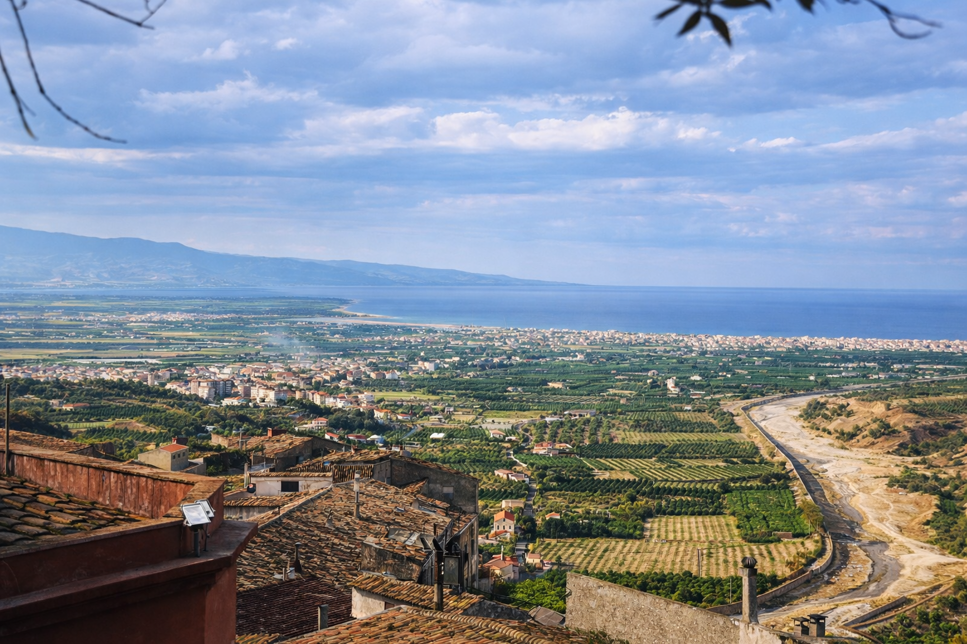
The Archaeological Park of Sibari is located in the municipality of Cassano all'Ionio, in the province of Cosenza, on the vast plain crossed by the Crati and Coscile rivers, just a short distance from Calabria’s Ionian coast.
This distinctive area is characterised by wide, flat landscapes, fertile land and scenery dominated in the distance by the mountains of Pollino and Sila.
This geographical position played a key role in the prosperity of ancient Sibari. Its proximity to the sea, abundant water resources and fertile plains encouraged the development of a city destined to become one of the most important centres of Magna Graecia.
Today, the park allows visitors to explore the traces of this ancient history, in a setting where the natural landscape and archaeological remains are constantly intertwined.
The History of Sibari: The Wealthiest City of Magna Graecia
The history of ancient Sybaris began around 720 BC, when a group of Greek settlers from Achaea founded a new settlement on the coast of southern Italy.
Thanks to its strategic location, trade connections and agricultural resources, Sibari experienced extraordinary growth, becoming one of the most powerful and prosperous cities of Magna Graecia.
Its wealth became legendary throughout the ancient world. Its inhabitants were known for their love of luxury, comfort and the pleasures of life, so much so that the term sybarite is still used today to describe someone with particularly refined tastes and a fondness for luxury.
Yet behind this reputation stood an economically thriving city, capable of controlling important trade routes and exercising considerable influence over the surrounding territory.
Its prosperity came to a dramatic end in 510 BC, when Sibari was defeated and destroyed by its rival, Croton.
Once one of the leading cities of the Greek Mediterranean, Sibari disappeared as a political centre, although its territory continued to be inhabited and transformed over the following centuries.
Three Cities Built on Top of One Another: Sybaris, Thurii and Copia
One of the most extraordinary features of the Archaeological Park of Sibari is the presence of three cities from different historical periods, built partly on top of one another.
After the destruction of ancient Sybaris, a new Greek city called Thurii was founded in 444–443 BC, as part of a project involving settlers from different regions of the Greek world.
Thurii marked a new chapter in the history of the area, with an urban layout and cultural life deeply connected to Greek traditions.
In 193 BC, during the Roman expansion into southern Italy, the Latin colony of Copia was founded on the same territory, experiencing a new period of prosperity under Roman rule.
Over the centuries, the gradual transformation of the plain into marshland contributed to the settlement’s decline, eventually leading to its complete abandonment during the Early Middle Ages.
This remarkable succession of civilisations makes Sibari a truly unique archaeological site: beneath the Roman structures lie the remains of the Greek city of Thurii and, even deeper underground, traces of ancient Sybaris.
What to see at the Archaeological Park of Sibari
Visiting the Archaeological Park of Sibari means walking among the remains of an ancient city and imagining what its streets, public buildings and everyday living spaces might once have looked like.
The visit focuses mainly on the remains from the Greek and Roman periods, offering an insight into the city’s urban organisation and its development over time.
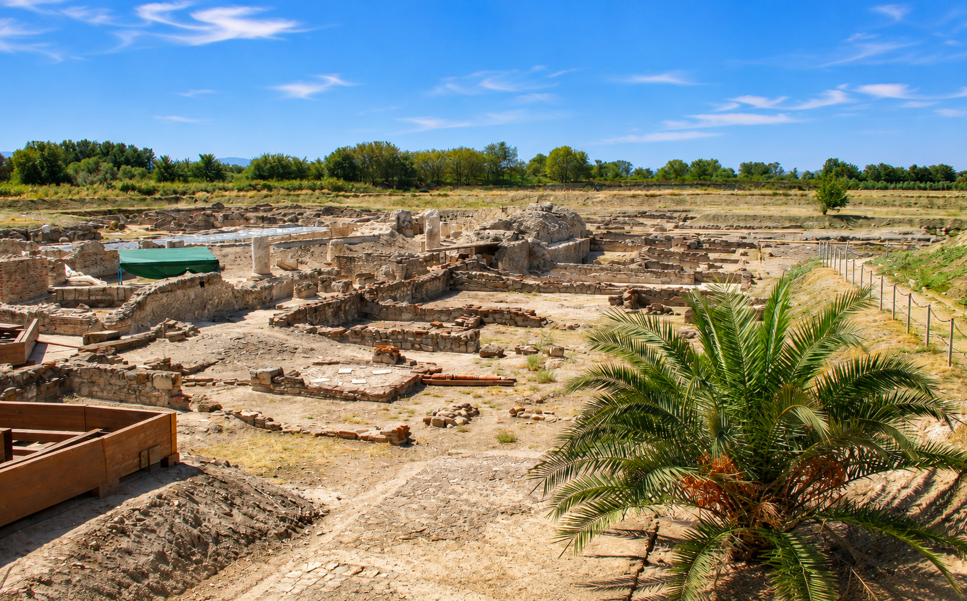
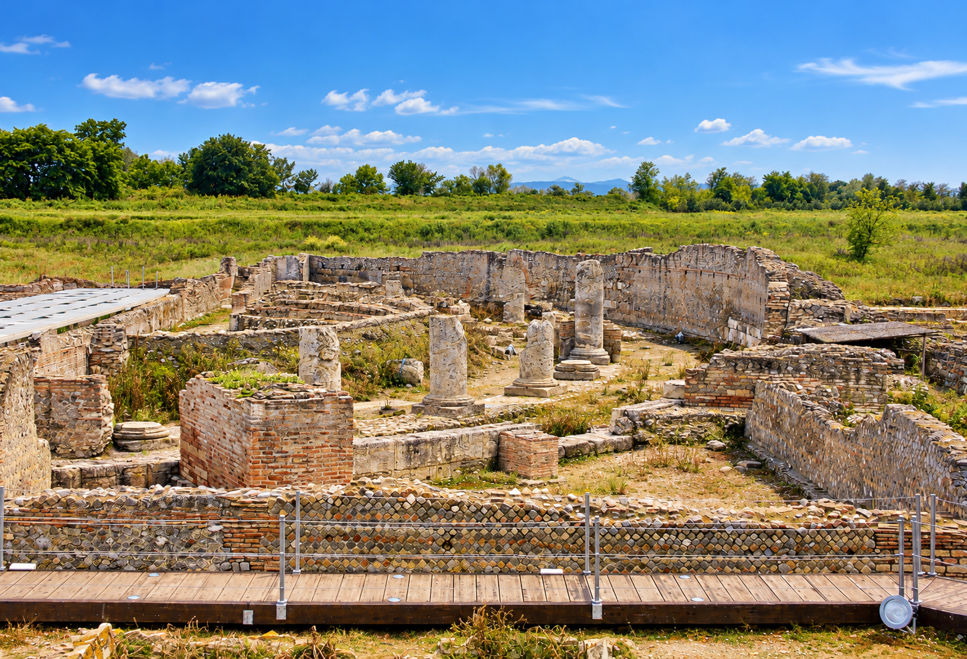
At the heart of the archaeological site lies Parco del Cavallo, one of the most important and representative sections of the Archaeological Park of Sibari. Here, excavations have uncovered significant remains of the Roman city of Copia, alongside traces of earlier Greek settlements. One of the most interesting features is the ancient street network, which reveals how the city’s urban spaces were organised.
Walking among the archaeological remains, visitors can discover sections of ancient roads, walls and buildings that reveal how the city once functioned. This area highlights one of Sibari’s most fascinating features: the opportunity to understand, through its ruins, the transformations of a place inhabited for many centuries.
One of the most impressive monuments is undoubtedly the Hemicycle Theatre, a Roman-era structure that stands among the site’s most recognisable architectural features. Its semicircular shape helps visitors imagine the importance of public spaces in ancient city life. The monument is particularly interesting because it reflects the urban development of Copia and the role of buildings dedicated to community activities. Exploring these structures offers a glimpse into a world where architecture, social organisation and public life were closely connected.
Another fascinating aspect of the visit is the remains of the Roman baths and private residences, which offer valuable insights into daily life in the Roman city. The baths were not simply places for personal hygiene, but also important spaces for meeting and socialising. The residential buildings, meanwhile, help visitors imagine the layout of ancient homes, their domestic spaces and the everyday habits of their inhabitants.
Alongside these remains, the park also preserves traces of the North Gate and a section of the ancient city walls, providing important clues about the size and layout of the settlement.
The National Archaeological Museum of the Sibaritide: Completing Your Visit
To truly understand the history of ancient Sibari, a visit to the Archaeological Park should be combined with a visit to the National Archaeological Museum of the Sibaritide.
The museum houses numerous artefacts discovered during excavations at the archaeological site and other locations in the surrounding area, offering a more complete picture of the civilisations that once inhabited this part of Calabria.
The collections cover a remarkably long period of history, from the communities that lived in the Sibaritide before the arrival of the Greeks to the Roman era and subsequent centuries.
Among the exhibits are pottery, everyday objects, funerary artefacts, coins and artworks that help reconstruct aspects of ancient society, economy and traditions.
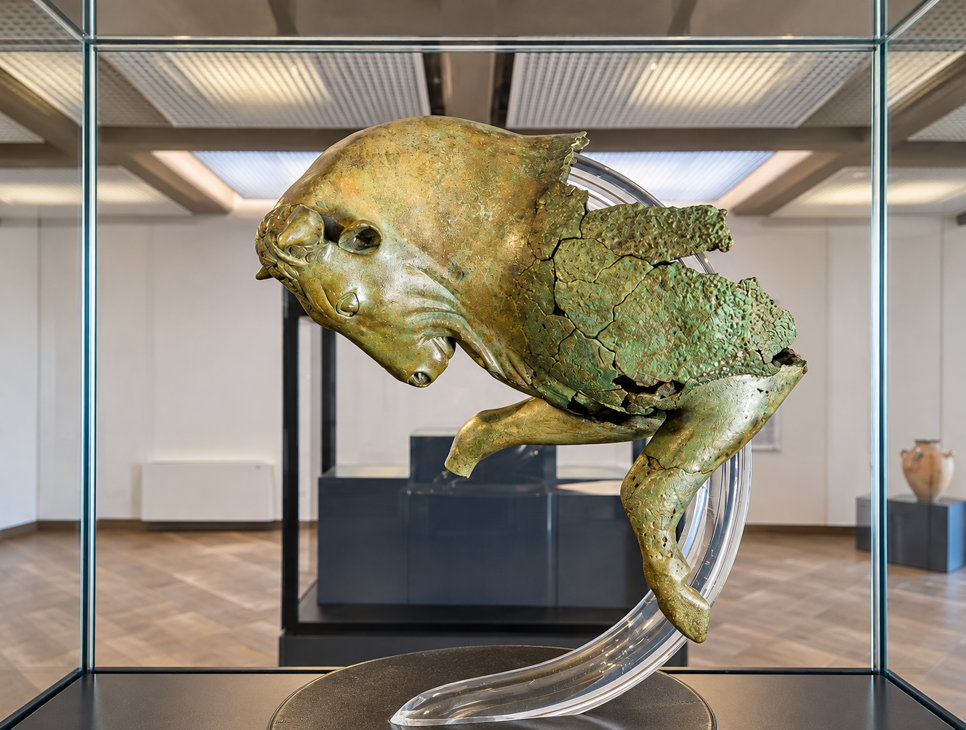
Particularly significant is the bull, the symbol of ancient Sibari, prominently featured on its coins and still used today as the museum’s emblem.
While the archaeological park allows visitors to explore the structures of ancient cities, the museum offers a closer look at the people who once lived in them.
It is precisely the combination of the archaeological site and the museum that makes the visit a complete cultural experience, revealing not only the fascinating history of Magna Graecia but also the everyday lives of its inhabitants.
What to see in the surroundings
MORANO CALABRO
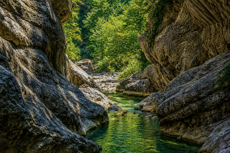
RAGANELLO GORGES
DUCAL CASTLE
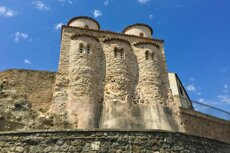
ROSSANO
The location of the Archaeological Park makes it easy to plan a day trip or a longer itinerary exploring northern Calabria, combining archaeology, historic villages, nature and the sea.
Among the most interesting destinations near Sibari is Rossano, one of Calabria’s most fascinating historic towns, known for its important Byzantine heritage. The old town preserves churches, historic palaces and picturesque streets that tell centuries of history. Among its main attractions is the famous Codex Purpureus Rossanensis, an extraordinary illuminated manuscript dating back to the 6th century.
Another unmissable stop is Corigliano Calabro, dominated by its imposing Ducal Castle. This fortress is one of Calabria’s most important historic buildings, preserving monumental rooms, decorations and traces of the noble families that shaped the history of the area.
For those wishing to discover a distinctive village, Civita is one of the most enchanting destinations in the area.
Located at the foot of the Pollino mountains, it is a traditional Arbëreshë village, where the customs, culture and heritage of the Albanian-descended community are still preserved. The village is also known for its characteristic houses and its proximity to the spectacular Raganello Gorges, one of northern Calabria’s most fascinating natural landscapes, where visitors can also discover the mysterious Devil’s Bridge.
Among the most picturesque villages in northern Calabria, Morano Calabro is also well worth a visit, with its houses clustered along the mountainside. Its historic centre preserves medieval streets, ancient churches and panoramic views that make exploring the village particularly enjoyable. Its location within the Pollino National Park also allows visitors to combine a walk through the village with scenic routes and nature excursions.
Finally, for those who love nature in its most ancient and untouched forms, the Sant’Angelo Caves are another must-see attraction. Also located in the municipality of Cassano all’Ionio, this remarkable karst cave system extends for several kilometres deep underground, offering a breathtaking experience that leaves visitors speechless.
Check out this itinerary!