Fiery sunsets
Wonderful views

Let yourself be embraced by the warmth of Calabria, where every glance stirs emotion, every encounter feels like a hug, and beauty surprises you at every step.
CALABRIA
O N T H E R O A D
CALABRIA
RoadCalabria
O N T H E R O A D
Italy's most authentic region!
ROADCALABRIA
CONTACTS
EXPLORE
Ideas, itineraries and places to discover, to experience Calabria on the road
Bovesia, a corner of Greece in the deep south of Calabria
Follow us on Instagram
Home
Itineraries
info@roadcalabria.it
Villages
What you’re looking for
CALABRIA
O N T H E R O A D
Beaches
Did you know that
Art, History, Culture
Useful Links
Millennial meeting of cultures, one of the most fascinating and rare testimonies of Mediterranean history
National Parks
Write to us
Trekking
Some of the images on RoadCalabria come from the 'Calabria Straordinaria' portal of the Calabria Region and are used under a CC-BY license
© 2026 RoadCalabria
Photo: Calabria Straordinaria - Regione Calabria
Grecanic culture: a unique heritage of Calabria
In the deep south of Calabria, among the rugged and wild landscapes of the southern Aspromonte and the evocative Ionian coasts, survives one of the most fascinating and rare testimonies of Mediterranean history: the Grecanic culture. A heritage made of language, traditions, music, and rituals that has its roots in over two thousand years of history and that still lives today, though fragile, like a precious thread linking past and present.
Calabria’s Greek area and the Bovesia territory
The so-called Greece of Calabria is mainly found in the area of the Bovesìa, a territory that includes several towns in the province of Reggio Calabria, nestled between the sea and the mountains. The most representative villages of this identity are Bova, the historical and symbolic capital of the Greeks of Calabria, and Gallicianò, a small perched village that still represents the beating heart of Grecanic culture. Alongside these centers, other municipalities such as Condofuri, Roghudi, Roccaforte del Greco, and Bagaladi also preserve linguistic and cultural traces of this ancient heritage.
Calabrian Greek: an ancient language still alive
Walking through the villages of Bovesìa, visitors discover a unique world: here, street signs and road names are bilingual, in Italian and in Greco di Calabria, a testimony to a language that, although minority, continues to live on.
The Greco di Calabria, also known as Grecanic, is a variant of ancient Greek, preserved over the centuries thanks to geographical isolation and the resilience of local communities. Today, it is spoken by only a few hundred people, and it has been included by UNESCO in the Red Book of Endangered Languages, which lists the world’s most threatened languages.
Despite its fragility, Grecanic is at the center of recovery and promotion projects, thanks to schools, cultural associations, and festivals that celebrate its beauty and uniqueness.
Bova: the heart of Grecanic culture
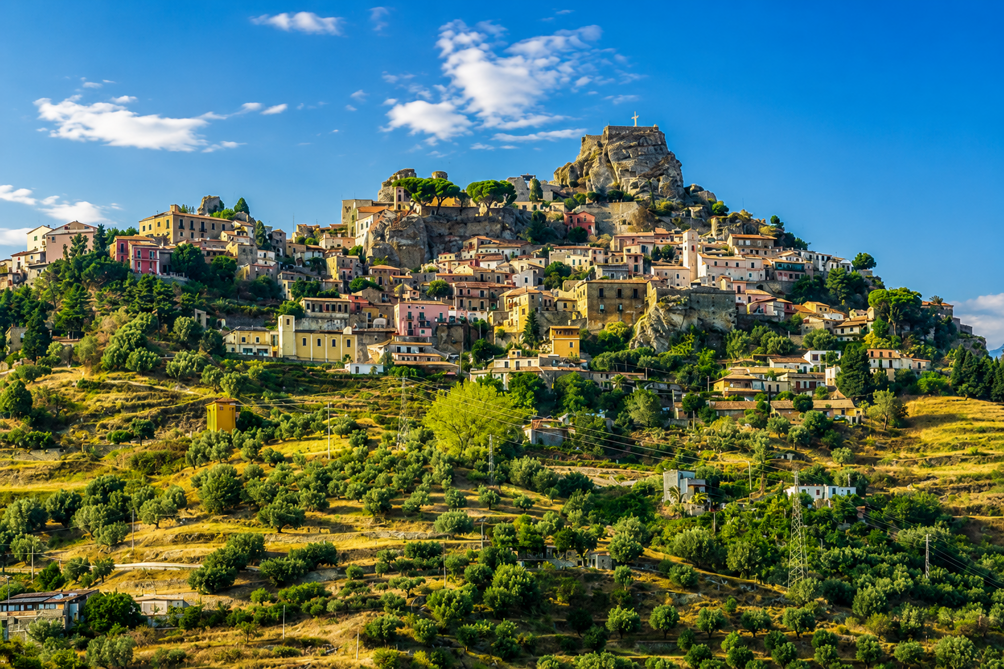
Among the most representative villages of Greek Calabria stands out Bova, known as the “eagle town”. Perched on a hill overlooking the Ionian coast of Reggio, this village preserves a timeless charm.
Its paved alleys, noble palaces and the ruins of the Norman castle tell centuries of history, but it is above all its Grecanic soul that enchants. Here every year events are held dedicated to the language and traditions, and even today it is possible to hear songs in Grecanic, ancient bagpipe sounds and stories passed down orally through generations.
Not by chance, Bova has been recognized as one of the Most Beautiful Villages in Italy and is considered the “cultural capital” of the Greeks of Calabria.
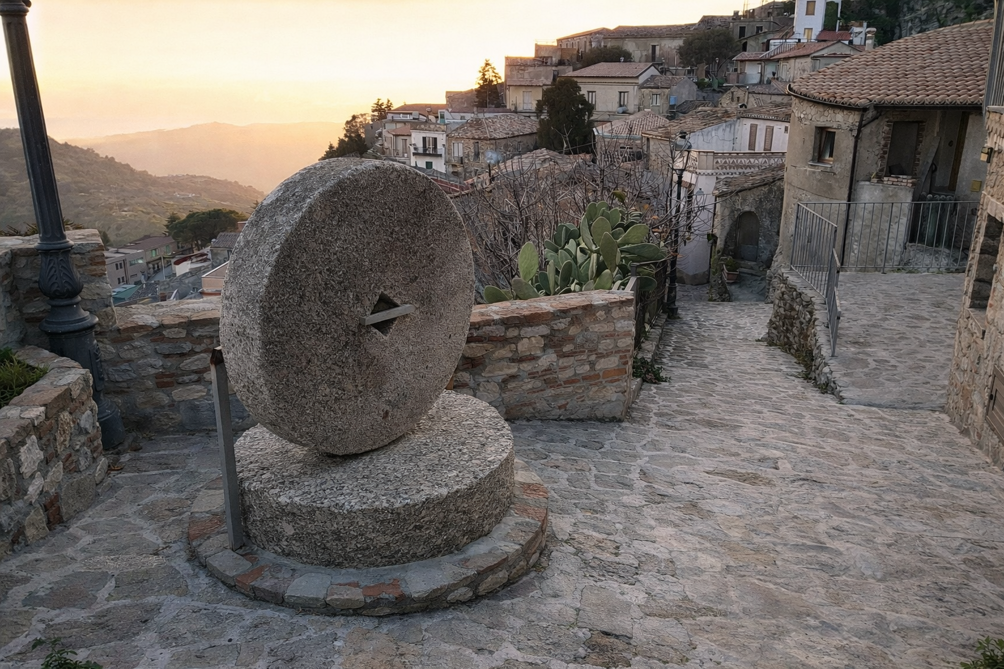
Author - Mmoyaq - wikipedia
Gallicianò: the village where the Greek language endures
Even more evocative is the experience in Gallicianò, a tiny village in the Aspromonte that seems suspended outside of time. Here, the Grecanic language has survived more strongly, and many inhabitants still speak it in everyday life.
Gallicianò is also a place of spirituality: it houses an Orthodox church of the Greek-Byzantine rite, a sign of the deep intertwining between faith and cultural identity. Walking through its narrow alleys, observing the murals that depict Greek myths, and listening to the sounds of traditional music is an authentic experience that touches the heart.
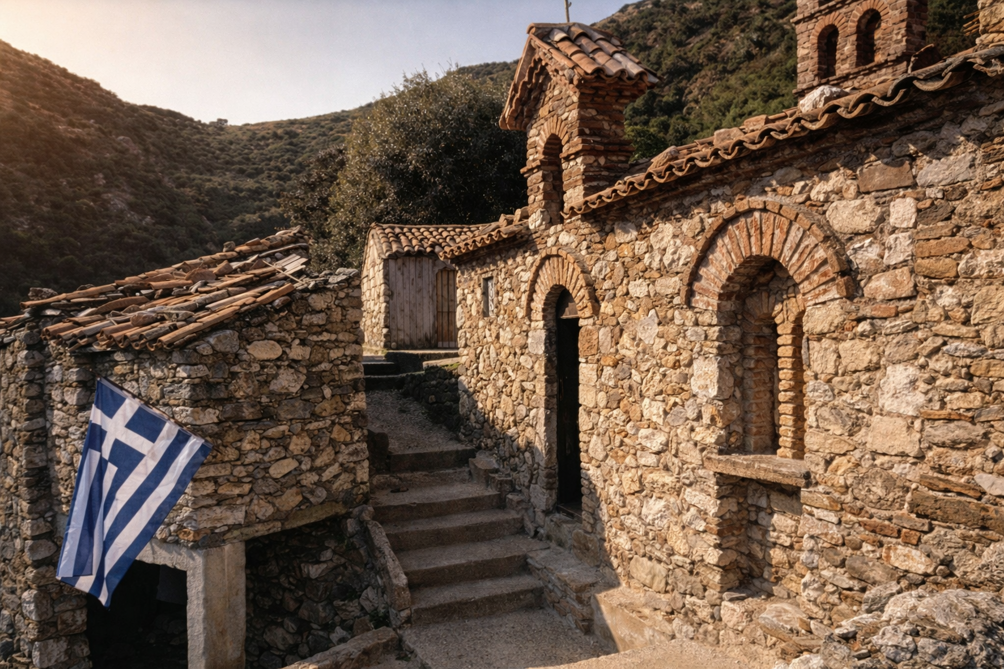
Author - EliaHoreftaris - wikimapia
Roots in Magna Graecia
The history of the Greeks of Calabria goes back to the ancient colonies of Magna Graecia, but it also intertwines with the Byzantine legacy, which left an indelible mark on these lands. Isolated from large cities and main roads, the inhabitants of these communities preserved over the centuries an intangible heritage of enormous value, made of language, folk songs, proverbs, religious festivals, and gastronomy. Today, visiting these villages means facing a true bridge between past and present, between East and West.
The Grecanic culture is not only a linguistic curiosity: it is an identity universe that also includes cuisine (with simple, genuine dishes linked to shepherding and agriculture), traditional music (from the Calabrian lyre to popular ballads), and ancient rituals often blending Christian and pagan elements.
A journey through memory, resistance and beauty
An additional element of charm is that these villages are crossed by the Englishman’s Path, a naturalistic and cultural itinerary that retraces the footsteps of the English traveler and writer Edward Lear, who in the 19th century described Calabria and its Grecanic villages with wonder and poetry. Walking along this path means reliving the emotions of his journey and discovering authentic Calabria, among breathtaking landscapes and communities that are guardians of a unique identity.
Visiting the Greece of Calabria therefore means immersing yourself in a world of memory, resilience, and beauty, a world that, despite its fragility, continues to tell the most authentic soul of the region. A journey to Bova, Gallicianò, and the other villages of Bovesìa is not only a tourist itinerary, but also a cultural and spiritual experience that leaves a lasting impression in the heart of anyone who lives it.
Do you want to find out how to include this destination in your trip to Calabria?
Fill out the form: I will help you for free to build the right itinerary for you.