Fiery sunsets
Wonderful views

Let yourself be embraced by the warmth of Calabria, where every glance stirs emotion, every encounter feels like a hug, and beauty surprises you at every step.
CALABRIA
O N T H E R O A D
CALABRIA
RoadCalabria
O N T H E R O A D
Italy's most authentic region!
ROADCALABRIA
CONTACTS
EXPLORE
Ideas, itineraries and places to discover, to experience Calabria on the road
Follow us on Instagram
Home
Itineraries
info@roadcalabria.it
Villages
What you’re looking for
CALABRIA
O N T H E R O A D
Beaches
Did you know that
Art, History, Culture
Useful Links
Itinerary Village Hopping
National Parks
Write to us
Trekking
Villages - 7 Days
Some of the images on RoadCalabria come from the 'Calabria Straordinaria' portal of the Calabria Region and are used under a CC-BY license
© 2026 RoadCalabria
The itinerary for those who love the slow rhythms of villages, traditions, views, immersing themselves in the local culture
This itinerary is designed for travellers who love the slow pace of historic villages, local traditions, narrow lanes, picturesque views and the atmosphere of small historic towns. From northern to southern Calabria, the journey explores some of the region’s most distinctive villages, guardians of centuries of history, art, culture and ancient culinary traditions.
The journey begins in Morano Calabro, a charming village at the foot of the Pollino mountains, before continuing to Civita, the heart of Arbëreshë culture and home to the famous Devil’s Bridge. The second day is dedicated to Rocca Imperiale and Oriolo, two medieval villages on the Ionian side of Calabria, dominated by their impressive castles. The itinerary then continues through the Esaro Valley, between the Pollino and Sila mountains, visiting Altomonte, Lungro and San Donato di Ninea. The journey continues through the historic Crotonese area with Santa Severina and Caccuri, before heading south along the Ionian coast to Gerace, one of Calabria’s most fascinating villages, with the option of also visiting Caulonia and Casignana. The route then enters the Serre Regional Park, home to Stilo, famous for the Cattolica, and Serra San Bruno, renowned for its historic Carthusian monastery.
The final day takes you to the far south of Calabria, into the heart of the Greek-speaking area, where you can discover Bova, the cultural capital of Bovesia, and Pentedattilo, a spectacular ghost village nestled beneath its distinctive hand-shaped mountain.
Day 1 - Morano Calabro, Civita
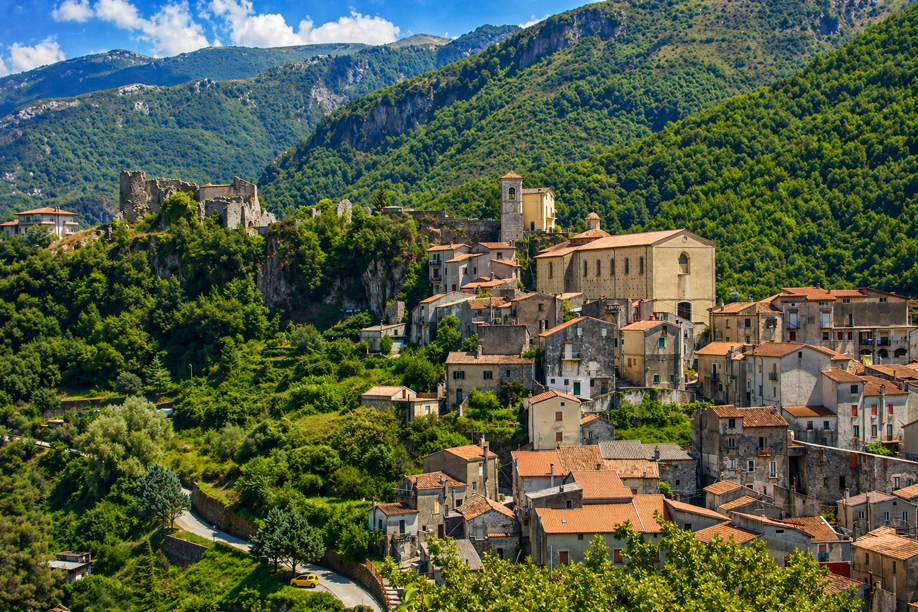
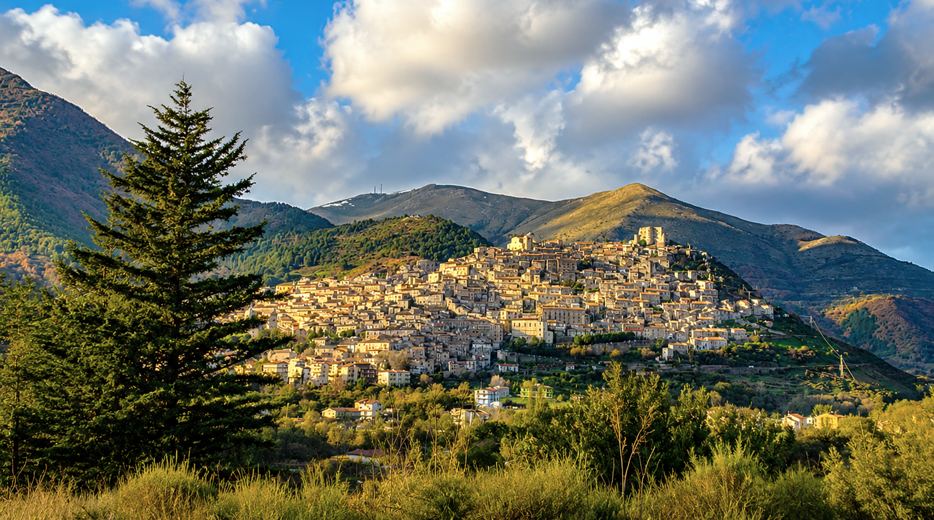
Perched at the foot of the Pollino, Morano Calabro is one of the most fascinating villages in Calabria, often described as a “living postcard” for its picturesque profile of houses climbing up to the ruins of the Norman-Swabian castle. Walking through its stone alleys and passing through the historic gates, you breathe an authentic atmosphere, enriched by churches and convents that house precious works of art, such as the complex of San Bernardino da Siena—a jewel of late fifteenth-century monastic architecture—and the collegiate church of Santa Maria Maddalena, which contains the splendid Sanseverino Polyptych by Bartolomeo Vivarini, dating back to 1477.
From the top, you can enjoy a spectacular view of the mountains of the Pollino National Park, ideal for nature and hiking lovers, and you can also appreciate the castle and the beautiful Church of SS Pietro e Paolo. Listed among the “Most Beautiful Villages in Italy”, Morano combines history, spirituality, and breathtaking landscapes in an experience that remains etched in the hearts of visitors.
Also in the heart of the Pollino National Park, a few kilometers from Morano Calabro, is Civita, a unique village that tells a story of hospitality and tradition. Founded in the 15th century by Albanians fleeing the Ottoman Empire, it still preserves the language, costumes, and Byzantine rites of the Arbëreshë community, making it a place with a special soul. Walking through the alleys, you discover the typical “kodra houses” with their curious anthropomorphic chimneys, while nature offers emotions with the famous Devil’s Bridge suspended over the Raganello gorges. Civita is a journey through culture, authenticity, and breathtaking nature: a village that intertwines Calabria and Albania in an extraordinary identity, still alive today.
Your first stop is here:
Day 2 - Rocca Imperiale, Oriolo
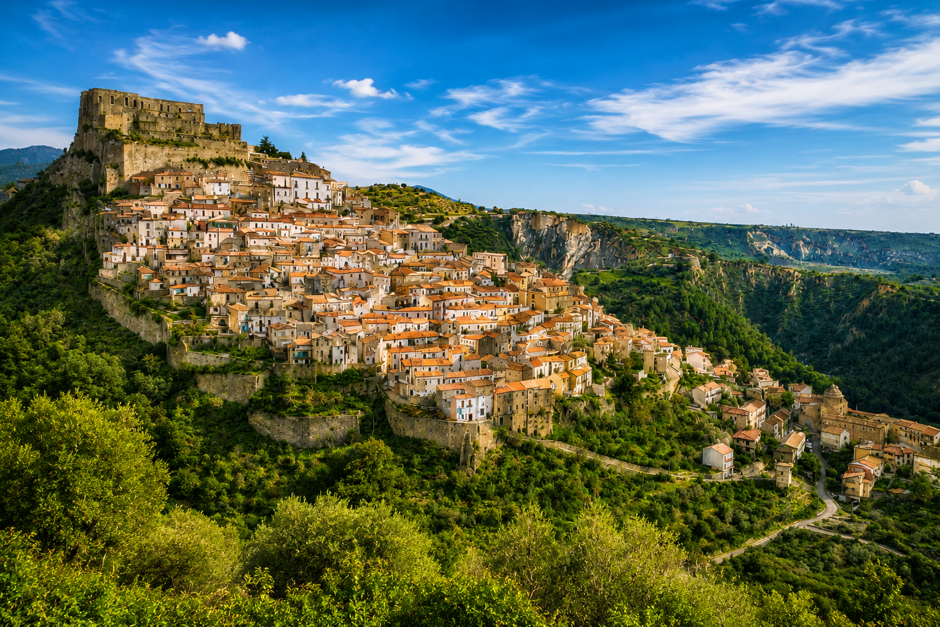
Nestled between sea and mountains, Rocca Imperiale enchants with its historic center dominated by the majestic Swabian Castle, commissioned by Frederick II and still today a symbol of the village. The stone houses climb up the hill to the fortress, offering highly evocative views. Rocca Imperiale is also famous as the “city of poetry,” for the verses engraved on the walls of the houses and for the production of exquisite IGP lemons. In addition, within the village, you can visit the beautiful Franciscan friars’ monastery, built shortly after 1500, which today also includes several museums.
According to a fascinating tradition, it was this very village that inspired Dante in his description of Purgatory in the Divine Comedy, thanks to its scenic structure reminiscent of a sacred mountain rising toward the sky. Visiting Rocca Imperiale means immersing yourself in a place that combines history, culture, and Mediterranean scents.
Among the most picturesque villages in Calabria, Oriolo stands on a rocky spur with its unmistakable profile dominated by the Medieval Castle, once a defensive stronghold and today a place of culture and exciting visits. The stone alleys weave among churches, noble palaces, and views that tell centuries of history, while the authentic atmosphere of the village offers a journey back in time. Included among the “Most Beautiful Villages in Italy”, Oriolo is a gem that combines medieval charm, living traditions, and panoramas that open onto the valley of the Ferro river, offering visitors an unforgettable experience.
Your second stop is here:
Day 3 - Altomonte, Lungro, San Donato di Ninea
Nestled in the Esaro valley and at the foot of the Pollino Park, Altomonte is a village that enchants with its Renaissance and Baroque atmosphere. The stone streets lead to historic churches and palaces, among which stand out the Church of Santa Maria della Consolazione, a Gothic-Angevin masterpiece, and the Franciscan Convent, which houses precious works of sacred art. From the Norman Castle, now a cultural center, you can enjoy a breathtaking view of the valley below. Strolling through the village, you can admire picturesque glimpses and unique architectural details, while the artisan shops and culinary traditions tell the living story of the area. Altomonte is an ideal destination for those seeking culture, art, and nature in Calabria, among alleys that preserve centuries of history and postcard views.
Just 10 minutes from Altomonte, you can also visit the archaeological park of the Roman Villa of Larderia, overlooking Lake Esaro.
A few kilometers from Altomonte, Lungro is one of the most significant centers of the Arbëreshë community in Calabria. Founded in the 15th century by Albanian refugees, it has preserved the cultural, linguistic, and religious traditions of its people intact. The historic center is laid out according to the typical eastern structure of the gjitonia, with houses arranged in a circle around two central squares. A spiritual reference point for the entire Italo-Albanian community, Lungro is home to the Eparchy of Lungro, which preserves the Greek-Byzantine rite and solemnly celebrates the Arbëreshë Holy Week (Java e Madhe), Carnival (Karnivalli), and Easter (Pashkëvet). Among the places to visit, the Cathedral of San Nicola di Mira stands out, with its Byzantine mosaics, and the Historical Museum of the Rock Salt Mine, which tells the story of one of the oldest and most important mines in Europe, used by the Greek colonists of Sybaris and Thurii, by the Romans and the Normans, who created a flourishing trade in rock salt transported on muleback; the church of Santa Maria di Costantinopoli, and the Church of Sant’Elia. Walking through its streets, you can breathe an authentic atmosphere, where the Arbëreshë language, traditional costumes, and typical cuisine tell a story handed down for centuries.
Located in the heart of the Pollino National Park, at about 720 meters above sea level, San Donato di Ninea is a village that enchants with its authenticity and its millenary history. The town is built on a sharp rocky spur, with stone houses climbing up the slope, offering breathtaking views of the surrounding valleys. Don’t miss a visit to the Church of the Assunta, located in the highest part of the town, the Church of the Trinity, and the chapel of San Donato. The village offers an authentic experience, where history, nature, and traditions intertwine, making it an ideal destination for those seeking tranquility and unspoiled beauty.
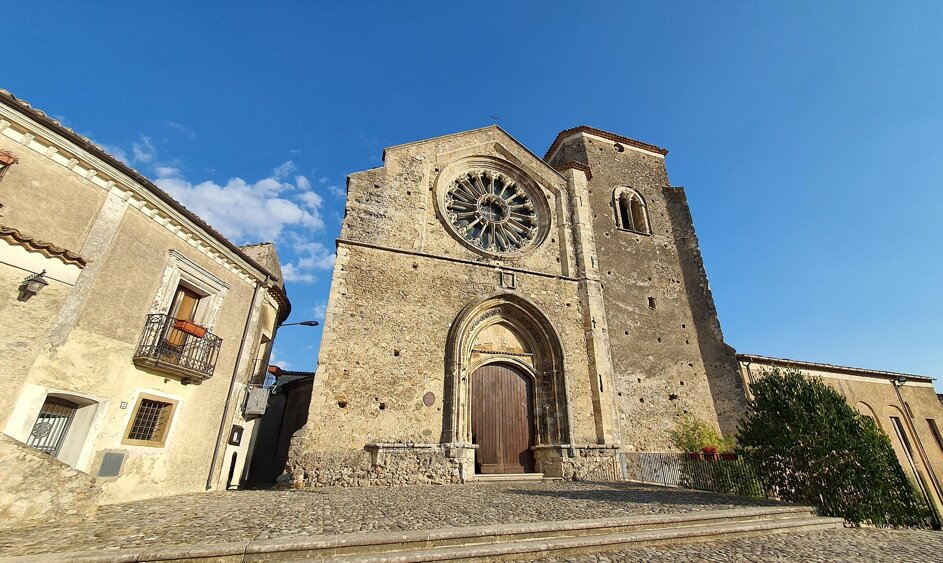
Your third stop is here:
Day 4 - Santa Severina, Caccuri
Overlooking the Neto Valley, Santa Severina is one of the most charming medieval villages in Calabria, renowned for its imposing Norman Castle, a perfectly preserved fortress that today hosts exhibitions and cultural events. Its construction is attributed to the Norman Robert Guiscard around the 11th century, from whom it takes its name. However, it is certain that the castle was built over a pre-existing structure: scholars believe the site corresponds to the acropolis of ancient Siberene. Excavations carried out during restoration works have uncovered materials dating back to the Greek era, as well as the remains of a Byzantine church and a necropolis from the same period.
The village of Santa Severina unfolds along cobbled alleys and noble palaces, offering picturesque views and breathtaking panoramas of the valley below. Among its treasures, the Byzantine Baptistery stands out, one of the oldest in Calabria, which has preserved its original plan: a cruciform layout, a cylindrical body, an octagonal drum supporting the dome, and a cylindrical cupolino. This architectural gem recalls central-plan buildings such as the Mausoleum of Santa Costanza in Rome.
Also worth visiting are the Co-Cathedral of Saint Anastasia and the smaller churches scattered throughout the historic center. Santa Severina is a place where history, art, and culture intertwine, offering visitors an authentic experience among timeless monuments and atmospheres.
Caccuri, located in the province of Crotone, is a medieval village that captivates with its history and architectural heritage. The Ducal Castle, dating back to the 15th century, rises majestically above the town and offers sweeping views of the Neto Valley. Inside, the Palatine Chapel preserves frescoes and artworks that bear witness to the noble past of the Cavalcanti family.
At the foot of the castle lies the Villa Comunale, a park featuring unusual limestone rock formations that add a unique touch to the landscape. The historic center is dominated by the Mother Church of Santa Maria delle Grazie, an impressive three-naved structure with Renaissance and Baroque elements, housing valuable works of art.
In the surrounding area, the Monumental Complex of Santa Maria del Soccorso Abbey, founded in 1518, includes the former Dominican convent, the namesake church, and the chapel of the Congregation of the Holy Rosary, offering a fascinating journey into the religious past of the village. Caccuri is also renowned for its cultural traditions, hosting events such as the Caccuri Literary Prize, which celebrates Calabrian literature.
The village is an ideal destination for those wishing to immerse themselves in Calabria’s history, art, and culture.
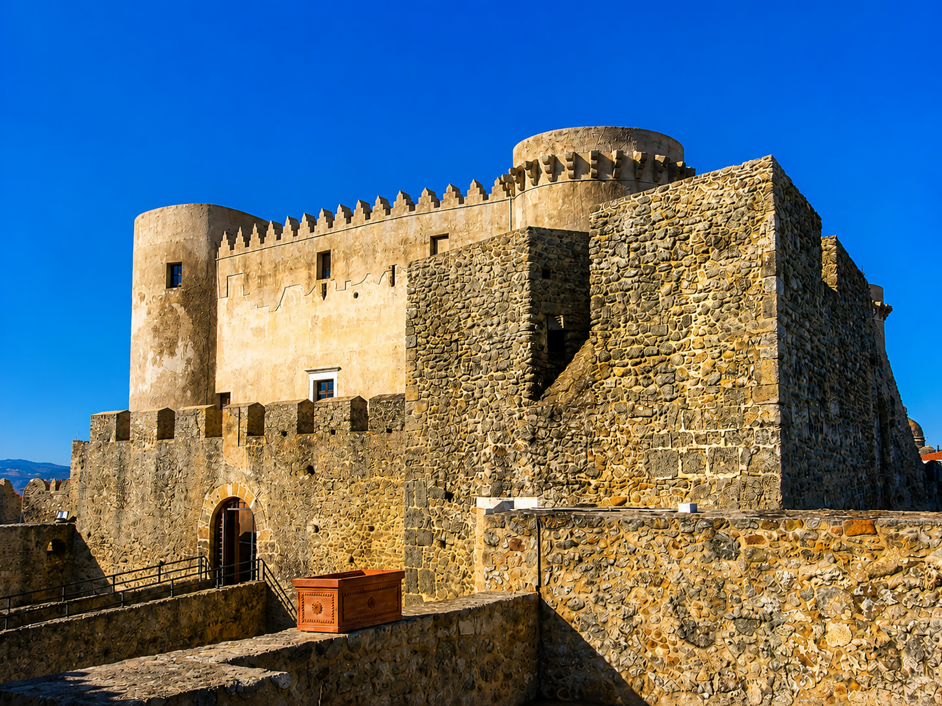
Your fourth stop is here:
Day 5 - Gerace, Casignana, Caulonia
Perched on a hill overlooking the Ionian coast, Gerace is one of Calabria’s most fascinating medieval villages, with origins dating back to the Byzantine and Norman periods. Once known as the “city of a hundred churches”, it still preserves numerous religious buildings that bear witness to its rich spiritual history.
The historic center, enclosed by ancient walls, retains the five gates that once protected the city. Wandering through its cobbled alleys and historic palaces, visitors encounter Romanesque and medieval churches, among which the majestic Cathedral of Santa Maria Assunta stands out, a masterpiece of Norman architecture with refined Gothic details and precious frescoes.
Gerace is also a candidate for UNESCO World Heritage status, thanks to the integrity of its urban fabric and the historical-artistic value of its monuments. Must-see sites include the Church of San Francesco, the Convent of the Minims, and the Norman Castle, which dominates the village and offers spectacular views of the coast and hinterland. Every corner tells centuries of history, art, and devotion, while the small squares and artisan workshops preserve the authentic atmosphere of a living medieval town.
Located on Calabria’s Ionian coast, Casignana preserves a charming old village with narrow streets, stone houses, and panoramic views of the sea and surrounding hills. The town is also famous for the Roman Villa of Casignana, an important archaeological site with exquisite mosaics and remarkable evidence of Roman life in Calabria. Walking through the old village and visiting the villa, one breathes an atmosphere suspended between ancient history and local tradition, making Casignana an ideal destination for lovers of archaeology and culture.
Overlooking Calabria’s Ionian coast, Caulonia is a village rich in history and traditions, famous for its medieval historic center, known as Caulonia Superiore, characterized by cobbled alleys, ancient churches, and noble palaces. Among the highlights are the Mother Church, with Baroque architectural elements, and the Church of Santa Maria dei Minnini together with the Church of the Holy Rosary.
The village preserves traces of both its ancient and modern history, from artisan traditions to cultural events such as the Kaulonia Tarantella Festival, which celebrates Calabrian music and folklore.
Strolling through the streets of Caulonia, visitors can enjoy an authentic atmosphere, between art, history, and breathtaking views of the Ionian coast, making it an unmissable destination in Calabria.
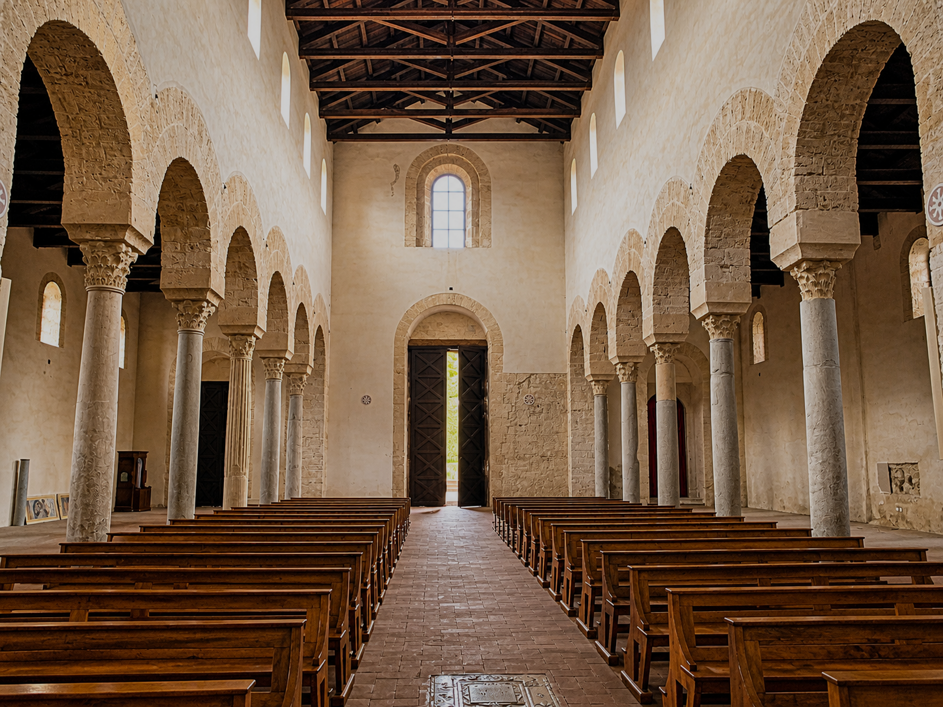
Your fifth stop is here:
Day 6 - Stilo, Serra San Bruno
Perched on the slopes of Mount Consolino, Stilo is a medieval village that fascinates with its thousand-year history and timeless atmosphere. The town is renowned for the extraordinary Cattolica of Stilo, an 11th-century Byzantine church with small domes and refined decorations, a symbol of Calabria’s Greek heritage and today a candidate for UNESCO World Heritage status. Also not to be missed is the Cathedral of Stilo, which preserves precious works of art, including the celebrated Saint George and the Dragon by Mattia Preti and the Madonna of All Saints by Battistello Caracciolo, both important examples of Neapolitan Baroque in Calabria. Other highlights include the Church of San Domenico and the Church of San Giovanni Theristis. Walking through the historic center reveals cobbled alleys, picturesque squares, and noble palaces, leading to panoramic viewpoints stretching from the valley to the Ionian Sea. Just a few kilometers away, in nearby Bivongi, stands the evocative Orthodox Monastery of San Giovanni Theristis, surrounded by nature and still today a place of spirituality and pilgrimage. Stilo is a village where art, faith, and tradition blend to offer visitors an unforgettable experience amid history and breathtaking landscapes.
Nestled in the green forests of the Serre mountains, Serra San Bruno enchants visitors with its balance of art, spirituality, and unspoiled nature. The historic center is home to three beautiful churches: the Church of the Addolorata, with its elegant façade and rich Baroque interior; the Church of San Biagio, one of the oldest and closely tied to local traditions; and the striking Church of Maria SS. Assunta in Cielo, which dominates one of the main squares with its grandeur. The absolute symbol of the village is the Charterhouse of Serra San Bruno, founded by Bruno of Cologne in the 11th century – the second Carthusian monastery ever built, after the one in Grenoble – still today a place of silence, meditation, and prayer that makes the atmosphere of the town unique. Around the Charterhouse, woodland trails lead to the Hermitage of San Bruno and to enchanting small lakes, ideal for those seeking peace and contact with nature. Strolling through the village’s alleys, one breathes a rare harmony, where sacred art, spirituality, and natural landscapes blend into an unforgettable experience.
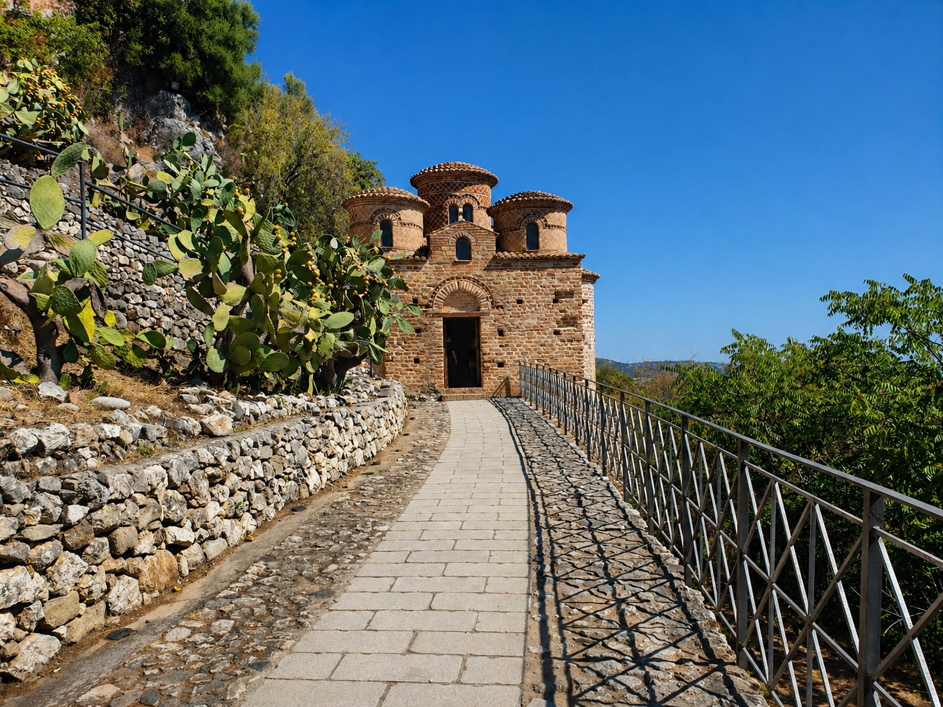
Your sixth stop is here:
Day 7 - Bova, Pentidattilo
Considered the “heart” of the Grecanic Area, Bova is one of the most fascinating villages in the province of Reggio Calabria, where the culture and language of the Greeks of Calabria can still be felt. Perched on a promontory with a spectacular view of the Ionian Sea and the Aspromonte mountains, the village preserves a historic center of rare beauty, with stone alleys, charming arches, and noble palaces. Among the highlights are the Cathedral of Santa Maria dell’Isodia, which houses artworks and Byzantine relics, and the ruins of the Norman Castle, overlooking the town from above. Bova is also home to the Museum of the Greco-Calabrian Language, a testimony to a tradition that has survived through the centuries. Not far from the village lies the Archeoderi Archaeological Park in Bova Marina, where the remains of an ancient synagogue and other important historical traces can be admired. Walking through the narrow streets, between churches, squares, and panoramic views, one feels the spirit of a place that unites culture, identity, and nature. It is no coincidence that Bova has been recognized as one of the Most Beautiful Villages in Italy, an authentic example of Calabria both ancient and alive.
Nestled among the rocks of the Aspromonte mountains, Pentedattilo takes its name from the peculiar shape of the mountain on which it rises, resembling a hand with five fingers. Abandoned for a long time due to landslides and earthquakes, today it has come back to life thanks to cultural projects, exhibitions, and events that enhance its unique charm. Strolling among the stone houses and silent alleys, visitors breathe in an atmosphere suspended in time, steeped in legends and popular tales. From the village, there are breathtaking views of the Ionian coast and the Aspromonte hinterland. Its history is also tied to the famous and tragic Alberti massacre, a 16th-century event that still fuels the myth of this ghost village. Today, Pentedattilo is a place of art, memory, and enchantment, capable of offering visitors a deeply moving experience.
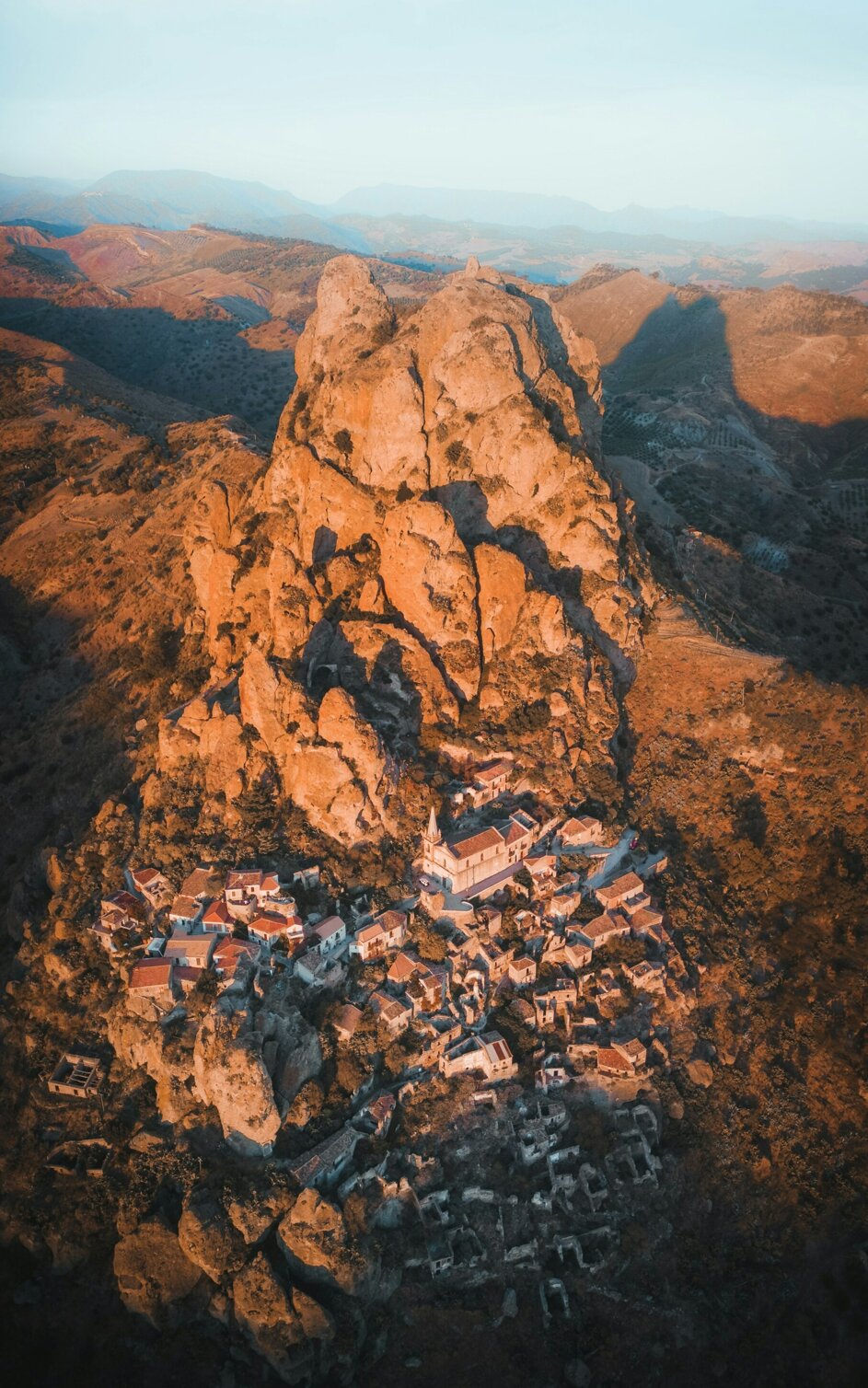
Your seventh stop is here:
Look here too…
NATURAL PARKS AND PROTECTED AREAS
PARKS CYCLE PATH
VILLAGES
TREKKING
Are you interested in this itinerary but would like to customize it?
Fill out the form: I will help you for free to define the perfect itinerary for you!