Fiery sunsets
Wonderful views

Let yourself be embraced by the warmth of Calabria, where every glance stirs emotion, every encounter feels like a hug, and beauty surprises you at every step.
CALABRIA
O N T H E R O A D
CALABRIA
RoadCalabria
O N T H E R O A D
Italy's most authentic region!
ROADCALABRIA
CONTACTS
EXPLORE
Ideas, itineraries and places to discover, to experience Calabria on the road
Crotone, the city of Pythagoras between Magna Graecia and the Ionian Sea
Follow us on Instagram
Home
Itineraries
info@roadcalabria.it
Villages
What you’re looking for
CALABRIA
O N T H E R O A D
Beaches
Did you know that
An ancient city, preserving an extraordinary historical, archaeological and cultural heritage
Art, History, Culture
Useful Links
National Parks
Write to us
Trekking
Some of the images on RoadCalabria come from the 'Calabria Straordinaria' portal of the Calabria Region and are used under a CC-BY license
© 2026 RoadCalabria
Photo by: Calabria Straordinaria
Overlooking the Ionian Sea, in the heart of Calabria’s eastern coast, Crotone is one of the oldest and most fascinating cities in Southern Italy. Founded by the Greeks in the 8th century BC under the name Kroton, it was one of the most important centers of Magna Graecia and home of the famous philosopher Pythagoras.
Even today Crotone preserves an extraordinary historical, archaeological and cultural heritage, where medieval castles, museums, archaeological areas and scenic seafronts blend with the authentic charm of Ionian Calabria. Among historic alleys, ancient fortresses and golden beaches, the city offers a unique journey between past and present, ideal for those who love history, the sea and Mediterranean culture
Where Crotone is located
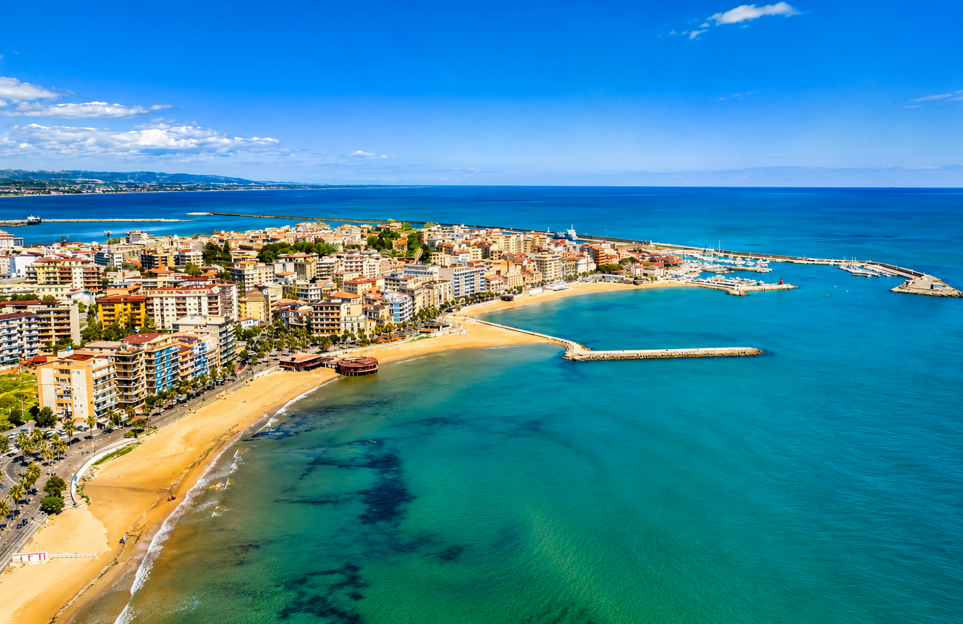
Crotone is located on the Ionian coast of Calabria, between the crystal-clear sea of the Capo Rizzuto Marine Protected Area and the hills of the Crotone hinterland. The city is the main center of the province and represents one of the most important gateways to the Calabrian Ionian coast.
Thanks to its strategic position, Crotone is an ideal destination both for a seaside holiday and for a cultural itinerary discovering Magna Graecia. The mild climate during much of the year, the wide beaches, and the rich archaeological heritage make it an increasingly appreciated destination among travelers.
The origins of the city and Magna Graecia
Founded by the Achaeans around 710 BC, Kroton quickly became one of the most powerful cities of Magna Graecia. Here Pythagoras founded his famous philosophical and mathematical school, turning the city into a cultural and scientific center of extraordinary importance.
In the Greek period Crotone was also known for its athletes and for medicine: the physician Alcmaeon and the legendary athlete Milo of Croton helped make the city famous throughout the ancient Mediterranean. Even today the Magna Graecia past is visible in the museums and archaeological sites found in the area, especially in the Capo Colonna area, one of the symbolic places of ancient Calabria.
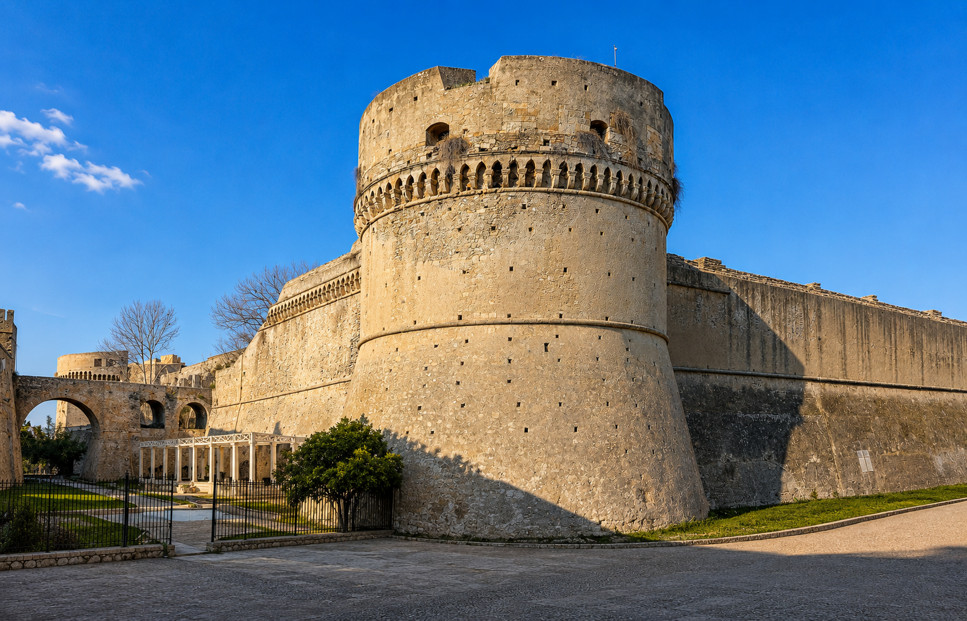
The Castle of Charles V
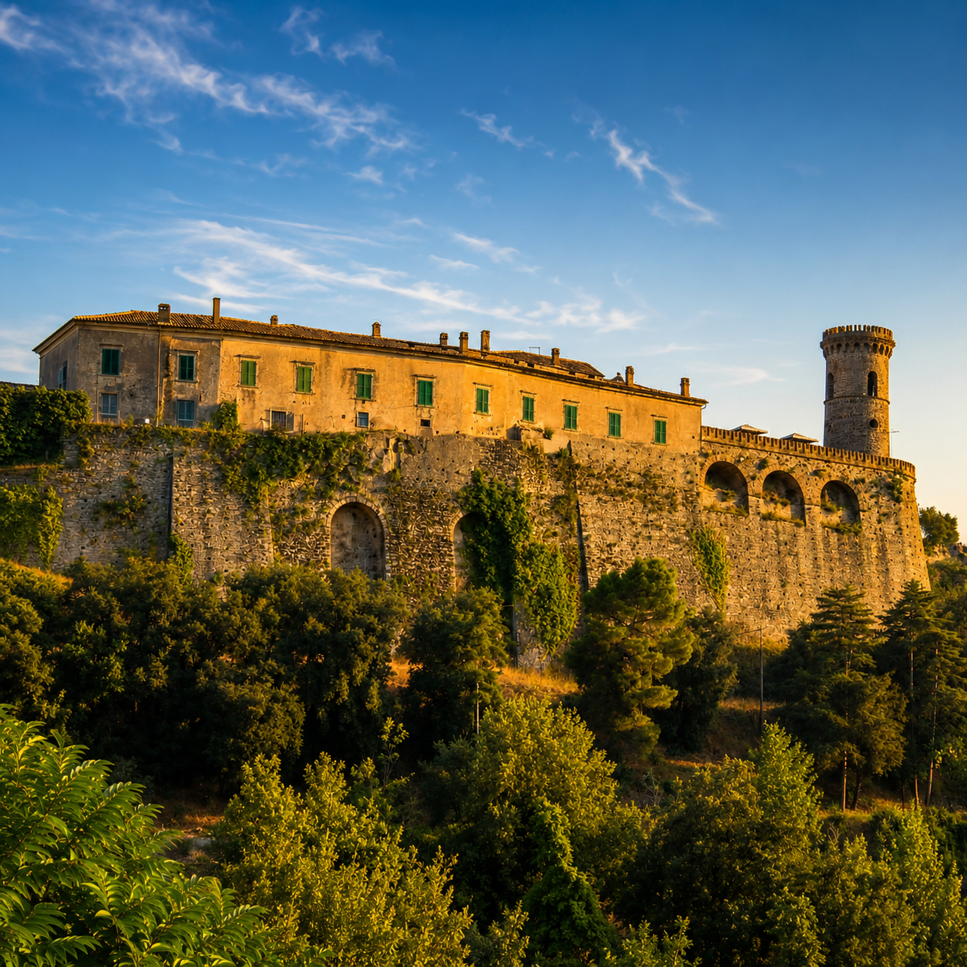
Among the city’s most important symbols is the majestic Castle of Charles V, one of the most imposing fortresses in southern Italy. Originally built in the 9th century to defend the city from Saracen raids, the castle was enlarged and fortified in the 16th century during the reign of Charles V.
The fortress stands on the ancient Greek acropolis and overlooks the historic center and the Ionian Sea with spectacular bastions, towers, and walls. Walking inside the castle, visitors can admire military halls, historic courtyards, and breathtaking views over the city and the port.
Today the castle also houses exhibition spaces, cultural events, and part of the city’s Civic Museum, making it one of the most visited places in Crotone.
The National Archaeological Museum
To truly understand the history of Kroton, it is essential to visit the National Archaeological Museum of Crotone, one of the most important archaeological museums in Calabria.
The museum houses extraordinary finds from excavations in the Crotone area and from the area of Capo Colonna: Greek pottery, statues, coins, votive objects, and evidence of the Magna Graecia civilization. Among the most famous pieces stand out the precious bronze askoi shaped like sirens, finds unique in the world, and numerous objects from the sanctuary of Hera Lacinia. The exhibition route tells over two thousand years of history, from the Neolithic to the Roman era
The Civic Museum
Inside the Castle of Charles V there is also the Civic Museum of Crotone, devoted above all to the city's medieval and modern history.
The museum gathers historical documents, 15th- and 16th-century finds, photographs and testimonies that tell of the urban and cultural evolution of Crotone over the centuries.
It is an interesting stop for those who wish to explore not only the city's Greek past, but also its more recent history.
Capo Colonna and the Temple of Hera Lacinia
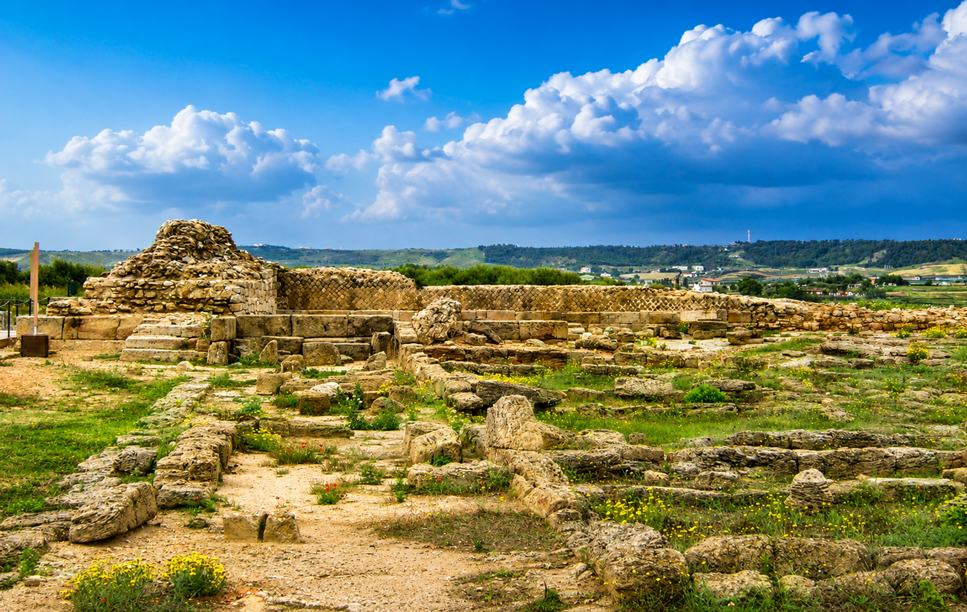
A few kilometers from the city center lies one of the most evocative places in Calabria: Capo Colonna. This promontory marks the easternmost tip of the Calabrian peninsula and is one of the most important archaeological sites of Magna Graecia.
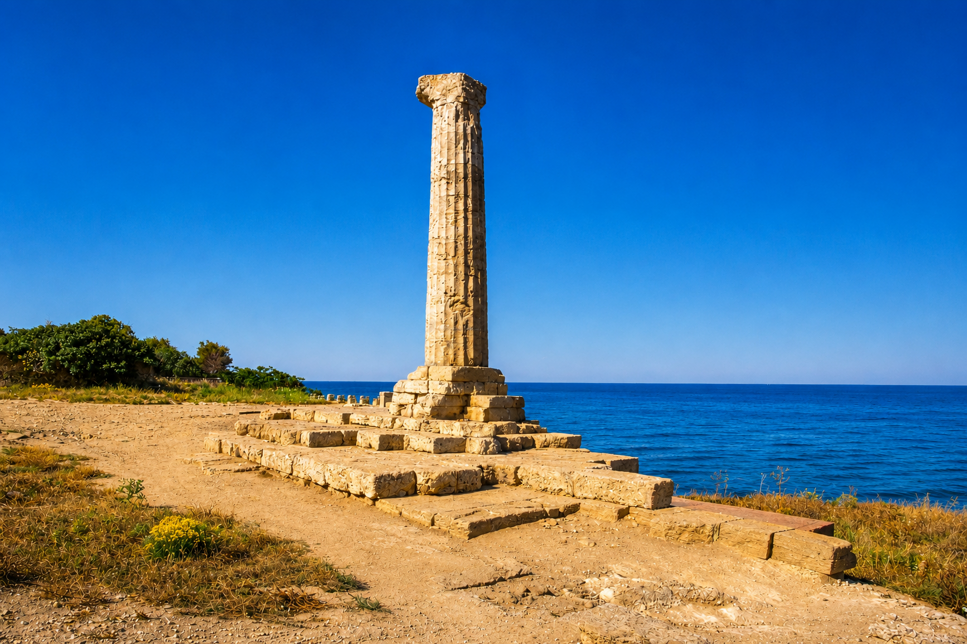
Here stood the famous sanctuary dedicated to Hera Lacinia, one of the most important in the ancient Greek world. Of the great Doric temple, only one column remains today, which has become the symbol of the whole Ionian Calabria. Despite time and the destruction suffered over the centuries, the charm of the site remains immense.
The Archaeological Park of Capo Colonna includes remains of the ancient sanctuary, Roman areas, paths immersed in the Mediterranean scrub, and a museum that preserves finds from the excavations. The view over the Ionian Sea makes this place even more moving, especially at sunset.
The Crotone Seafront
One of the places most loved by locals and tourists is the city seafront, perfect for walking between the sea and the old town.
The seafront offers a spectacular view of the Ionian Sea, easily accessible beaches, cafés, restaurants and areas dedicated to relaxation.
During the summer it becomes the heart of city life, with events, markets and evening shows. Walking along the coast, you can admire the port, the ancient city walls and the outline of the Castle of Charles V overlooking the old town from above.
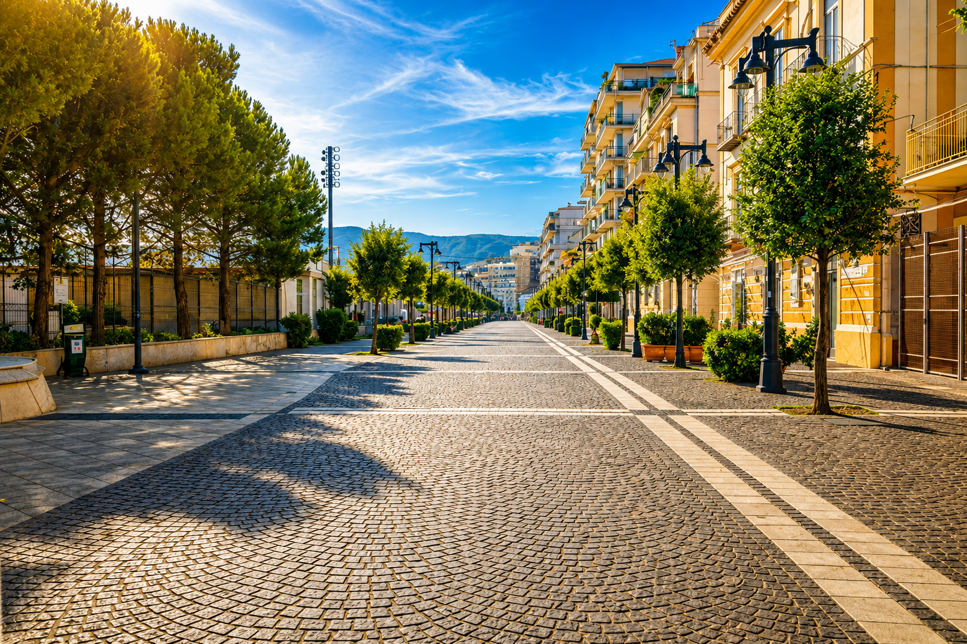
The historic center and the Cathedral
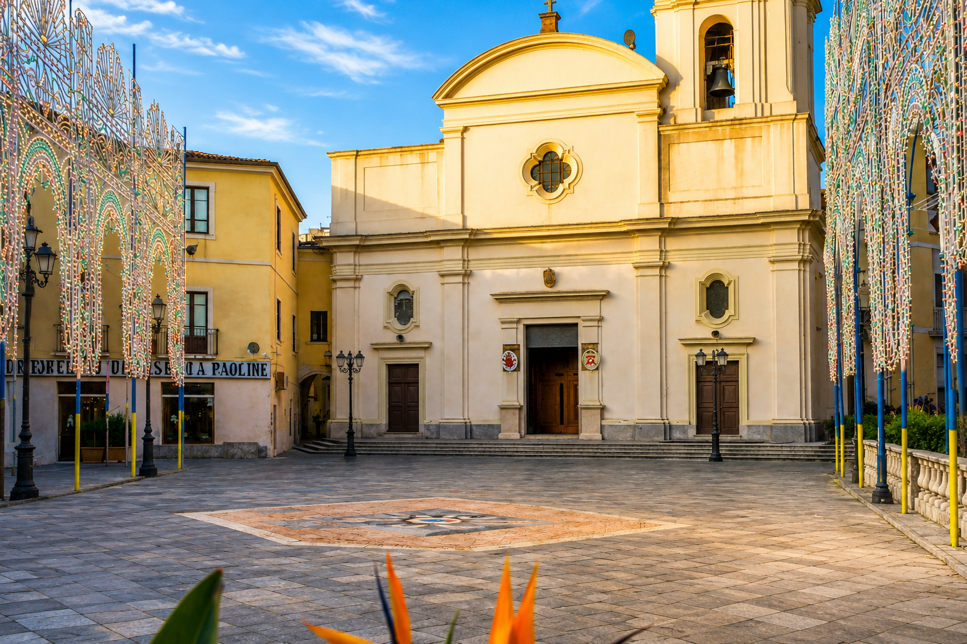
The historic center of Crotone still preserves the authentic charm of Mediterranean cities. Narrow alleys, historic squares, noble palaces and ancient churches tell centuries of history.
Among the most important religious buildings is the Cathedral of Santa Maria Assunta, also known as the Cathedral of Crotone. The church houses the venerated icon of the Madonna of Capo Colonna, patron saint of the archdiocese of Crotone.
Walking through the alleys, you also come across the characteristic Porticoes, ancient historic buildings and panoramic views that offer an authentic and evocative atmosphere.
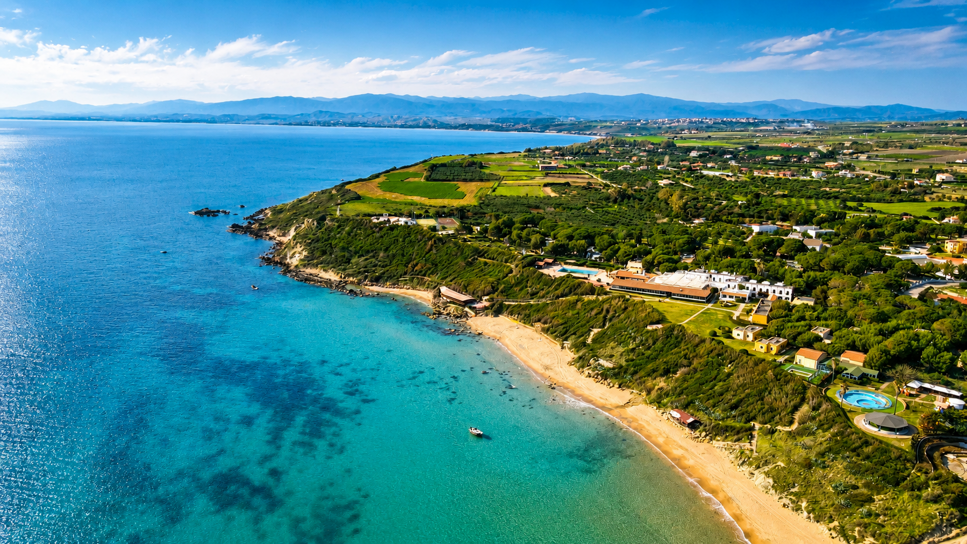
The beaches and the sea
Crotone is also famous for its clear sea and golden beaches. Around the city are some of the most beautiful seaside resorts on the Ionian coast of Calabria, many of which are part of the Capo Rizzuto Marine Protected Area.
The crystal-clear waters, seabeds rich in biodiversity, and long sandy beaches make this area ideal for beach holidays, snorkeling, diving, and water sports.
Why visit Crotone
Visiting Crotone means immersing yourself in a land rich in history, culture and traditions. Here the past of Magna Graecia meets the charm of the Mediterranean, giving visitors an authentic experience among archaeology, sea and typical Calabrian flavors. From the walls of the Castle of Charles V to the remains of the sanctuary of Hera Lacinia, from the seafront to the narrow streets of the old town, Crotone is a city able to amaze anyone who loves places that are still authentic and full of identity.
In the surroundings of Crotone
The area around Crotone offers some of the most charming landscapes of Ionian Calabria, with crystal-clear sea, historic villages and hills covered with vineyards.
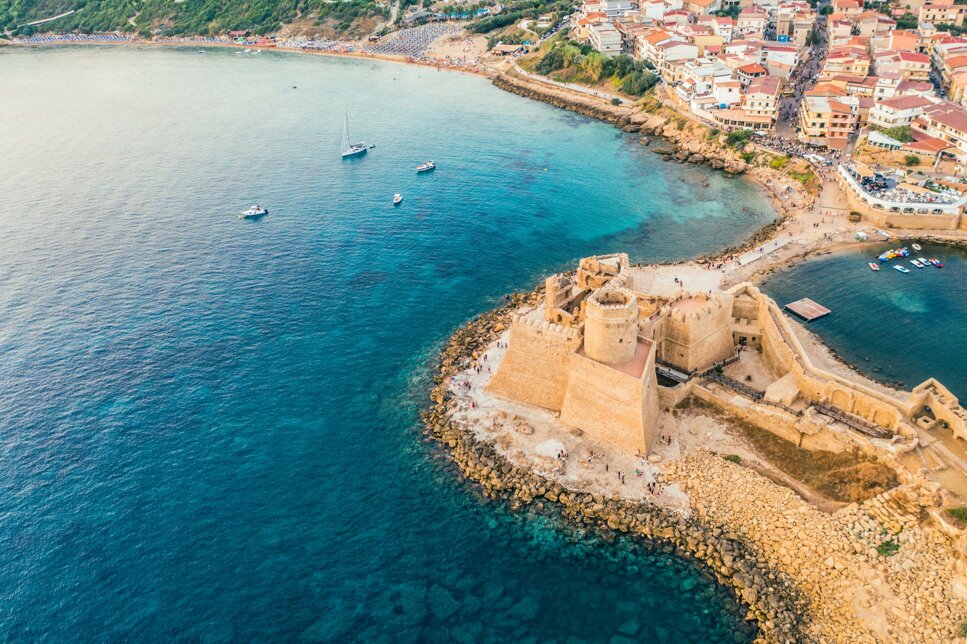
A few kilometers from the city lies Le Castella, famous for the striking Aragonese Castle overlooking the sea and set within the Capo Rizzuto Marine Protected Area, the largest in Italy, known for spectacular seabeds and turquoise waters.
Along the Costa dei Saraceni follow one another wonderful beaches such as Capo Piccolo, Curmo and Praialonga, marked by golden sand and clear sea.
To the north stretches the area of Cirò and Cirò Marina, home of the famous Cirò DOCG wine and of many wineries where you can discover the flavors and traditions of Calabria.
In the inland area of the Marchesato Crotonese stand some of the most beautiful villages in the region, such as Santa Severina with its imposing Norman castle and the famous Byzantine baptistery, or Caccuri dominated by its splendid medieval fortress.
Finally, for lovers of nature in its most unusual forms, you can visit the geosite of the Zinga salt diapirs, natural salt formations, or the Verzino caves, important rock settlements.
Are you interested in Magna Graecia? Discover this itinerary!
4 DAYS DISCOVERING THE MARCHESATO CROTONESE
Look also…



CALABRIA ITINERARIES
VINEYARD APERITIFS
WINE TASTINGS IN CIRO'
HIKING IN CALABRIA
Want to learn more about the history and places of Magna Graecia?
Click here and you’ll find much more, or alternatively fill out the form and I will provide you for free with all the necessary info.