Fiery sunsets
Wonderful views

Let yourself be embraced by the warmth of Calabria, where every glance stirs emotion, every encounter feels like a hug, and beauty surprises you at every step.
CALABRIA
O N T H E R O A D
CALABRIA
RoadCalabria
O N T H E R O A D
Italy's most authentic region!
ROADCALABRIA
CONTACTS
EXPLORE
Ideas, itineraries and places to discover, to experience Calabria on the road
Follow us on Instagram
Home
Itineraries
info@roadcalabria.it
Villages
What you’re looking for
CALABRIA
O N T H E R O A D
Beaches
Did you know that
Crotone and the Marchesato
Art, History, Culture
Useful Links
National Parks
Write to us
Trekking
Between history, medieval villages, nature and red beaches
Some of the images on RoadCalabria come from the 'Calabria Straordinaria' portal of the Calabria Region and are used under a CC-BY license
© 2026 RoadCalabria
An itinerary among crystal-clear sea, medieval villages, and stunning landscapes: the Crotonese Marchesato is a land rich in history, nature, and traditions, where the Ionian coast meets hills and charming historic centers.
The territory of Crotone and the Marchesato holds some of the most authentic experiences in Calabria. This itinerary leads to the discovery of ancient cities of Magna Graecia, perched medieval villages, and amazing natural landscapes, where history, sea, and traditions blend harmoniously. From the crystal-clear waters of the Capo Rizzuto Marine Protected Area to the timeless silence of the inland historic centers, each stop reveals the most genuine soul of this land. An ideal journey for those who want to discover a different, rich, and still unexplored Calabria.
Day 1 - Crotone and Capo Colonna
The journey starts from Crotone, an ancient city of Magna Graecia overlooking the Ionian Sea.
Crotone has a small airport and if you’re lucky you can land there, otherwise land at Lamezia airport. From there, Crotone can be reached by train, but I suggest renting a car at the airport since you’ll need to move around the inland hills among villages and nature areas. But let’s get back to Crotone!
Crotone is a lively seaside city, with a pleasant climate, slow pace, and a very long history. I definitely recommend starting with a walk along the beautiful seafront, from the beginning (north area, old port) to the southernmost part. Among other things, you’ll find many bars and small restaurants for a break.
From there, head up to the historic center, stopping at the city’s symbol, the Castle of Charles V. An intact fortress, with roots going back to the 9th century. In one wing of the castle you’ll also find the civic museum.
Another recommended stop is the archaeological museum, located in the medieval city walls, which once corresponded to the acropolis of ancient Kroton.
Continue your walk in the historic center, passing through some squares (Piazza Duomo, Piazza Pitagora), and also visit the Cathedral (inside is the beautiful chapel of the Virgin of Capo delle Colonne), the Church of Santa Chiara, and the Church of the Immaculate. You’ll also find many archaeological areas scattered here and there among the streets of the center and outskirts, thanks to a project to rediscover and bring to light ancient Kroton.
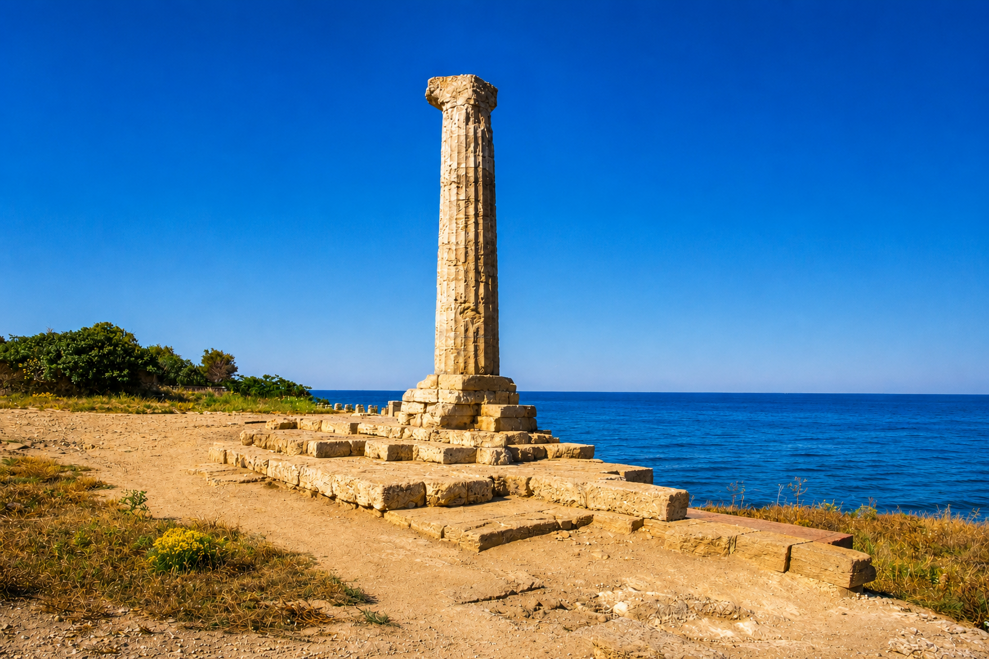
Finally, heading a few km further south along the sea, reach the striking promontory of Capo Colonna (fun fact: it’s the easternmost point of Calabria!). Here you’ll visit the beautiful archaeological park of Capo Colonna, home – among other things – to the only (and iconic) column left from the ancient temple dedicated to Hera Lacinia, in an open and solemn landscape facing the sea. Finally, you’ll also enjoy the museum containing the ruins of the archaeological park, a testament to Crotone’s great ancient history.
Day 2 - Le Castella, Capo Rizzuto, Marine Protected Area
The second day is again dedicated to the coast, known as the Costa dei Saraceni.
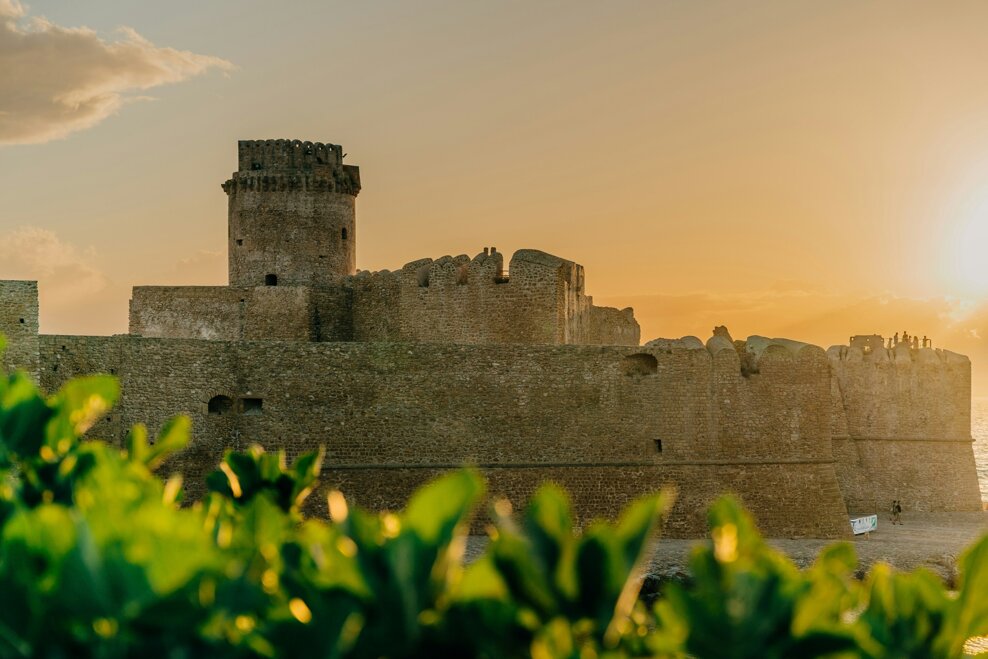
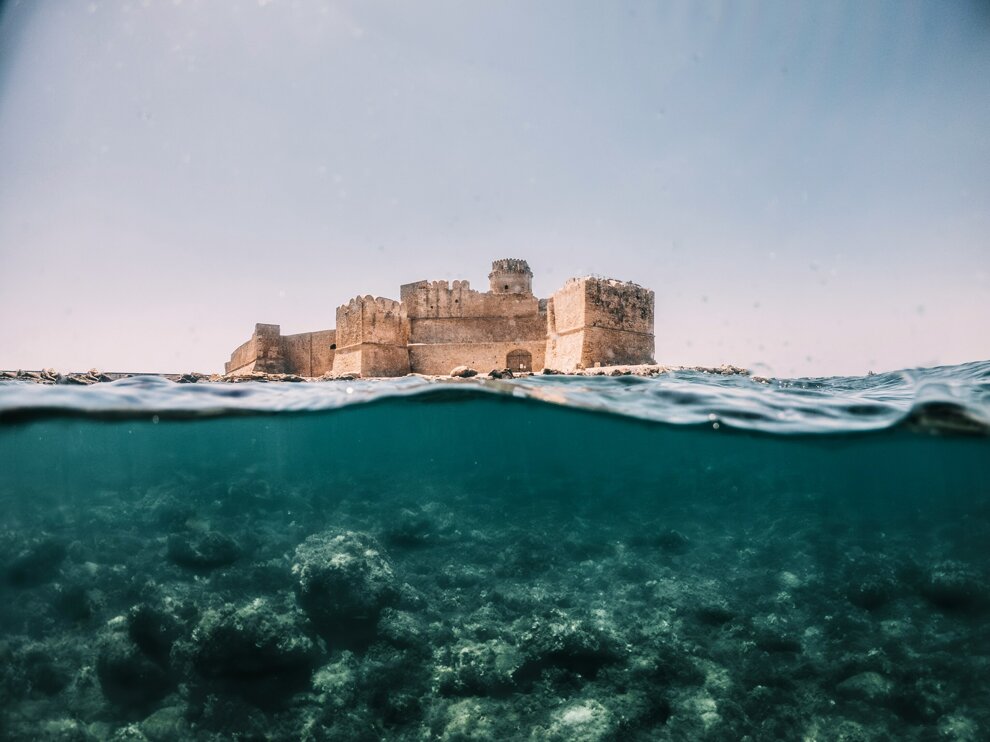
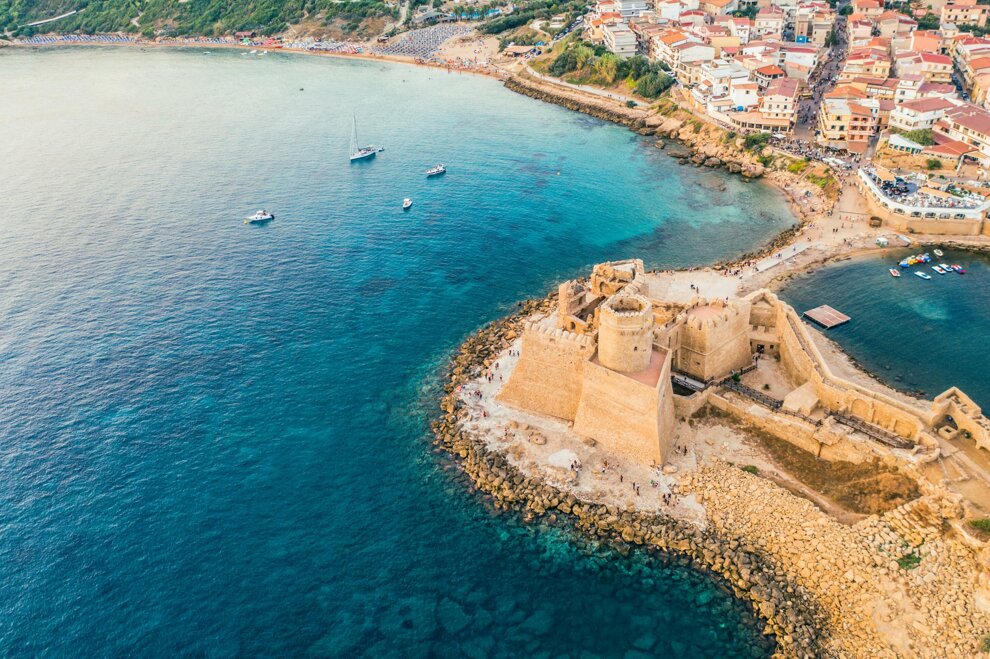
Head to the fishing village of Le Castella, famous for the Aragonese Castle built on an islet connected to the mainland by a thin strip of sand. The view is one of the most iconic on the Ionian coast. Visit the castle, which currently – by the way – has free admission.
Continue along the coast of the Capo Rizzuto Marine Protected Area, a stretch of coastline with clear waters, sandy coves, and cliffs shaped by the wind. It's the perfect spot for a swim or a scenic walk. Here you can find the most beautiful beaches of the Costa dei Saraceni.
If you have time and feel like it, I also recommend a nice boat trip with a glass bottom to better enjoy what the marine protected area offers visitors.
Day 3 - Santa Severina and Caccuri
Leaving the coast, the itinerary heads into the hinterland of the Marchesato.
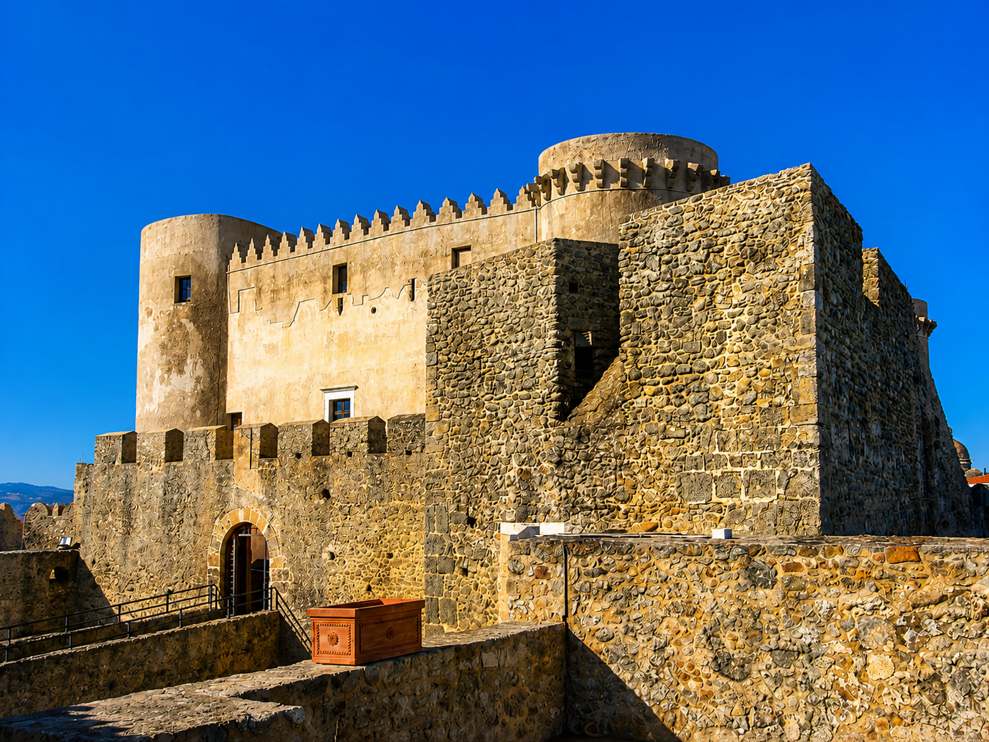
The first stop is Santa Severina, one of the most charming villages in Calabria, perched on a rocky spur. Its imposing castle overlooks a medieval old town made up of alleys, churches, and quiet squares. Definitely worth visiting, in addition to the aforementioned Castle—which also houses a museum and offers a beautiful view over the wide Neto river valley—are the Cathedral of Santa Anastasia and the beautiful baptistery, a gem of Byzantine art dating back to the 10th century.
In the afternoon, head to Caccuri, another medieval village with great charm. The symbol of Caccuri is its castle, whose origins date back to the Byzantine period (6th century). It later became the fief of important families such as the Ruffo, Cavalcanti, and Barracco, who transformed it from a defensive structure into a noble residence. The current appearance of the castle, which reflects the medieval style, is due to the 19th-century renovation carried out by the Barracco family. Inside the castle are many treasures, including the Palatine Chapel, a real gem containing several paintings, including a work by Gargiulo and one by Muratori.
In Caccuri you can enjoy the beautiful medieval old town, with its maze of narrow streets, the Church of Santa Maria delle Grazie, and the monumental complex of the Abbey of Santa Maria del Soccorso, founded way back in 1518.
Day 4 - Diapirs, Caves, Badlands
The last day is dedicated to the most unusual nature of the area. A truly incredible nature, that makes you feel on another planet.
Start from the village of Verzino, where – right near the town – you’ll find an amazing complex of rock caves. The Marchesato area is full of natural cavities and rock settlements, and the Verzino Caves are among the largest complexes. They are the perfect place for a short hike between geology and silence.
Twenty minutes from Verzino, in the Zinga area, you’ll take another leap in time – into another dimension – where you’ll find a surprising landscape: that of the Saline Diapirs, a unique geosite. The saline diapirs are hills of salt (yes, salt!) pale and shaped by erosion, creating an almost lunar environment, unique in Calabria.
Finally, on the way back to Crotone, preferably in the late afternoon (to enjoy the sunset), visit the badlands of Cutro (or of the Marchesato), a vast stretch of clay dunes with shifting colors that create a lunar landscape. An incredible view that has inspired many filmmakers, including Pier Paolo Pasolini.
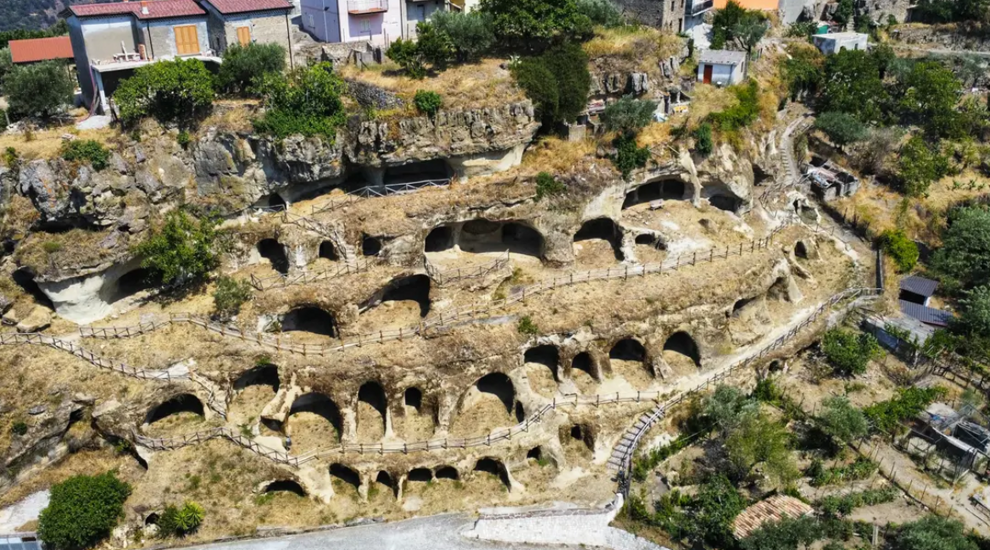
Photo: Calabria Straordinaria - Regione Calabria
* * *
Look also…

CALABRIA ITINERARIES
VINEYARD APERITIFS
TASTINGS IN CIRO'
HIKING IN CALABRIA
Do you want to learn more about Crotone and the Marchesato?
Fill out the form and I will be happy to help you!