Fiery sunsets
Wonderful views

Let yourself be embraced by the warmth of Calabria, where every glance stirs emotion, every encounter feels like a hug, and beauty surprises you at every step.
CALABRIA
O N T H E R O A D
CALABRIA
RoadCalabria
O N T H E R O A D
Italy's most authentic region!
ROADCALABRIA
CONTACTS
EXPLORE
Ideas, itineraries and places to discover, to experience Calabria on the road
Discovering Magna Graecia: 5-day itinerary along the Ionian coast
Follow us on Instagram
Home
Itineraries
info@roadcalabria.it
Villages
What you’re looking for
CALABRIA
O N T H E R O A D
Beaches
Did you know that
Sibari, Locri, Crotone and Reggio Calabria. An itinerary to discover the powers of the past.
Art, History, Culture
Useful Links
National Parks
Write to us
Trekking
Some of the images on RoadCalabria come from the 'Calabria Straordinaria' portal of the Calabria Region and are used under a CC-BY license
© 2026 RoadCalabria
The Ionian side of Calabria is a land where history emerges everywhere, among archaeological remains, timeless landscapes, and towns that still bear the marks of the greatness of Magna Graecia. This 5-day itinerary takes you along the coast overlooking the Ionian Sea, following the traces of the ancient Greek colonies that flourished here from the 8th century BC.
From Sibari to Reggio Calabria, this itinerary allows you to travel through centuries of history in just a few days; it is a journey that combines culture, landscapes, and identity—perfect for those who want to discover the most authentic side of Calabria.
Day 1 - Sibari and Corigliano-Rossano
The journey begins in Sibari, one of the richest and most powerful colonies of Magna Graecia, founded by the Achaeans around 720 BC. The city was renowned throughout the ancient world for its luxury and prosperity, becoming synonymous with wealth and refinement. Today, you can visit the Archaeological Park of ancient Sibari, where the remains of different historical phases overlap, including Sybaris, Thurii, and Copia—evidence of the destructions and reconstructions that took place over the centuries.
Walking among the ruins, you can observe urban layouts, remains of public buildings, and infrastructures that tell the story of daily life in one of the most important cities of the Greek world. The archaeological museum complements the visit with artifacts, ceramics, and objects that offer a vivid picture of Sybarite civilization.
Just a few hundred meters from the archaeological park, you can also visit the National Archaeological Museum of Sibaritide, which houses numerous artifacts from the successive cities that once stood here. Among them stands out the Cozzante Bull, a precious Greek bronze statuette dating back to the 5th–4th century BC, discovered in 2004, depicting a bull in the act of charging. A symbol of fertility, strength, and of the colony of Thurii, this artifact represents the cultural continuity between the Magna Graecia and Roman civilizations.
Beyond its Magna Graecia heritage, the Sibaritide also offers several options to enjoy the rest of your day. If you are interested in art and culture, you can head to nearby Corigliano and visit the Ducal Castle of Corigliano, one of the most fascinating noble residences in Calabria, or reach Rossano to admire the famous Codex Purpureus, one of the oldest illuminated Gospels in the world.
For those who prefer a more nature-oriented experience, the Abbey of Santa Maria del Patire offers a unique atmosphere, surrounded by greenery. If you are fascinated by underground worlds, the Sant’Angelo Caves in Cassano all’Ionio are well worth a visit. Alternatively, if you simply want to relax by the sea, you will find wide, well-equipped beaches—perfect for ending the day in total relaxation.
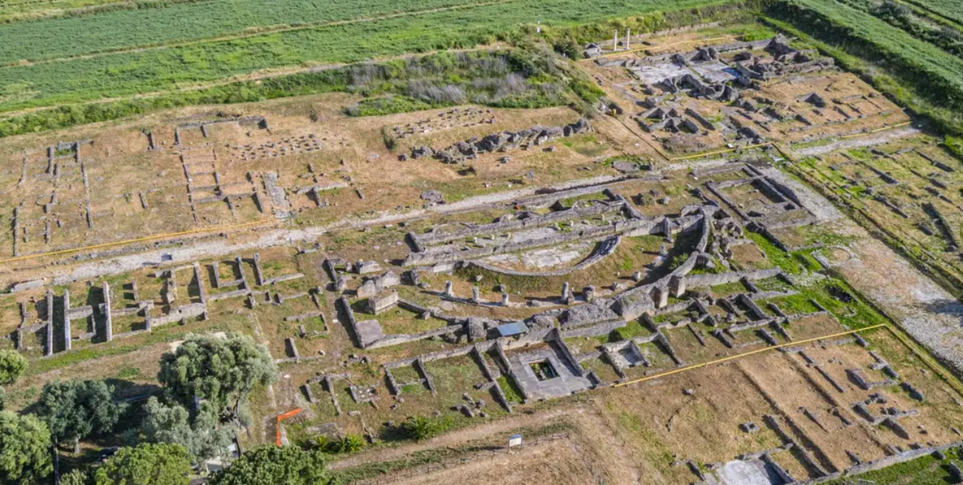
Photo by: Calabria Straordinaria
Day 2 - Crotone and Capo Colonna
The second day is dedicated to Crotone, the ancient Kroton, one of the most influential cities of Magna Graecia. Founded by the Achaeans, it became an important cultural and philosophical center, best known for the Pythagorean school established by Pythagoras in the 6th century BC. Beyond its intellectual significance, Kroton was also a military and athletic power, famous for its Olympic athletes.
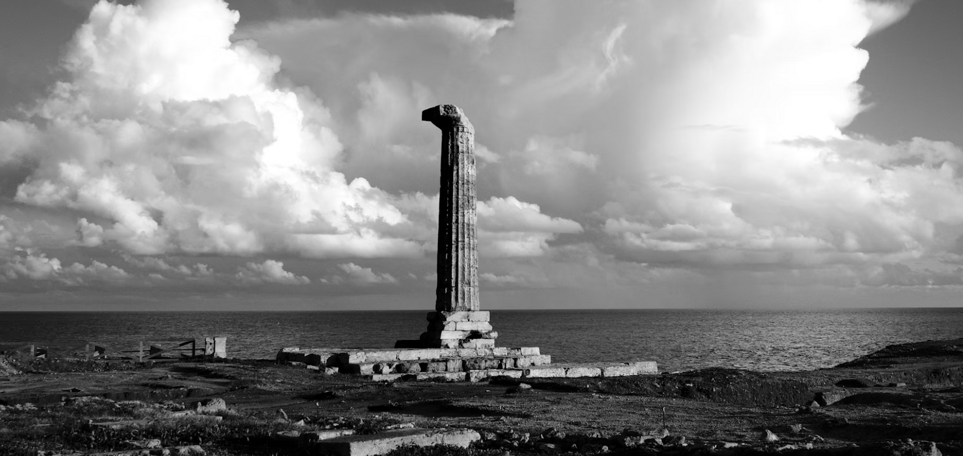
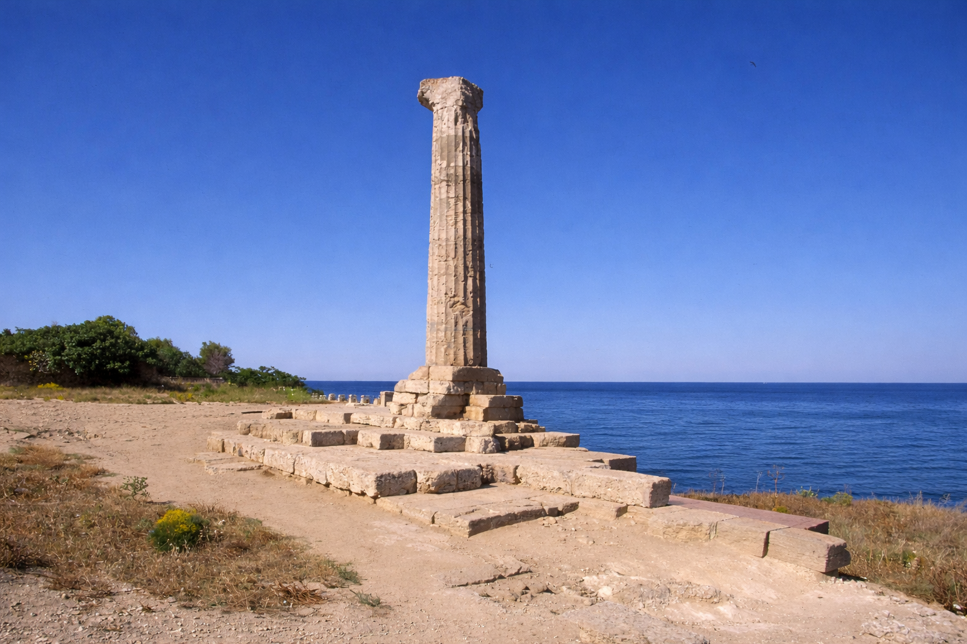
In Crotone, you should definitely visit the historic center and its churches, the archaeological museum, the Castle of Charles V, and enjoy a walk along the beautiful seafront promenade. Afterwards, you can continue to Capo Colonna, one of the most iconic places in Calabria. Here lie the remains of the sanctuary dedicated to Hera Lacinia, one of the most important religious sites of Magna Graecia. The single remaining column, overlooking the sea, creates a truly evocative scene, especially at sunset.
In the afternoon, you can head to Le Castella, with its Aragonese castle built on a small islet connected to the mainland, or explore the stunning Costa dei Saraceni, known for its crystal-clear waters, dramatic cliffs, and uniquely colored beaches.
Day 3 - Skylletion/Scolacium
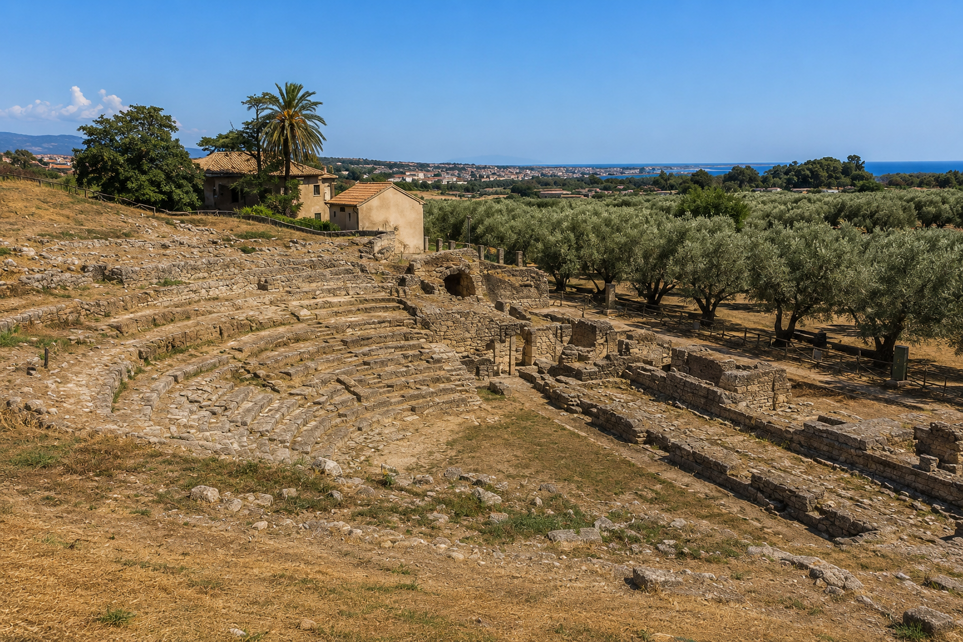
The third day is dedicated to the Archaeological Park of Scolacium, located near Roccelletta di Borgia. This site is a perfect example of historical stratification: originally founded as a Greek colony, probably under the name Skylletion, it reached its peak during the Roman period, when it became known as Scolacium.
Here you can explore the well-preserved Roman theater, the forum, the baths, and other public buildings that highlight the importance of the city. Next to the ruins stands the evocative Norman basilica of Santa Maria della Roccella, adding yet another historical layer to the site.
The park is set within a stunning natural landscape, surrounded by centuries-old olive groves and rolling hills that gently slope toward the sea, making the visit not only culturally enriching but also visually and emotionally rewarding.
Right next to the park, the archaeological museum is also well worth a visit, showcasing beautiful collections, including marble statues and significant artifacts from the area.
In the afternoon, you can relax in nearby Soverato, a lively seaside town known for its wide, white beaches, elegant beach clubs where you can enjoy an aperitivo or dinner, and a scenic promenade perfect for long, relaxing walks.
Day 4 - Locri, Gerace, Casignana
On the fourth day, you will arrive in Locri Epizefiri, one of the most important Greek colonies in Calabria, founded by settlers from central Greece. Unlike other cities, Locri stood out for its social organization and the central role of religion in its daily life.
The Archaeological Park of Locri is one of the largest in the region and preserves remains of temples, walls, sanctuaries, and residential areas. Particularly significant are the sanctuaries dedicated to Persephone, which highlight the strong religious identity of the city. Here too, next to the archaeological park, you will find an excellent museum with a well-structured exhibition path.
After the visit, you can head up to Gerace, one of the most beautiful medieval villages in Calabria, known for its impressive Norman cathedral and breathtaking panoramic views. Alternatively, the Roman Villa of Casignana offers a different yet equally fascinating experience, thanks to its extraordinary polychrome mosaics, among the best preserved in Southern Italy. As another option, you can relax on the beaches of Locri or nearby Siderno, perfect for unwinding by the sea.
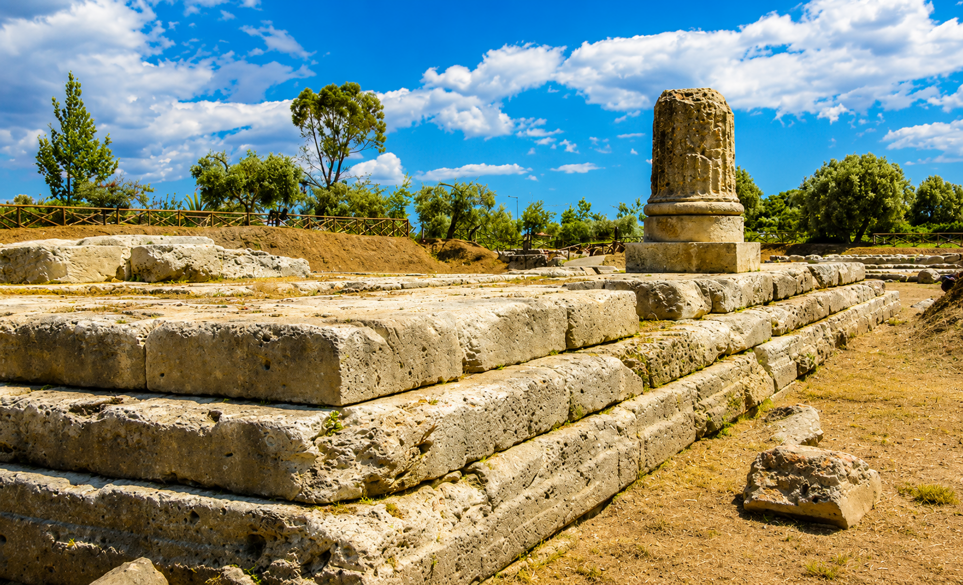
Photo by: Calabria Straordinaria
Day 5 - Reggio Calabria
The final day ends in Reggio Calabria, the ancient Rhegion, a strategic city of Magna Graecia thanks to its position on the Strait of Messina. Here, you can still feel the historical importance of a place that once served as a crossroads of trade and cultures.
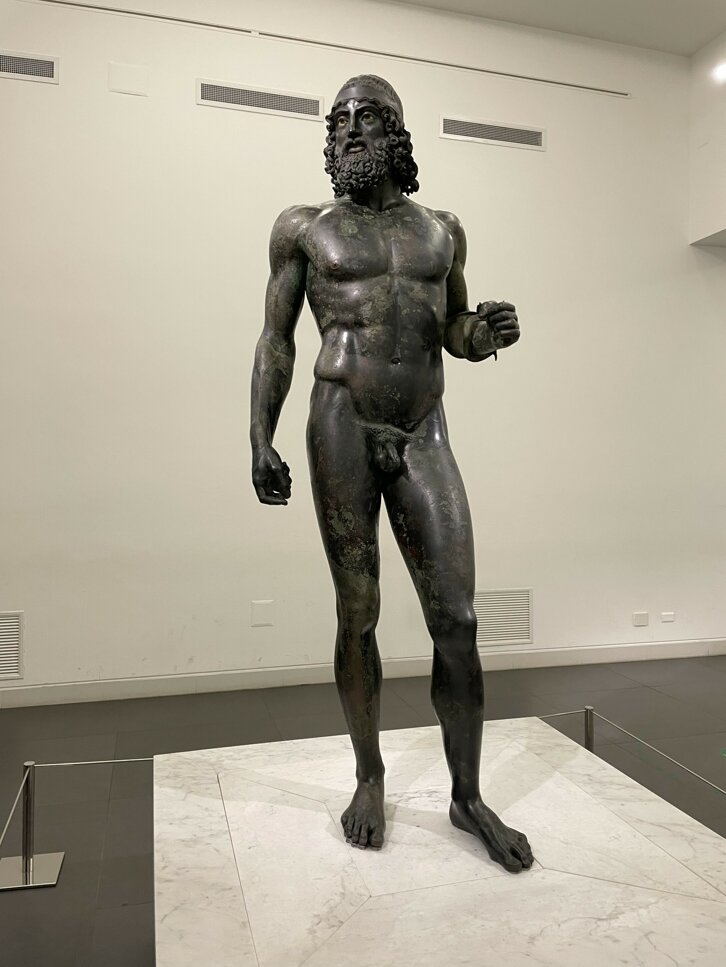
The main highlight is the National Archaeological Museum, home to the famous Riace Bronzes—two Greek statues dating back to the 5th century BC, considered among the greatest masterpieces of ancient sculpture. Their extraordinary level of detail and remarkable state of preservation make them an unmissable experience.
Reggio Calabria has much more to offer, including its beautiful Cathedral, the Palace of Culture, the Francesco Cilea Theatre, the Bergamot Museum, and many other attractions worth exploring.
Finally, a walk along the Falcomatà seafront promenade, followed by a delicious gelato with views of Mount Etna and Sicily, is the perfect way to end this journey through Magna Graecia.
Want to learn more about the history and places of Magna Graecia?
Click here and you’ll find much more, or alternatively fill out the form and I will provide you for free with all the necessary info.