Fiery sunsets
Wonderful views

Let yourself be embraced by the warmth of Calabria, where every glance stirs emotion, every encounter feels like a hug, and beauty surprises you at every step.
CALABRIA
O N T H E R O A D
CALABRIA
RoadCalabria
O N T H E R O A D
Italy's most authentic region!
ROADCALABRIA
CONTACTS
EXPLORE
Ideas, itineraries and places to discover, to experience Calabria on the road
Follow us on Instagram
Home
Itineraries
info@roadcalabria.it
Villages
What you’re looking for
CALABRIA
O N T H E R O A D
Beaches
Did you know that
Art, History, Culture
Useful Links
National Parks
Write to us
Itinerary ArcheoCalabria
Trekking
The itinerary for those who love art and archaeology, for those who travel with their minds while walking on ancient roads or spend minutes observing a sculpture
Some of the images on RoadCalabria come from the 'Calabria Straordinaria' portal of the Calabria Region and are used under a CC-BY license
© 2026 RoadCalabria
This itinerary is aimed at those who love culture and archaeology, those who enjoy strolling along ancient streets, observing age-old mosaics, and imagining theatrical performances in Greco-Roman theaters. So, from north to south of Calabria, you will find information on the main archaeological sites and cultural attractions (just a part, of course, because listing them all would be impossible), guardians of centuries of history, art, and culture.
I will try to outline the route, but clearly, based on the days you have available and the places where you will stay or depart from, you will decide if and which parks and cultural attractions to visit and how much time to spend there.
Stages:
Day 1 - Museum and Archaeological Park of Sibari, Caves of Cassano allo Ionio, Romito Cave
Day 2 - Ducal Castle of Corigliano, Rossano, Abbey of Santa Maria del Patire
Day 3 - Cosenza, San Giovanni in Fiore
Day 4 - Rock Caves of Verzino, Archaeological Park of Capo Colonna, Le Castella, Santa Severina
Day 5 - Museum and Archaeological Park of Scolacium, Catanzaro, Urban Arch. Park of Tiriolo, Abbey of S. Maria di Corazzo
Day 6 - Certosa of Serra San Bruno, Royal Bourbon Ironworks, Stilo, Monumental Complex of San Domenico
Day 7 - Museum and Archaeological Park of Locri, Gerace, Roman Villa of Casignana, Urban Arch. Park of Brancaleone
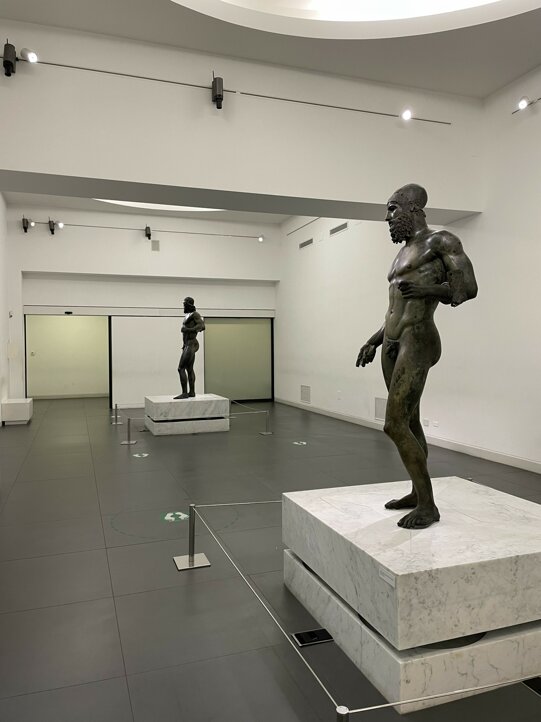
Day 8 - Reggio Calabria, Aragonese Castle, Cathedral, Magna Grecia Archaeological Museum, Riace Bronzes
Day 1 - Museum and Archaeological Park of Sibari, Caves of Cassano allo Ionio, Romito Cave
Three, two, one... let's go! Imagining arriving in Calabria from the North, thus crossing Basilicata, you immediately start with the attractions of northern Calabria. The first attraction you encounter, just beyond the border with Basilicata, is the Grotta del Romito, located in the territory of Papasidero (Cosenza). The Grotta del Romito is one of the most important prehistoric sites in Italy. Inhabited since the Upper Paleolithic (about 20,000 years ago), it preserves impressive rock engravings, including the famous depiction of a primordial ox (Bos primigenius), and perfectly preserved human burials, which offer valuable evidence about the life of the first inhabitants of Calabria. In addition to its archaeological and cultural importance, it is also a true spectacle of nature.
A few dozen kilometers from Papasidero, you come across the first archaeological park, the Archaeological Park of Sibari, one of the most important in Calabria. Located in the plain of Sibari (Cosenza), this park preserves the remains of one of the most important cities of Magna Graecia. Founded by the Achaeans in the 8th century BC, Sybaris was famous for its wealth and refinement, then destroyed and rebuilt several times (as Thurii and finally Copia in Roman times). The park includes three main areas — Parco del Cavallo, Prolungamento Strada and Casabianca — and a National Archaeological Museum of Sibaritide that displays artifacts from the Greek to the Roman period, offering an immersive journey through the millennial history of the colony and its territory. Learn more here.
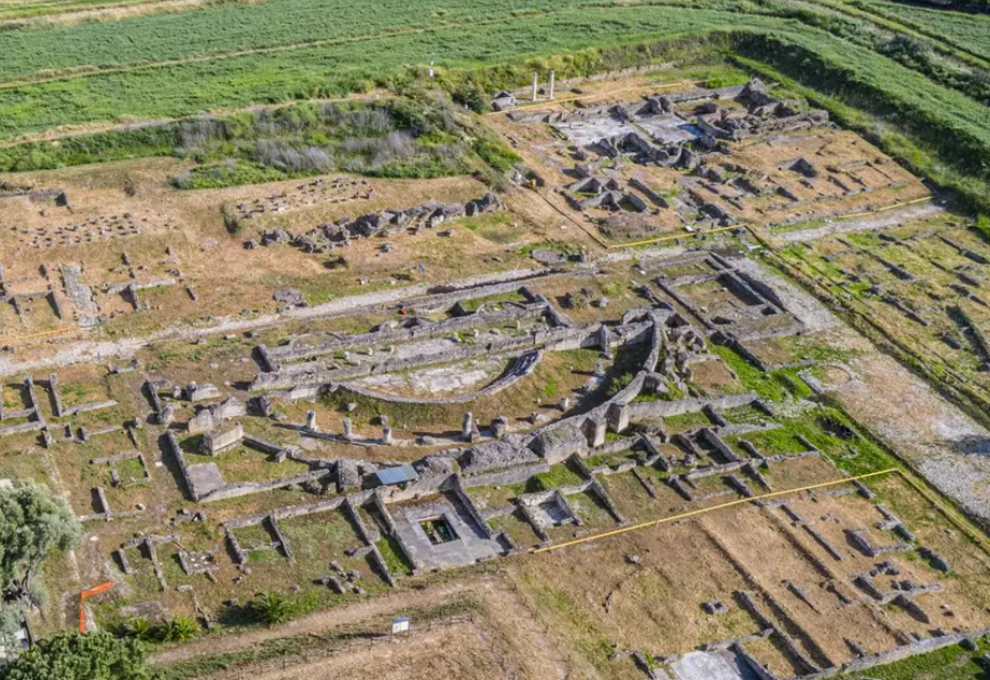
Photo: Calabria Straordinaria - Regione Calabria
Moving about ten kilometers away, in the territory of Cassano all’Ionio, you will find the Grotte di Sant’Angelo, a fascinating karst complex among the largest in Calabria. Carved into the Pollino massif, they stretch for over three kilometers with halls, tunnels, and spectacular formations of stalactites and stalagmites. Inhabited since prehistoric times, they have yielded Neolithic artifacts and fossil remains that testify to a very ancient human presence, making them a place of great naturalistic and archaeological value. If you are in Cassano, I also suggest a visit to the Cathedral, the Basilica of the Nativity of the Blessed Virgin Mary of Lauro. This monumental cathedral, features a Baroque façade, has three portals, and is divided into two orders, adorned with stone and stucco decorations. On the crowning, you can admire a fine statue of the Madonna and Child. The interior is richly decorated with various frescoes and paintings dating back to different centuries and also boasts equally rich and sumptuous chapels. Noteworthy is the presence of a highly venerated Neapolitan school effigy of Our Lady of Sorrows, an artistic painting of the Last Supper in the Chapel of the Sacrament, the Chapel of St. Francis of Paola and that of St. John the Baptist, as well as that of the martyr St. Blaise, co-patron of the city and principal patron of the diocese.
Your first stop is here:
Day 2 - Ducal Castle of Corigliano, Rossano, Abbey of Santa Maria del Patire
About ten kilometers south of Sibari you will find Corigliano-Rossano, a city on the Ionian coast of Cosenza born from the recent merger of the municipalities of Corigliano Calabro and Rossano Calabro. The first recommended site is the beautiful Ducal Castle of Corigliano. Imposing and evocative, the Ducal Castle dominates the old town with its massive towers and mighty walls. Built at the end of the 11th century as a fortress by the will of Robert Guiscard, it became the residence of the local dukes centuries later and today welcomes visitors among frescoed rooms, courtyards, and armories, offering a fascinating journey through the medieval and Renaissance history of Calabria. With a bit of time, it is also worth walking through the historic center of Corigliano to admire the Ponte Canale, a Roman-style aqueduct built in 1480, and the various churches (among which, in particular, the Church of Sant’Antonio and the Church of Santa Maria Maggiore are recommended). A few kilometers from Corigliano is the other soul of the city, Rossano. Its historic center, rich in art and culture, will amaze you. The Byzantine soul of Calabria, in Rossano you should definitely visit the diocesan museum where the Codex Purpureus Rossanensis is kept, one of the most precious and mysterious treasures of ancient Christianity. A manuscript that contains centuries of history, art, and spirituality, today a UNESCO heritage in the Memory of the World category.
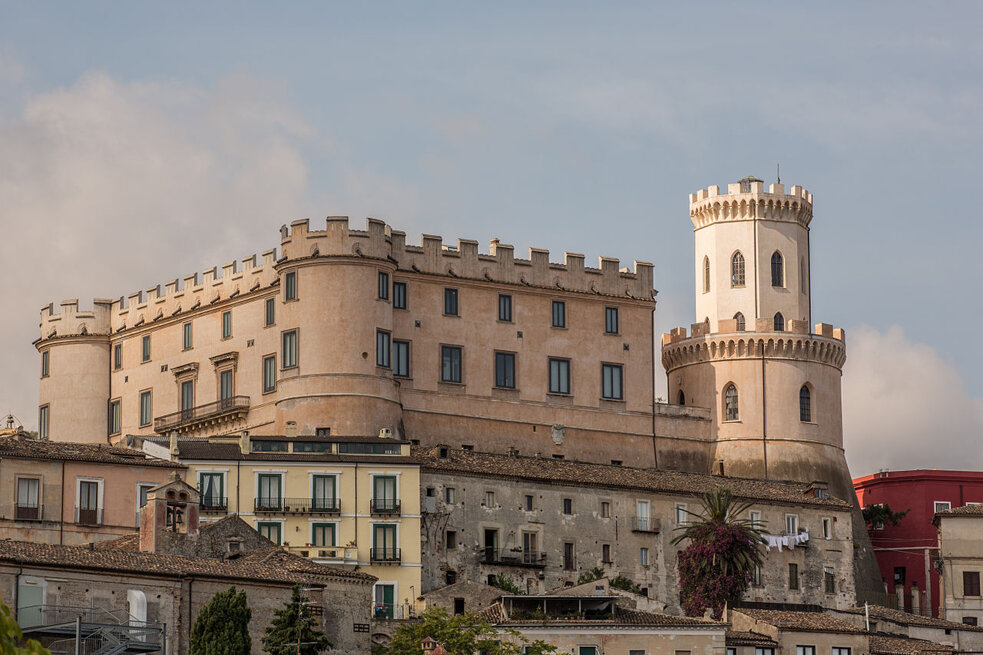
Photo: Paolo Musacchio - own work - wikipedia
Another must-see stop is the beautiful Cathedral of Santa Maria Achiropita, a jewel of Byzantine art and history. Famous for its miraculous icon "Achiropita" (not painted by human hand) and its medieval frescoes, it offers visitors an evocative journey through sacred art and Calabrian culture. Walking through the historic center of Rossano will allow you to admire and breathe in the Byzantine culture, and to come across small Byzantine gems such as the Church of the Panaghia, or the Oratory of San Marco (part of a wider network of sites nominated for UNESCO World Heritage status).
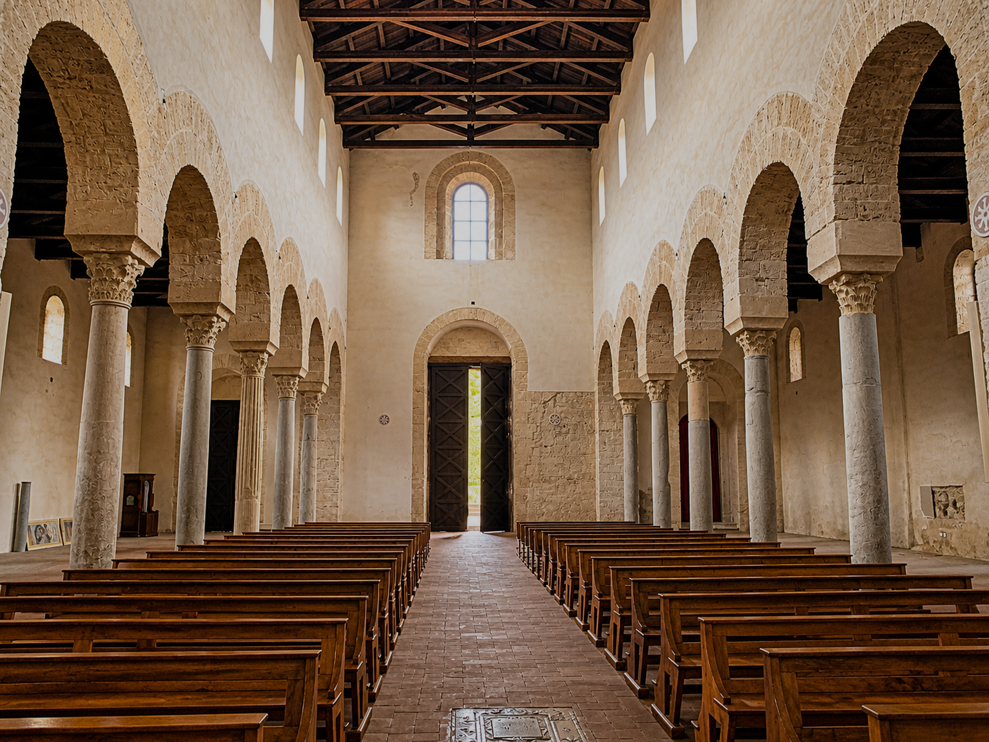
Between Corigliano and Rossano, by extending your trip a few kilometers, I suggest visiting the splendid Church of Santa Maria del Patire. Among the hills that gently slope towards the Sila Greca, stands this ancient Abbey, one of the most precious spiritual and architectural treasures of Byzantine Calabria. Surrounded by wild and quiet nature, among woods, olive groves, and the constant song of cicadas, the abbey appears as a place out of time, suspended between sky and earth, between faith and beauty. It was founded around 1095 by the will of the monk Bartolomeo di Simeri, a figure of deep spirituality, who wanted a refuge here for prayer and meditation, far from the world. The building, dedicated to the Virgin, soon became an important Basilian monastic center, a crossroads of Greek-Oriental culture and spirituality in the heart of medieval Calabria. The architecture of the abbey reflects this fusion of worlds: Byzantine, Romanesque, and Norman elements harmoniously coexist in its sober and powerful lines. The stone façade, austere and bright, opens onto an interior of surprising elegance, where the eye is drawn to an absolute masterpiece: the 12th-century floor mosaic, an interweaving of symbolic figures, animals, geometric and floral motifs, which silently tells the story of faith and knowledge.
Your second stop is here:
Day 3 - Cosenza, San Giovanni in Fiore
A few dozen km from Rossano, we find Cosenza. Cosenza is a city of extraordinary charm, where history, art and culture intertwine in one of Calabria’s most evocative urban settings. Its historic center, among the oldest in Italy, rises at the foot of Pancrazio hill, dominated by the imposing Swabian Castle, from which there is a panoramic view over the whole city.
The religious heart is represented by the Cathedral, a UNESCO heritage witness to peace and culture, guardian of works of art and centuries-old testimonies. A short distance away are the Brettii and Enotri Museums, essential for learning about the area’s most ancient roots, and the National Gallery of Cosenza, housed in the refined Palazzo Arnone, which preserves important works of art from the Renaissance to the modern age.
Villa Rendano, an elegant historic residence overlooking the old center, now represents an important cultural hub and venue for events. Along the modern Corso Mazzini runs the Bilotti Open-Air Museum, an open-air contemporary art gallery with works by internationally renowned artists, including Modigliani.
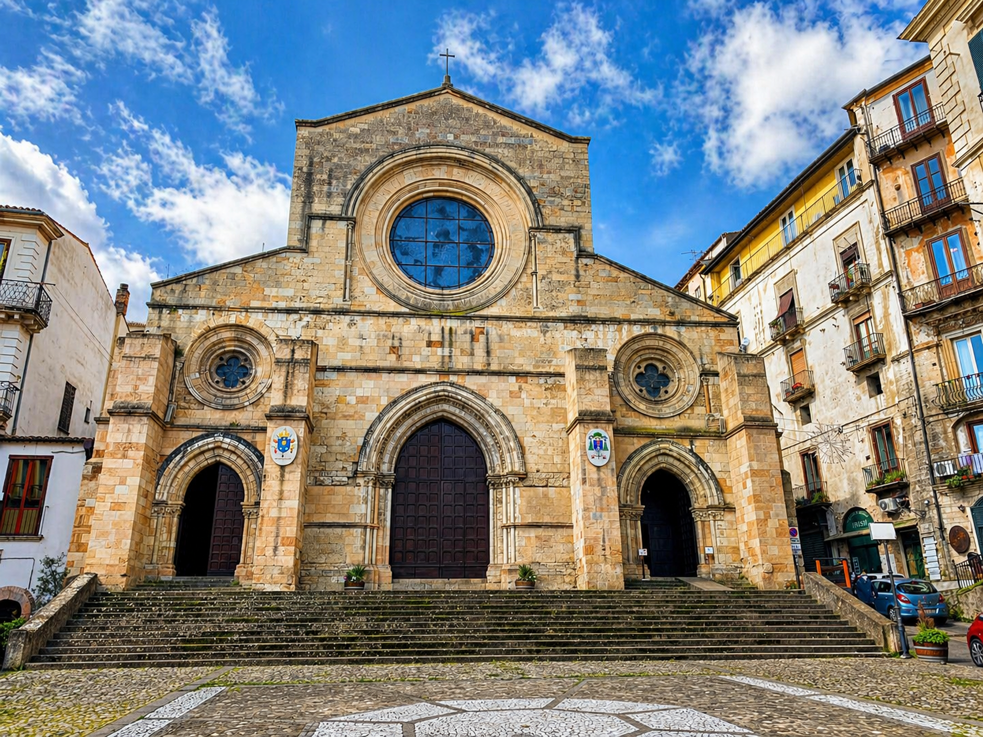
Among the places of worship, the Church of San Francesco di Paola stands out, while the monumental complex of San Domenico is of great value, with its cloister and church, flanked by the splendid Oratory of the Most Holy Rosary and the Chapel of the Most Holy Crucifix.
Nor should the Church of San Francesco d’Assisi be forgotten, which houses the precious Chapel of Saint Catherine of Alexandria, a seventeenth-century masterpiece, nor the evocative complex of Santa Maria delle Vergini, a testimony to the city’s deep spirituality.
Cosenza is therefore a city to be experienced slowly, strolling through alleys, squares and monuments, letting yourself be surprised by the richness of its cultural heritage.
A few kilometers from Cosenza, in the heart of the Sila, lies San Giovanni in Fiore, one of Calabria’s most important centers from a historical and spiritual point of view. Here stands the imposing Florense Abbey, founded in the 12th century by Gioacchino da Fiore, a figure of extraordinary religious and cultural importance in the Middle Ages.
Gioacchino, a theologian and visionary thinker, developed one of the most fascinating interpretations of Christian history, profoundly influencing European thought and authors such as Dante. The abbey, austere and evocative, still represents today the symbol of his spiritual legacy and a place of great charm immersed in the nature of the Sila.
Your third stop is here:
Day 4 - Rock Caves of Verzino, Capo Colonna, Le Castella, Santa Severina
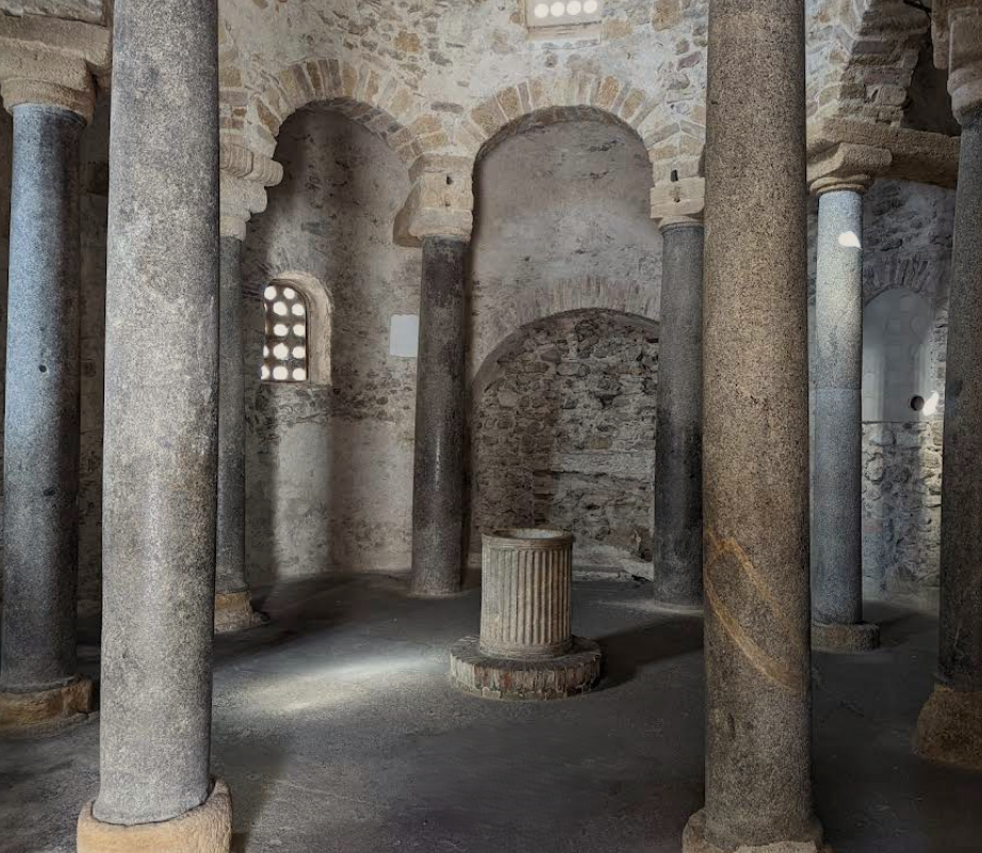
An hour and a half drive from Rossano, heading further south and moving inland, you come across a very interesting site, the Caves of Verzino, one of the largest rock complexes in Calabria. In this incredibly fascinating place, over 80 caves carved into the sandstone have been recorded, distributed along a natural ridge overlooking the surrounding area. These cavities, most likely dating back to the medieval period (between the 9th and 12th centuries), were used as dwellings, animal shelters, storage spaces, but also as places of worship, as evidenced by some signs and crosses engraved on the walls. The caves of Verzino thus tell a story of adaptation and ingenuity, of communities that knew how to use the rock as both refuge and resource. Today, they can be visited with guided tours, which allow you to discover both the natural formation of the site and traces of human presence, with routes winding through the vegetation and gullies typical of this area. Half an hour by car from Verzino is Santa Severina, a fascinating medieval village. Santa Severina enchants with its medieval streets and breathtaking views over the Neto valley. The majestic Norman Castle, commissioned by Robert Guiscard in the 11th century, with its towers and bastions, dominates the village, telling centuries of history. Among its artistic gems stands out the Byzantine Baptistery, a small but precious jewel of ancient art. Strolling among walls, little squares, and evocative views, the village offers an experience that combines history, art, and timeless charm.
From Santa Severina, in just a few kilometers you can reach Capo Colonna, a place of extraordinary charm where the evocative Archaeological Park of Capo Colonna, overlooking the sea of Crotone, preserves the only remaining column of the Temple of Hera Lacinia, a symbol of a millennia-old past and of the splendor of ancient Kroton. Walking among the archaeological remains and the surrounding nature means immersing yourself in the history of Magna Graecia, surrounded by legends, myths and breathtaking views of the Ionian coast.
A few kilometers from Capo Colonna lies the beautiful bay of Le Castella, home to the stunning castle that appears to rise directly from the water. Its origins are lost in time: some sources trace its first foundation back to the era of Magna Graecia, others to the Byzantine or Norman period. However, it was during the Aragonese rule in the 15th century that the fortress acquired the imposing and fascinating appearance we admire today. Built and fortified by the Aragonese to defend the coast from Saracen incursions, the castle became a symbol of resistance and a sentinel of the sea, witness to battles, landings and centuries of history. Over time, its elegant and austere silhouette has become an integral part of the landscape, as if the rock itself wished to preserve the memory of the past. A narrow sand isthmus connects the castle to the mainland, allowing visitors to reach it on foot, almost as if crossing a threshold between reality and dream. Today, the Aragonese Castle of Le Castella can be visited. From its crenellated towers, visitors can enjoy breathtaking views of the turquoise sea and the village of Le Castella. Inside, it is possible to explore restored rooms, ramparts, temporary exhibitions and museum spaces that tell the story of the territory. At sunset, when the sun sets the stones ablaze and the sea turns golden, the castle seems to float on the water, suspended between sky and sea.
Your fourth stop is here:
Day 5 - Museum and Archaeological Park of Scolacium, Catanzaro, Urban Archaeological Park of Tiriolo, Abbey of Santa Maria di Corazzo
Thirty kilometers further south, in the heart of Catanzaro’s historic center, stands the Monumental Complex of San Giovanni, an ancient Norman fortress transformed over the centuries into a place of art and culture. Its halls and cloisters host exhibitions, events, and museum routes that tell the story of the city and of Calabria. From its panoramic terraces, you can enjoy a breathtaking view of the Gulf of Squillace and the Corace Valley — a place where the charm of the past meets contemporary vitality. Also worth visiting are the adjoining Church of San Giovanni Battista, the Cathedral, and the other historic churches scattered throughout Catanzaro’s old town, as well as the recently opened underground galleries of Catanzaro, and the MARCA museum.
A few kilometers further down, returning to the coast, among millennia-old olive trees and the blue waters of the Ionian Sea, lies the Archaeological Park of Scolacium, a site that tells the story of a timeless place. Here, among the remains of the ancient Roman city of Scolacium and the majestic Basilica of Santa Maria della Roccella, the past comes alive in a landscape suspended between myth and Mediterranean beauty. The adjoining museum houses precious artifacts that narrate the daily life, art, and spirituality of an ancient civilization overlooking the sea — a journey through history where Calabria reveals its most authentic soul.
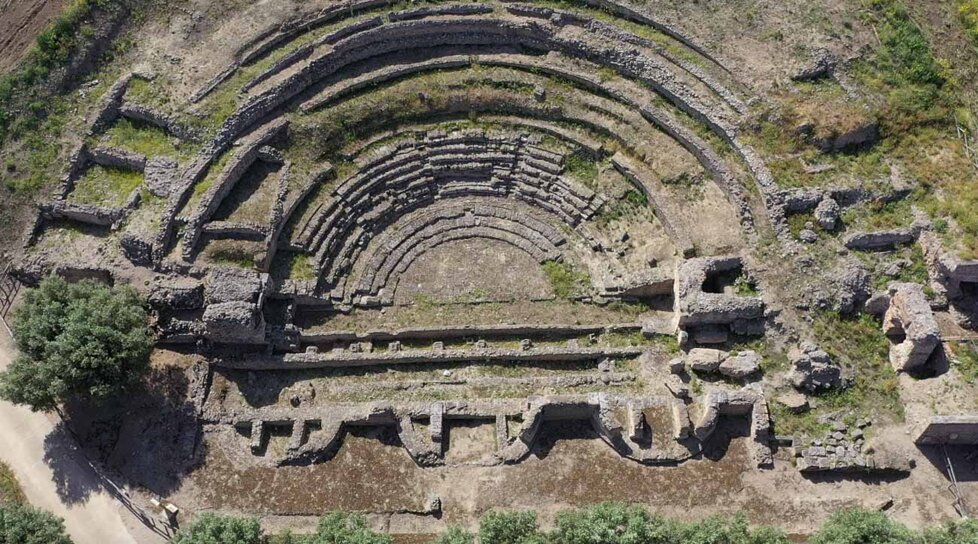
Photo: https://virtualcalabria.it/
With a bit more time, which is needed to venture into the Pre-Sila area, the urban archaeological park and village of Tiriolo, as well as the majestic Abbey of Santa Maria di Corazzo, are well worth a visit. Nestled among the forests of the Catanzaro Pre-Sila, the Abbey of Santa Maria di Corazzo enchants visitors with its majestic ruins — guardians of silence and medieval spirituality. Here lived Joachim of Fiore, the Calabrian mystic who turned this place into a center of thought and contemplation.
Your fifth stop is here:
Day 6 - Charterhouse of Serra San Bruno, Royal Bourbon Ironworks, Stilo, Monumenal Complex of San Domenico
From the Ionian coast, head inland — in just thirty minutes you’ll reach Serra San Bruno. Nestled in the forests of the Serre mountains, the Charterhouse of Serra San Bruno is a place of silence and spirituality, where nature embraces history. Founded in the 11th century by Saint Bruno of Cologne, it is one of the most important monastic centers in Europe. Its sober and harmonious architecture reflects the contemplative life of the Carthusian monks. Strolling through the surrounding area, among paths lined with fir and beech trees, you can breathe an atmosphere of timeless peace — an experience that blends culture, faith, and nature in the authentic heart of Calabria. A walk through the historic center of Serra San Bruno will allow you to admire the art preserved in its beautiful churches, such as San Biagio, Santa Maria Assunta, and Addolorata. Just a few kilometers from Serra San Bruno, in the area of Mongiana, the Royal Ironworks and Workshops of Mongiana tell the story of Calabria’s ancient Bourbon industrial tradition. In this 19th-century complex — a true symbol of industrial archaeology — iron extracted from the surrounding mountains was forged into cannons, tools, and fine artifacts. Today, the museum and carefully restored remains allow visitors to relive the extraordinary history of the first steelmaking center in southern Italy. The Royal Ironworks and Workshops of Mongiana represent the peak of Bourbon ironworking in Calabria. Here, among forges and workshops, local iron was transformed into weapons, instruments, and exquisite crafted goods. Today, the site, with its historic buildings and museum, preserves and celebrates this remarkable industrial heritage.
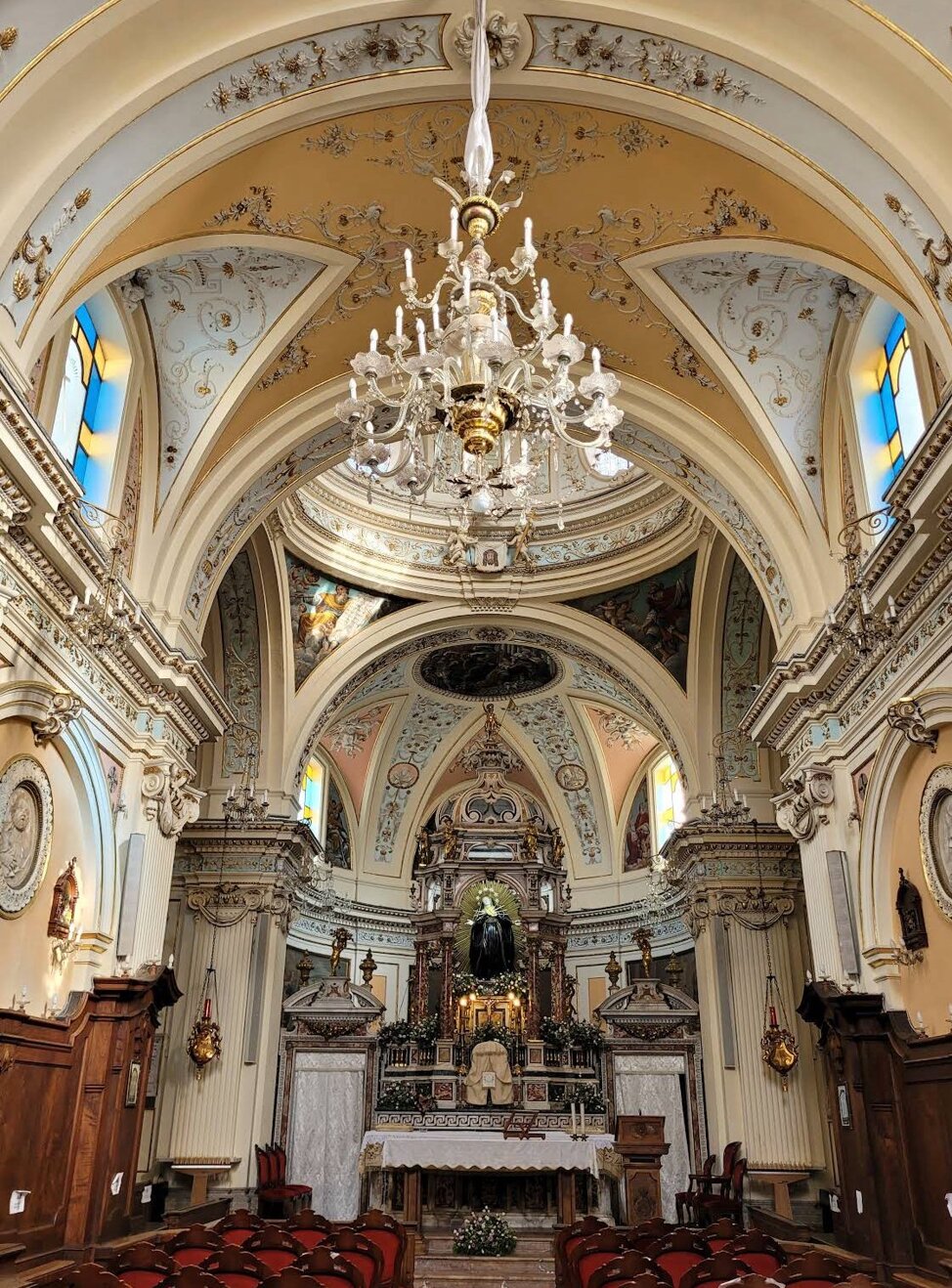
In about 50 minutes you’ll reach Bivongi, where the Basilian Monastery of San Giovanni Theristis — a precious example of the Byzantine-Eastern tradition in Calabria — preserves ancient frescoes and rituals that are still alive today. Listed among the UNESCO candidate sites together with other Byzantine landmarks in the region, it represents a spiritual and cultural heritage of extraordinary value.
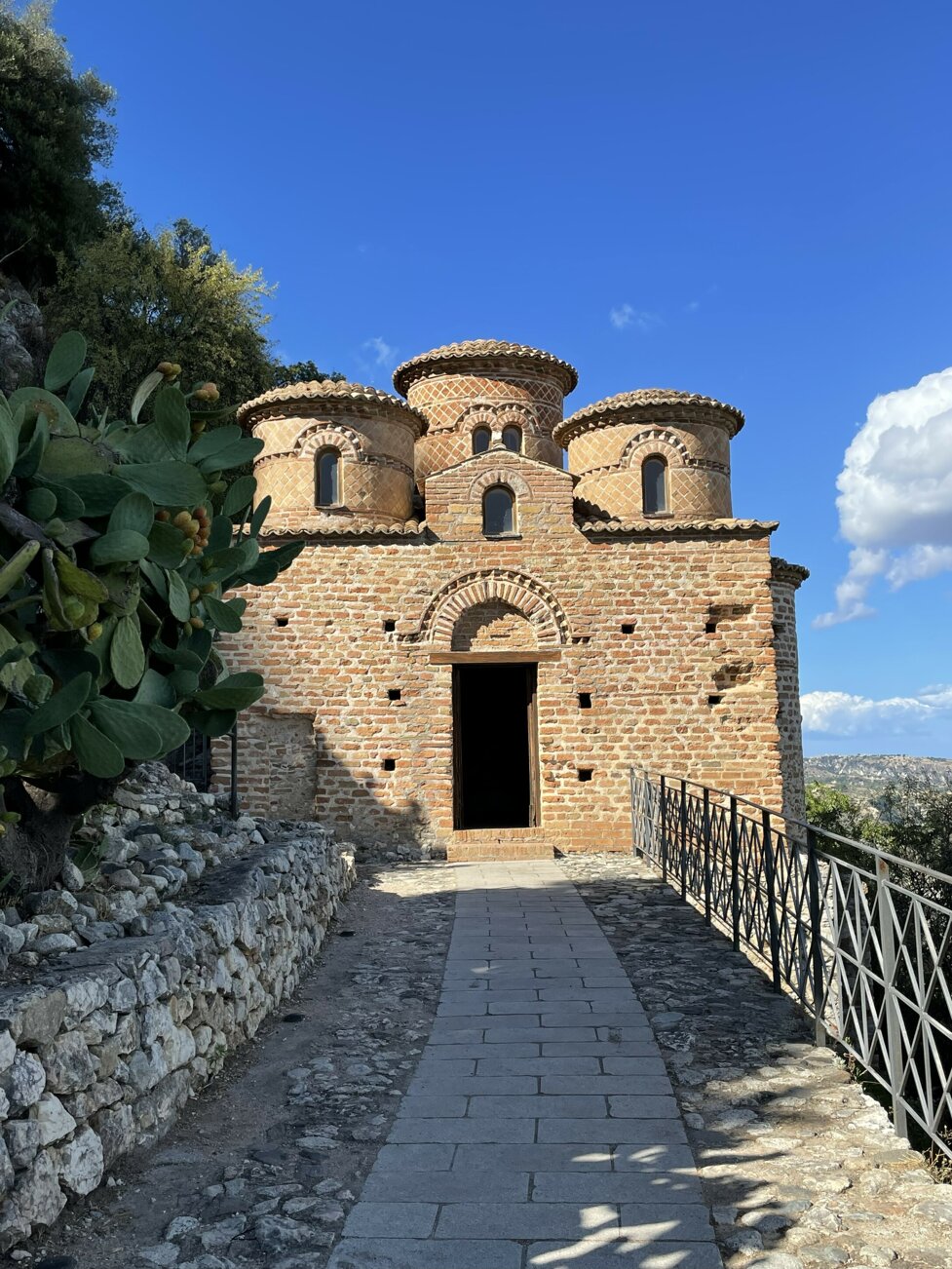
Just 10 minutes from Bivongi lies the beautiful Stilo, home to the famous Cattolica of Stilo. This small jewel of Byzantine art in Calabria dates back to the 10th century and is renowned for its Greek-cross plan and elegant domes. Its walls and frescoes safeguard centuries of religious and cultural history. Surrounded by olive groves and the rolling hills of the Ionian coast, it offers an atmosphere of enchantment and reflection. It is one of the most authentic symbols of Calabria’s Byzantine heritage — and as a fun curiosity, you can even find it depicted on page 9 of the Italian passport! Stilo will also captivate you with the remains of the Norman Castle, the Cathedral, which houses Giovan Battista Caracciolo’s altarpiece Santa Maria d’Ognissanti, and the other beautiful churches scattered throughout the historic center.
With a bit more time, it’s well worth visiting the Monumental Complex of San Domenico in Soriano Calabro, just fifteen minutes from Serra San Bruno. Featuring an imposing church and adjoining convent, it stands as a significant example of Calabrian religious architecture. Founded in the 15th century, it preserves valuable artworks, frescoes, and architectural details of great historical interest.
Today, the complex welcomes both cultural and spiritual visitors, offering a journey into the ancient heart of the town.
Your sixth stop is here:
Day 7 - Museum and Archaeological Park of Locri, Gerace, Roman Villa of Casignana, Urban Archaeological Park of Brancaleone
The Locride area overflows with cultural and archaeological treasures — Greek, Roman, Byzantine, and Norman — a true celebration of beauty and history. Starting from Locri, the Archaeological Park of Locri Epizefiri is one of the most important sites of Magna Graecia. Founded in the 7th century BC, it preserves city walls, a theatre, towers, temples, and the famous Sanctuary of Persephone, known as the Persephoneion. The National Archaeological Museum houses artifacts from the ancient city and from the Iron Age. Visiting both the park and the museum offers a fascinating immersion into the history and culture of Locri. Just nearby, don’t miss the charming Casino Macrì, part of the archaeological complex.
Only a few kilometers from Locri, heading inland, lies Gerace, a delightful medieval village perched on a hill overlooking the Torbido Valley. This enchanting town seems suspended in time. Its cobbled streets wind between medieval churches and noble palaces, silent witnesses to centuries of history. The Norman Cathedral, with its majestic façade and beautifully decorated interiors, captivates every visitor. From every corner, the view opens onto red-tiled roofs, the surrounding mountains, and the distant sea. The calm, unhurried atmosphere invites slow walks through quiet alleys and picturesque corners. Gerace is a true Calabrian gem where past and present blend in timeless harmony.
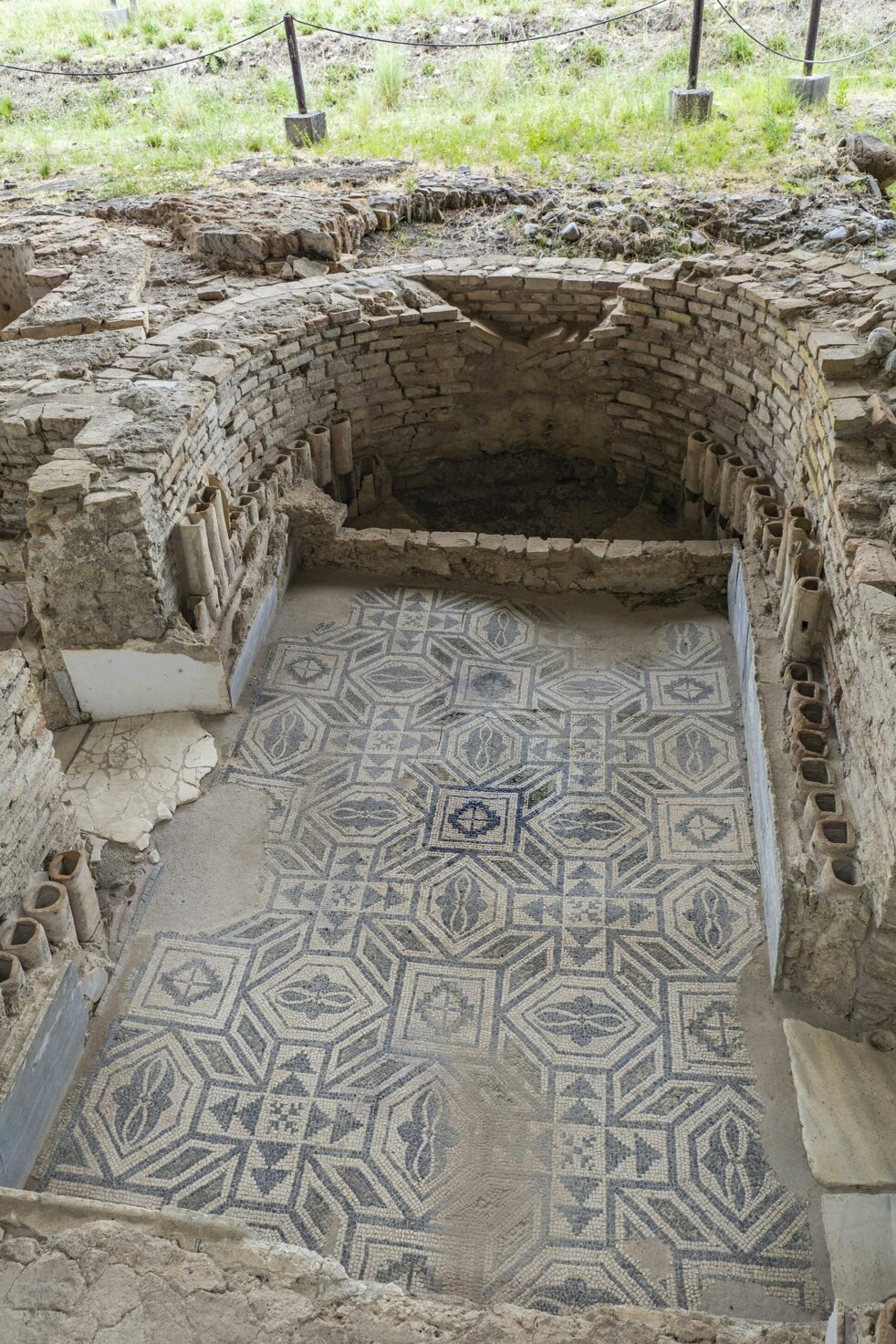
Returning to the coast, about ten kilometers further south, you’ll find a true hidden gem — a unique site in Calabria — the Roman Villa of Casignana. Nestled at the foot of gentle hills, this refined Roman complex reveals an elegant arrangement of residential and thermal spaces. Its polychrome mosaics adorn the triclinium and the reception rooms, while the calidarium and tepidarium tell the story of the everyday luxury enjoyed by its inhabitants. The frigidarium, with its pools and architectural details, reflects the remarkable engineering skill of the Romans. Walking through courtyards, porticoes, and richly decorated rooms, every corner evokes the charm of a residence that beautifully combines art, comfort, and history.
With a bit more time, another truly fascinating site awaits — the Urban Archaeological Park of Brancaleone Vetus, located about half an hour south of Casignana. This ancient abandoned village, perched on a sandstone hill overlooking the Jasmine Coast, was originally settled by Greek-Byzantine monks. It preserves unique remnants such as the Cave Church of the Tree of Life and silos carved into the rock. The ancient town, also known as “Sperlinga”, was gradually abandoned over the centuries due to earthquakes and floods.
Your seventh stop is here:
Day 8 - Reggio Calabria, Aragonese Castle, Cathedral, National Archaeological Museum of Magna Graecia, Riace Bronzes
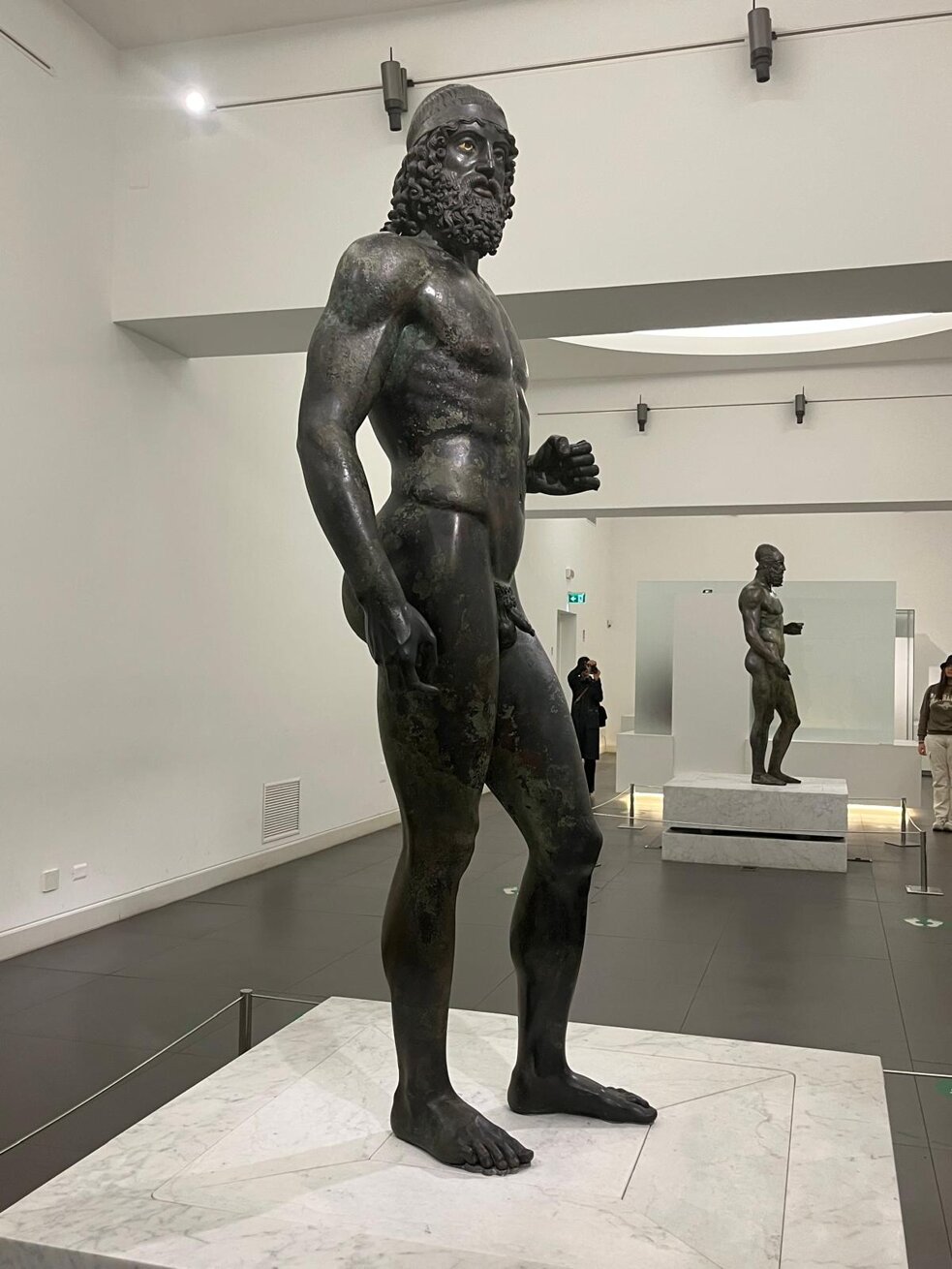
The fast-paced seven-day journey concludes in the beautiful Reggio Calabria. Resting at the southernmost tip of the Italian peninsula, gazing across the strait toward Sicily and the distant silhouette of Mount Etna, Reggio Calabria enchants every visitor. Here, the deep blue of the sea blends with the green of the gardens and the white of historic architecture, creating a unique panorama of light and reflections that change with the hours of the day. Reggio Calabria is above all a guardian of priceless treasures. The National Archaeological Museum of Magna Graecia houses the world-famous Riace Bronzes, two masterpieces of classical Greek sculpture that alone are worth the trip. Around them, a remarkable collection tells the story of the power and allure of Magna Graecia. Equally fascinating is the Civic Art Gallery, located inside the Francesco Cilea Theatre, which preserves valuable artworks, as well as the Pasquino Crupi Palace of Culture, where contemporary art and tradition engage in a continuous dialogue. For lovers of ancient history, archaeological excavations scattered throughout the city reveal Roman baths and Greek walls near the seafront, underground ruins in the beautiful Piazza Italia, and the newly opened archaeological area of Piazza Garibaldi. A visit to the impressive Aragonese Castle is also a must — from its terrace, you can enjoy a splendid view over the city and the Strait of Messina. The city is also a place of spirituality and tradition: the Cathedral of Maria Santissima Assunta, rebuilt after the 1908 earthquake, dominates the historic center with its grandeur, while small churches and sanctuaries throughout the city preserve precious memories of popular faith.
Your eighth stop is here:
Are you interested in this itinerary but would like to customize it?
Fill out the form: I will help you for free to define the perfect itinerary for you!