Fiery sunsets
Wonderful views

Let yourself be embraced by the warmth of Calabria, where every glance stirs emotion, every encounter feels like a hug, and beauty surprises you at every step.
CALABRIA
O N T H E R O A D
CALABRIA
RoadCalabria
O N T H E R O A D
Italy's most authentic region!
ROADCALABRIA
CONTACTS
EXPLORE
Ideas, itineraries and places to discover, to experience Calabria on the road
Follow us on Instagram
Home
Itineraries
info@roadcalabria.it
Villages
What you’re looking for
CALABRIA
O N T H E R O A D
Beaches
Did you know that
Art, History, Culture
Useful Links
Itinerary
Full Immersion
National Parks
Write to us
Trekking
Nature, Art, Villages, Culture - 14 Days
Some of the images on RoadCalabria come from the 'Calabria Straordinaria' portal of the Calabria Region and are used under a CC-BY license
© 2026 RoadCalabria
The complete itinerary to discover all the beauties of Calabria, from parks, to villages, to the sea, to culture, to cities.
As anticipated in the title, this itinerary is aimed at those who, having more time available, don’t want to miss out on anything. For those who, on their holiday, don’t want to give up the natural beauty of Calabria (its stunning coastal shores but also its beautiful green mountains and parks); for those who want to experience authentic local customs and traditions, preserved in the inland villages; for those interested in the art and archaeology that this region offers in great quantity and quality. In short... this itinerary is truly complete.
The special feature, and also the spectacular aspect of this region, is that you will always have everything within “sight”... Calabria is a region where from the mountains you’ll be able to see the villages but also the blue of the sea... and from the sea, turning your gaze behind you, you’ll see villages and the green of the mountains... you’ll always have everything with you!
Clearly, the itinerary is very packed and demanding, so my goal is to give you a sort of outline, a guideline to follow; then, based on the days you have available, and how “tight” you want your schedule to be, you’ll decide whether to skip some stops in favor of others. And again, in some cases, I’ll give you different options, and you’ll choose—based on what you feel like doing—what to visit and how to spend your days.
Fasten your seatbelt... and set off on the road!
Day 1 – Sea
Dino Island, Arcomagno, San Nicola Arcella
Let's go! We are on the upper Tyrrhenian coast of Cosenza, among the northernmost areas of Calabria, and we are exactly on the Cedar Riviera. Golden beaches and crystal-clear waters alternate with villages rich in art and tradition.
For your day of relaxation and sea, you will have several options. The first beach I recommend is Punta Fiuzzi beach. Here you can swim in the crystal-clear waters in front of the wonderful Dino Island. You can also rent a pedal boat or book an excursion to circumnavigate the island, admire its high cliffs on the west side, and venture into and swim in its wonderful caves, especially the Blue Cave.
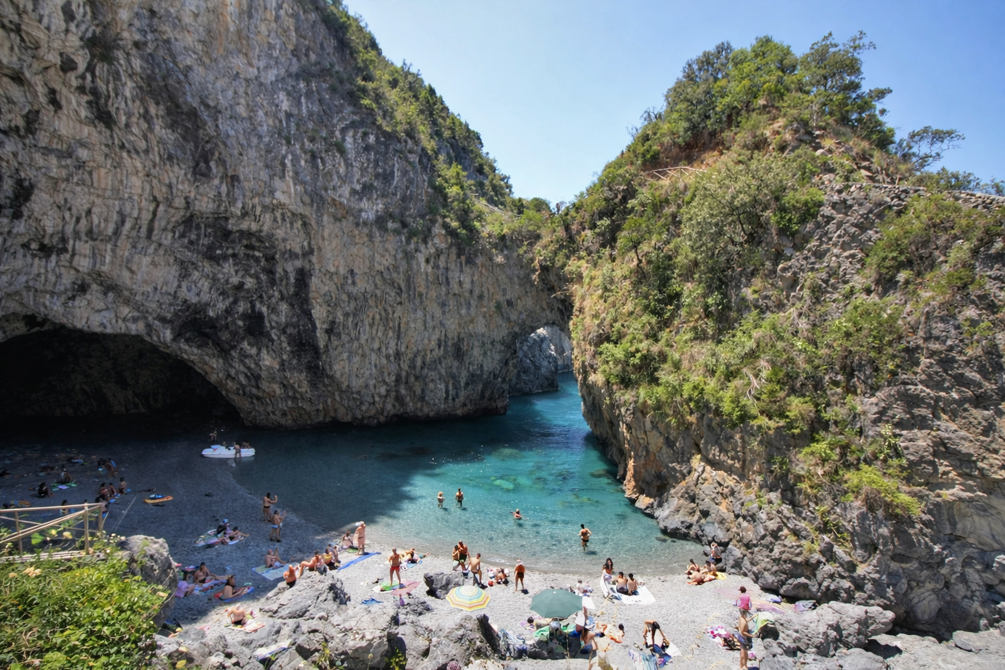
A little further south you will find an iconic beach, one of the most evocative in Italy. The Arcomagno beach, in San Nicola Arcella. Nestled between the cliffs of San Nicola Arcella, it is a wild and evocative corner of paradise. Accessible only on foot or by sea, it is famous for its natural rock arch that frames a crystal-clear and silent sea. A magical place, perfect for those seeking authentic beauty and unspoiled nature. A couple of kilometers further south, if you love wide beaches and equipped beach resorts, then you can relax for a few hours on the Scalea beach.
If you want to have an aperitif, you can go to one of the various beach resorts you will find on the seafront of Praia a Mare or Scalea. For example, I suggest Budda Beach, in front of Dino Island. For a nice dinner, instead, you can go up to the historic center of Scalea, or to the picturesque historic center of San Nicola Arcella.
Day 2 – Mountains, Villages
Pollino National Park
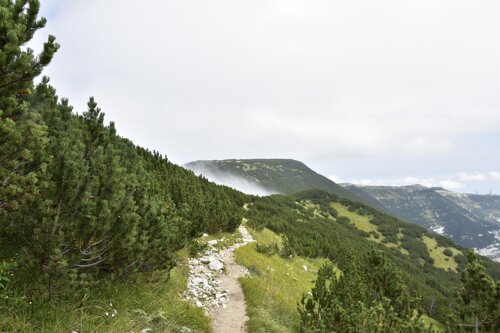
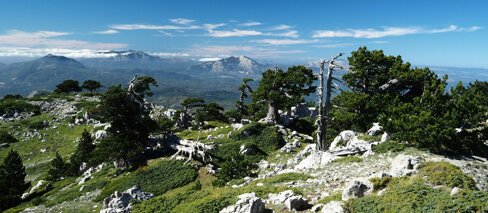
For the second day, a full immersion in the nature of the Pollino National Park. The Pollino National Park is one of the 11 UNESCO Geoparks in Italy. This national park is the largest in Italy, with over 192,565 hectares. It is a mosaic of majestic mountains, spectacular gorges, and plateaus that stretch to the horizon. Here grows the legendary Loricate pine, a symbol of resilience and beauty, clinging to the rocks like a guardian of time. Here also stands the highest peak of the Pollino massif and of all Calabria, namely Serra Dolcedorme, which reaches 2,267 meters above sea level.
Among ancient villages, crystal-clear rivers, and endless trails, the Pollino offers authentic emotions, combining the rugged strength of nature with the depth of a land steeped in history and traditions.
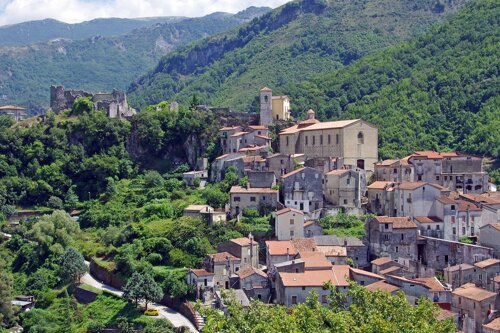
If you decide to stay in the Riviera dei Cedri area, then I definitely recommend stopping by the village of Orsomarso. A small, characteristic village at the foot of the Pollino. In the Orsomarso area, you can go hiking in the beautiful Valle del Fiume Argentino Oriented Nature Reserve. The spectacular landscapes, streams, waterfalls, abundant wildlife, and especially the presence of a roe deer population considered among the few native to the Italian peninsula, will make your time in the reserve truly enjoyable!
If you like sports, then being in the Pollino area you can't miss the experience of rafting on the Lao river. In the wild heart of the Pollino Park, the Lao river offers you unique thrills: breathtaking rafting and canyoning among spectacular gorges and crystal-clear waters—pure adventure and adrenaline in an amazing natural setting (on this page you can find more links to book these activities)
Day 3 – Mountains, Villages, Culture
Pollino National Park
Another day in the Pollino National Park… trust me, it's worth it! For the third day, we move a bit further inland. Here, I suggest several options, related to culture, nature, history, and art.
If you like nature, you can spend an hour in the beautiful Lavender Park, in Campotenese. An educational farm at the foot of the Pollino, the purple oasis of the Pollino, or even the corner of Provence in Calabria. Not far from there you will find the village of Morano Calabro.
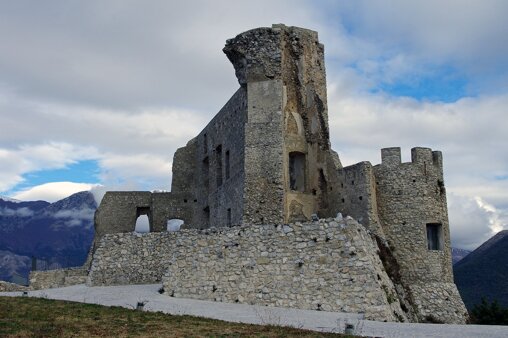
Perched at the foot of the Pollino, Morano Calabro is one of the most fascinating villages in Calabria, often described as a “living postcard” for its picturesque profile of houses climbing up to the ruins of the Norman-Swabian castle. Walking through its stone alleys and passing through the historic gates, you can feel an authentic atmosphere, enriched by churches and convents that house precious works of art, such as the San Bernardino da Siena complex – a jewel of late 15th-century monastic architecture – and the collegiate church of Santa Maria Maddalena, which contains the splendid Sanseverino Polyptych by Bartolomeo Vivarini, dating back to 1477. From the top, you can enjoy a spectacular view of the mountains of the Pollino National Park, ideal for nature and hiking lovers, and you can also appreciate the castle and the beautiful Church of Saints Peter and Paul. Listed among the “Most Beautiful Villages in Italy”, Morano combines history, spirituality, and breathtaking landscapes in an experience that remains etched in the hearts of visitors.
Still in the heart of the Pollino National Park, a few kilometers from Morano Calabro, is Civita, a unique village that tells a story of hospitality and tradition. Founded in the 15th century by Albanians fleeing the Ottoman Empire, it still preserves the language, costumes, and Byzantine rites of the Arbëreshë community, making it a place with a special soul. Walking through its alleys, you discover the typical “kodra houses” with their curious anthropomorphic chimneys, while nature offers emotions with the famous Devil's Bridge suspended over the Raganello gorges. Civita is a journey through culture, authenticity, and breathtaking nature: a village that intertwines Calabria and Albania in an extraordinary identity, still alive today.
If, on the other hand, you are more interested in nature, you will find many areas of great beauty and geological value; to name a few: Piani di Ruggio, a grassy plateau at 1500 meters, perfect for breathtaking views of the Pollino massif and Orsomarso; Piani di Pollino: the wild heart of the park, surrounded by woods and imposing peaks, starting point for climbing Serra di Crispo and Monte Pollino; Serra di Crispo and Garden of the Gods, an iconic place, where the centuries-old Loricate pines grow, true natural monuments that seem sculpted by the wind; Raganello Gorges, a spectacular canyon between Civita and San Lorenzo Bellizzi, with dizzying walls and crystal-clear streams.
By the way... in the Morano area you will find many farmhouses where you can taste the delicacies of the Pollino!
Stay: if you don't like staying in a different place every day, then I recommend staying in the San Nicola Arcella area. You will be relatively comfortable for what I suggest on days one and two, and on the third morning you will move inland. At the end of the third day, you will reach Cosenza (about half an hour from Morano) where I recommend staying for the next two nights.
Day 4 – Art, Culture
Cosenza
Situated along the banks of the Crati River and surrounded by the gentle hills of northern Calabria, Cosenza welcomes visitors with a discreet yet powerful charm. The city blends the elegance of its historic buildings with the vibrancy of its squares and alleys, which recount centuries of history and offer evocative views that change with the light.
Founded in pre-Roman times and later flourishing as a strategic center during the Middle Ages, Cosenza has experienced periods of cultural splendor that earned it the nickname “Athens of Calabria.” Despite the challenges of time, through earthquakes and wars, the city has managed to preserve and enrich its artistic and cultural heritage, becoming a crossroads of art, knowledge, and tradition.
Walking through the historic center, you can feel history in every stone. The Swabian Castle, imposing and majestic, dominates the city from above and tells centuries of power and resistance, while the elegant squares—such as Piazza XV Marzo and Piazza dei Valdesi—host cafés, bookshops, and artisan shops that reflect the lively cultural spirit of the city.
The artistic heart of Cosenza beats in its museums and galleries: the Museum of the Brettii and Enotri preserves archaeological finds that testify to the ancient history of Calabria, while the National Gallery of Cosenza and the Museum of the Present recount tradition and contemporary art. The city is also home to the Rendano Theatre, a beautiful theater symbolic of Cosenza’s cultural life.
The Cathedral of Cosenza, guardian of centuries of history and faith, is the spiritual heart of the city, but among its churches, the Church of Saint Francis of Paola, the beautiful monumental complex of San Domenico with its cloister and church, the splendid Oratory of the Holy Rosary, and the Chapel of the Holy Crucifix are certainly worth a visit. Also not to be missed is the Church of Saint Francis of Assisi, which houses the marvelous 17th-century Chapel of Saint Catherine of Alexandria, and the Church and Complex of Santa Maria delle Vergini. Tall minor churches and noble palaces complete an architecturally rich and varied panorama, where every corner bears witness to a vivid past.
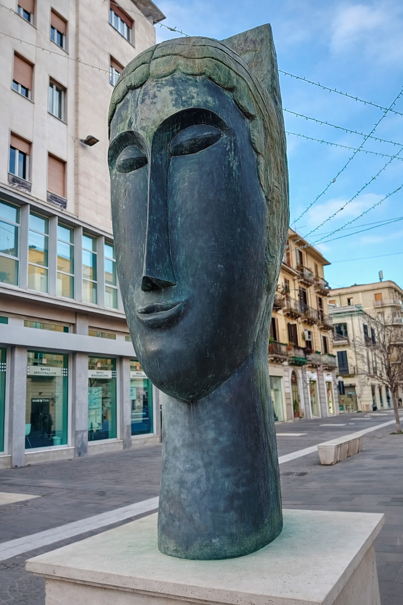
Cosenza is not only history and art: it is also a living culture. Independent bookshops, literary cafés, and cultural events—from poetry festivals to theater seasons—animate the city throughout the year. A walk along Corso Mazzini or through the narrow streets of the historic center allows visitors to immerse themselves in everyday life, among the aromas of Calabrian pastries, markets with local products, and panoramic views that seem to freeze time. Not to be missed along the way is the Bilotti Open-Air Museum, a unique path where contemporary sculptures and open-air artworks transform the city into an urban gallery that blends history and modernity. Among its roughly thirty works, you can find sculptures by De Chirico, Giò Pomodoro, a Modigliani, a Dalí, and much more.
Day 5 – Mountain, Villages, Culture
Sila National Park
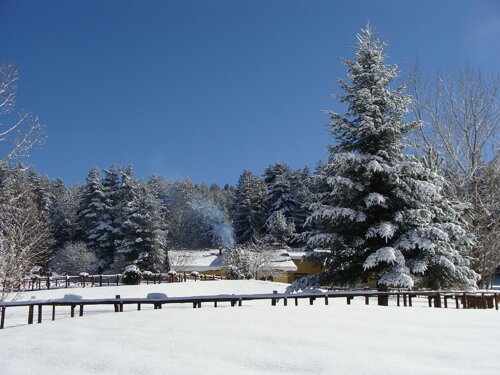
After a day in the city, among streets, art, and culture, we move on to a beautiful day in the mountains of the Sila. The Sila National Park, the tenth Italian UNESCO biosphere reserve, is an enchanting plateau, a sea of woods stretching between sparkling lakes and gentle hills. Here, the landscape opens into vast silent expanses, with waters that mirror the sky and endless conifer forests shaping the horizon. In some spots, the atmosphere recalls northern forests and landscapes—a sense of remoteness and purity that surprises those who don’t expect it. It’s the ideal place for anyone seeking peace, long walks, and views that seem to come from another world. The Sila is vast, and to avoid straying too far from our itinerary, here are a few options that won’t take you too far off the path.
From a naturalistic perspective, here are some reserves and natural areas I recommend:
Biogenetic Nature Reserve of the “Giants of the Sila”, a FAI-protected area that includes majestic larch pines and centuries-old maples, some reaching over 40 meters in height and more than 350 years of age; Lake Cecita, the largest lake in the Sila, surrounded by woods and meadows and home to numerous bird species; Lake Ampollino, a mirror of water set between mountains and forests, ideal for walking and outdoor activities; Lake Arvo, a place of great charm, perfect for excursions, boat rides, and birdwatching; Golia-Corvo Nature Reserve, kingdom of wildlife, where it’s possible to spot deer, wolves, and roe deer; Tre Faggi Nature Reserve, characterized by monumental trees and forests of beech, fir, and pine; Gariglione Nature Reserve, one of the richest in terms of botanical value, with rare and protected species; Macchia della Giumenta – S. Salvatore Nature Reserve, important for biodiversity, with landscapes that combine woods and pastures; Poverella–Villaggio Mancuso Nature Reserve, famous for its larch pine forests and its rest areas immersed in nature; Mount Botte Donato (1928 m), the highest peak in the Sila, with a panoramic and striking view embracing the entire plateau.
Camigliatello Silano and Lorica are the main villages in the heart of the Sila, typical mountain towns with wooden houses and lodges that complete the scene. Here you’ll find several trattorias where you can taste delicious local dishes (porcini mushrooms, Sila potatoes, caciocavallo cheese, etc.).
San Giovanni in Fiore, on the other hand, is a town rich in history and spirituality, founded by Abbot Gioacchino da Fiore, a mystical and visionary medieval thinker. Today it hosts the majestic Florense Abbey and preserves an authentic soul, suspended between faith, nature, and ancient traditions.
And after the long day, in just 30 minutes you can be back in Cosenza for the night, ready to leave again the next day.
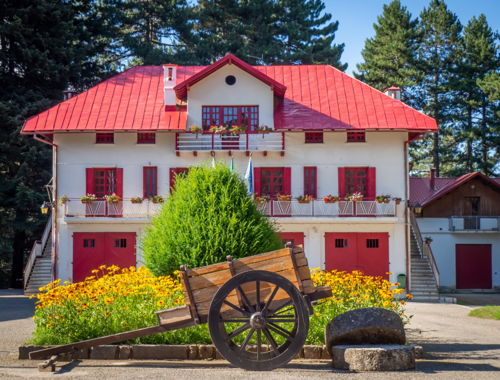
Days 6 and 7 – Sea, Culture
Pizzo, Tropea, Capo Vaticano
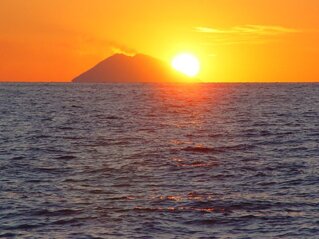
Continuing to roll southward, about 50 km below Cosenza, you reach the wonderful Coast of the Gods: 55 km of paradise where myth meets breathtaking views over the Tyrrhenian Sea. It is said that only the gods themselves could dwell in such an enchanting place. Crystal-clear waters, white beaches, sheer cliffs, and fiery sunsets evoke an almost divine perfection—worthy indeed… of the gods.
The gateway to the Coast of the Gods is Pizzo. Pizzo is a village suspended between sea and history, famous for its scenic overlook (“u spunduni” to the locals), for its castle rising above the blue, for the winding alleyways of its historic center, and for the sweet taste of its tartufo gelato, a symbol of Calabrian tradition and passion. In the lower part of the old town (the Marina), you can cool off with a refreshing swim in crystal-clear water.
But the historic center of Pizzo is truly charming, rich in fascinating churches and steeped in history, including a very unique one—located just outside the old town—the Church of Piedigrotta. Hidden inside a grotto carved into tuff rock, the tiny Church of Piedigrotta is one of the most evocative and mysterious places in Calabria. Legend has it that in the 17th century, a group of Neapolitan sailors caught in a terrible storm vowed to the Madonna of Piedigrotta that they would build her a chapel if they survived. Their shipwreck brought them right here, onto the beach of Pizzo, where they kept their promise by carving the first small chapel into the rock.
After your day in Pizzo, I recommend continuing on to nearby Tropea (just 20 minutes away), where you can stay the night and be perfectly placed for the following day.
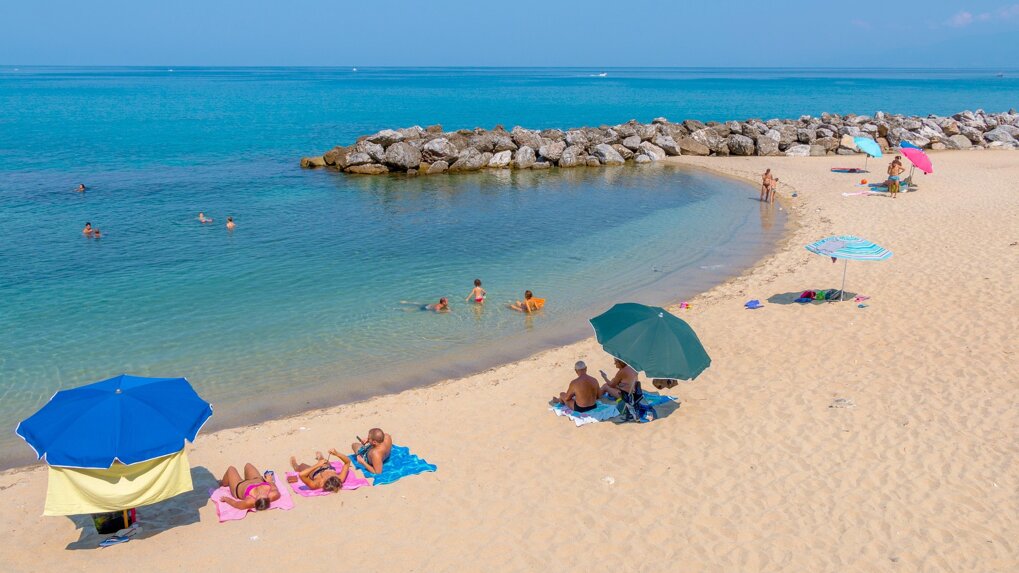
So, on day 7, you wake up in Tropea! In the marvelous pearl of the Tyrrhenian Sea! Tropea is a stunning village whose fame has reached every continent. It is the queen of the Coast of the Gods: a perfect blend of turquoise sea, dramatic cliffs, and a historic center suspended in time. Here, beauty is everywhere—among fragrant alleyways, fiery sunsets, and the eternal magic of the Sanctuary overlooking the sea. Dedicate this day to the beach, to relaxation, to the dolce vita... (truthfully, you’d need at least 3 or 4 days of pure relaxation in this area!)
When it comes to beaches, you’ll be spoiled for choice. From the iconic Tropea beach, nestled between the island sanctuary and noble palaces perched over the sea, to the fantastic Baia di Riaci. If you’re looking for hidden gems, try the Paradiso del Sub in Zambrone Marina, with its lion-shaped rock dominating the beach, or the iconic Michelìno beach in Parghelia, known by locals as “centoscalini.” Heading further south from Tropea, you’ll find the spectacular Baia di Grotticelle, in Capo Vaticano, the secluded Praia i Focu, and the Scalèa beach. Let’s do this… look here, so you can get an idea!
I know time is limited, but if you can also take a boat excursion, you won’t regret it!
In Tropea, you’ll find plenty of places for an aperitivo, dinner among the alleyways of the old town or by the sea, and a drink after dinner… you’ll truly be spoiled for choice!
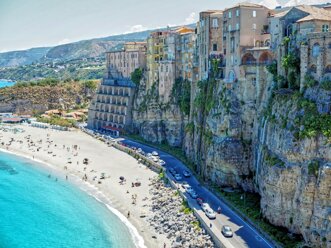
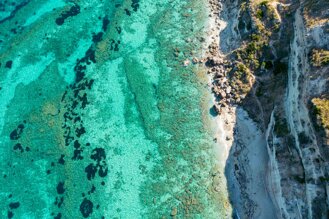
Day 8 – Sea
Scilla
Leaving Tropea on the morning of day 8, in about forty minutes you’ll reach the beautiful village of Scilla, on the Violet Coast. The Violet Coast is a corner of Calabria suspended between myth and wild beauty.
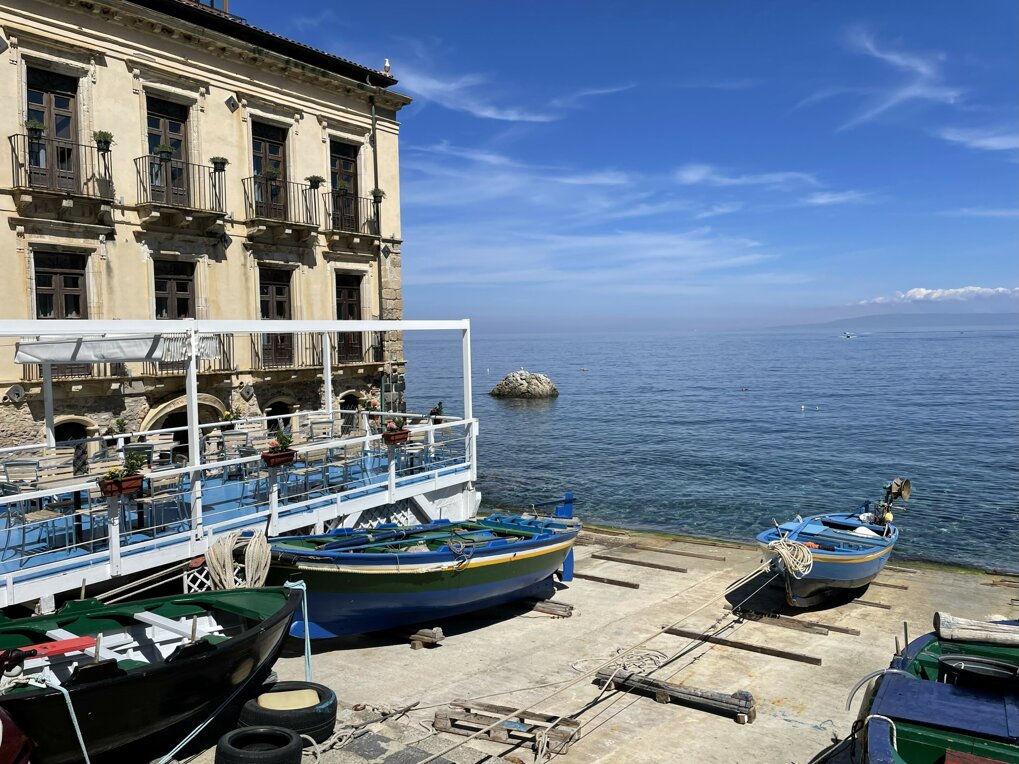
Scilla is mainly divided into three districts: the upper part, which I strongly recommend visiting for its incredible view of nearby Sicily and the Aeolian Islands; Marina Grande, which is the seaside district where you can enjoy a long walk and a wonderful swim; and finally, the fascinating and unique village of Chianalea. Chianalea is poetry on the sea: an enchanted village where the ancient fishermen’s houses reflect on the water and time seems to have stopped—between the sound of the waves and the authentic charm of a timeless Calabria. My advice is to enjoy lunch, an aperitivo, or dinner on one of the stilt-side terraces you’ll find there… it will be an incredible experience!
Returning to the sea, of course I must recommend taking a swim at the wonderful Scilla beach. Here you can enjoy an incredible dip—crystal-clear water, the green of Aspromonte behind you, the view of the majestic castle perched on the cliff, and Sicily and the Aeolian Islands right in front of you. Just a couple of kilometers south of Scilla you’ll find a beautiful, less crowded cove, San Gregorio beach. A little further north, also a quieter beach, is Favazzina beach.
Day 9 – Art, Culture…with a sea view
Reggio Calabria
After two days mainly dedicated to the sea, we now turn to art and culture—though always with a sea view… since we are in Reggio Calabria.
Reggio Calabria is a city that enchants anyone who visits it. Here, the deep blue of the sea meets the green of the gardens and the white of historic architecture, creating a unique scene made of light and reflections that change throughout the day. Founded in ancient times as a colony of Magna Graecia, Reggio is one of the oldest cities in Italy. Its history is marked by periods of great splendor and difficult moments, such as the devastating earthquakes that struck it several times, forcing the city to rise again from its own rubble. Yet each reconstruction left a mark, turning the city into a mosaic of eras, styles, and identities.
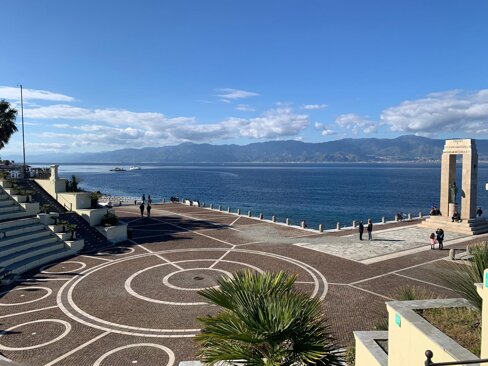
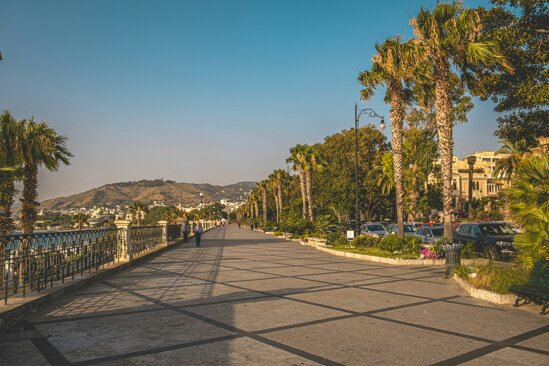
Walking through its streets, you can feel the layers of history: from Hellenic influence to Roman remains, from the Middle Ages to early 20th-century Liberty style. The Falcomatà seafront, called by Gabriele D’Annunzio “the most beautiful kilometer in Italy,” is now the beating heart of the city: an elegant boulevard lined with palm trees, magnolias, and centuries-old ficus trees, from which you can admire the sunset over the Strait. But it’s not only a natural viewpoint: the promenade itself is an open-air museum. Here you’ll encounter the striking sculptures by Rabarama, the fascinating installation by Edoardo Tresoldi (Opera) with its mesh-architecture forms, the historic Villa Zerbi, symbol of Reggio’s Liberty elegance, and the Arena dello Stretto, a modern amphitheater overlooking the sea that hosts events and performances, offering unique atmospheres shaped by the rhythm of the waves.
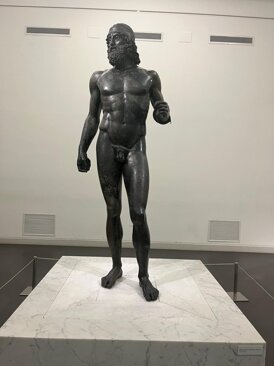
Reggio Calabria is above all the guardian of priceless treasures. The National Archaeological Museum houses the world-famous Riace Bronzes, two masterpieces of classical Greek sculpture that alone are worth the trip. Surrounding them, an extraordinary collection recounts the power and allure of Magna Graecia. Also fascinating is the Civic Art Gallery, located inside the Francesco Cilea Theatre, which holds valuable artworks, as well as the Pasquino Crupi Palace of Culture, where contemporary art and tradition meet in constant dialogue.
For lovers of ancient history, the many archaeological excavations scattered across the city reveal remains of Roman baths and Greek walls near the seafront, underground ruins in the beautiful Piazza Italia, and the very recent archaeological area of Piazza Garibaldi. A visit to the impressive Aragonese Castle, whose terrace offers a beautiful view of the city and the Strait, is also worthwhile. The city is also a place of spirituality and tradition: the Cathedral of Maria Santissima Assunta, rebuilt after the 1908 earthquake, dominates the historic center with its imposing presence, while small churches and sanctuaries preserve precious memories of popular faith.
Needless to say, in a city like Reggio you’ll easily find restaurants where you can enjoy a pleasant evening, as well as places for a true Italian-style aperitivo—or other spots to spend the rest of your night.
Day 10 – Villages, Culture
Bova, Pentidattilo, Grecanic area
Hold on tight because now we're changing dimension... we're changing place... at times it will feel like you're changing country! We're moving to a place where the culture changes... even the language changes! In fact, we're going to the Grecanic area, the “Bovesia”, and in particular to Bova.
In the heart of the Grecanic Area, Bova is one of the most fascinating villages in the province of Reggio Calabria, where the culture and language of the Greeks of Calabria can still be felt. Perched on a promontory with a spectacular view of the Ionian Sea and the Aspromonte mountains, the village preserves a historic center of rare beauty, with stone alleyways, evocative arches, and noble palaces. Among the must-see places are the Cathedral of Santa Maria dell’Isodia, which houses artworks and Byzantine testimonies, and the remains of the Norman Castle, dominating the village from above. Bova is also home to the Museum of the Greco-Calabrian Language, a testament to a tradition that has endured through the centuries. Not far from the village is the Archeoderi Archaeological Park of Bova Marina, where the remains of an ancient synagogue and other important historical evidence are visible. Walking through the village’s small streets, among churches, squares, and panoramic views, you can feel the soul of a place that unites culture, identity, and nature. It is no coincidence that Bova has been recognized as one of the Most Beautiful Villages in Italy, an authentic example of ancient and vibrant Calabria.
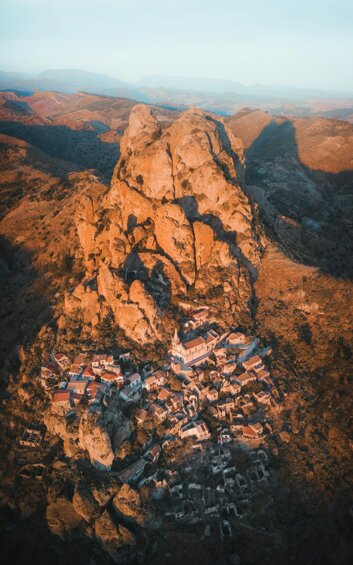
Also within the Grecanic area, nestled among the rocks of the Aspromonte, you will find a stunning ghost village (though perhaps not for much longer…) called Pentedattilo. This village owes its name to the peculiar shape of the mountain on which it stands, which resembles a five-fingered hand. Abandoned for a long time due to landslides and earthquakes, it has come back to life thanks to cultural projects, exhibitions, and events that highlight its unique charm. Walking among its stone houses and silent alleyways, you can feel a suspended atmosphere, wrapped in legends and folk tales. From the village, you can enjoy spectacular views of the Ionian coast and the Aspromonte massif. Its history is tied to the famous and dramatic Alberti massacre, a 16th-century episode that still fuels the village’s aura of mystery. Today, Pentedattilo is a place of art, memory, and suggestion—capable of giving emotions to anyone who visits.
Giorno 11 – Arte, Borghi, Cultura, Mare
Locride
Ten days have already flown by… they went by so quickly! But there is still so much waiting for you… so much culture, so much history, so much archaeology… (and also plenty of sea, if you want to relax!).
Yes, because the Locride area contains a bit of everything and deserves at least 4 or 5 days of exploration… with incredible villages, archaeological parks, white beaches, and crystal-clear seas, it could easily be a vacation on its own! Locride abounds with cultural and archaeological heritage—Greek, Roman, Byzantine, and Norman. A true trio of beauty and history. But since time is short, here are a couple of things that I believe are truly worth a visit.
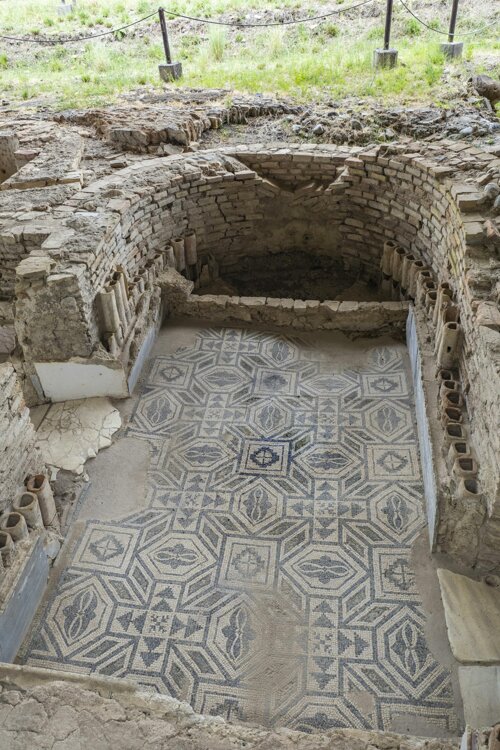
Starting from the side you’re coming from (Reggio Calabria), the first thing you encounter is a jewel of archaeology, unique in Calabria: the Roman Villa of Casignana. The villa stands at the foot of gentle hills, revealing a refined complex from Roman times, with thermal and residential areas elegantly arranged. The multicolored mosaics decorate the triclinium and the representative halls, while the calidarium and tepidarium reveal the daily luxury of its ancient inhabitants. The frigidarium, with its pools and architectural details, reflects Roman engineering ingenuity. Walking through courtyards, porticoes, and richly decorated rooms, every corner conveys the charm of a residence that blended art, comfort, and history.
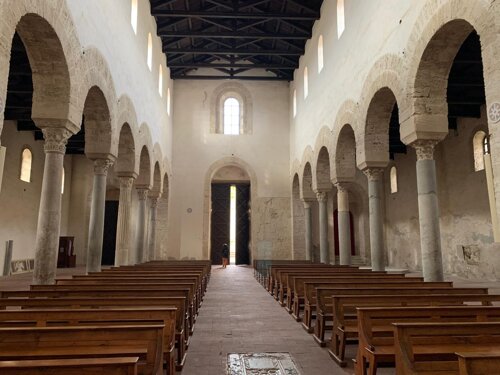
A few kilometers north, turning inland, you reach Gerace. This delightful medieval village, perched on a hill overlooking the Torbido Valley, feels suspended in time. Its cobbled alleys lead to medieval churches and noble palaces—witnesses of centuries of history. The Norman Cathedral, with its majestic façade and decorated interiors, enchants every visitor. From every corner, your gaze stretches toward red rooftops and sweeping views of the mountains and distant sea. The quiet, unhurried atmosphere invites you to wander leisurely through silent streets and picturesque viewpoints. Gerace is a small Calabrian gem where past and present blend into a timeless enchantment. Its beauty and uniqueness have led it (along with other monumental buildings) to become a candidate for recognition as a UNESCO World Heritage Site.
Returning to the coast, you’ll arrive in Locri, where you can visit the ruins of ancient Locri Epizefiri, found within the vast Archaeological Park. This is one of the most important sites of Magna Graecia. Founded in the 7th century BC, it preserves walls, theater, temple remains, and the famous sanctuary of Persephone, the Persephoneion. The National Archaeological Museum safeguards precious artifacts that recount the city’s history and the Iron Age. Visiting the park means diving into the ancient soul of Locri. Don’t miss the museum inside the Casino Macrì as well.
Remember, the sea will always be before your eyes — it will never abandon you.
Day 12 – Art, Villages, Culture, Sea
Catanzaro, Soverato, Badolato
A few dozen kilometers further north, we leave the province of Reggio Calabria and enter that of Catanzaro. Here too, I’ll give you a few options, because you can really do anything… you can visit some villages and get closer to the local culture, explore archaeological sites, relax on white beaches, or discover the artistic treasures the city has to offer.
So, in order, coming from the south, you can visit the village of Badolato. A medieval village perched on the hills overlooking the Ionian Sea, a maze of alleyways and ancient stones that tell centuries of history and hospitality. From above, your gaze embraces the sea and the olive groves, in a silence that truly smells of authenticity and real Calabria. If you decide to go to Badolato, you absolutely must take the walk that leads you to the beautiful Church of the Immaculate—and maybe even stop by the Convent of the Angels.
If instead you prefer to spend a day at the beach, well… then I highly recommend Soverato, the pearl of the Ionian Sea! Soverato offers wide beaches, plenty of beach clubs, crystal-clear water, and a beautiful, very green promenade. In short, the ideal place to relax!
If you want to continue riding the wave of Locride’s archaeology, then you can’t miss the Archaeological Park of Scolacium, one of the most fascinating places in Calabria, where ancient history intertwines with the beauty of Mediterranean nature. This archaeological park, surrounded by olive trees, is truly stunning! You can admire the paved roads, the forum and its original stone flooring, the theater (which still comes to life in summer with artistic and cultural events), and the amphitheater. Overlooking the area is the majestic Norman Basilica of Santa Maria della Roccella, built between the 11th and 12th centuries on the remains of the ancient city: its ruins, imposing and scenic, are today the very symbol of the park and an immediate draw for visitors. The Museum of the Archaeological Park of Scolacium preserves the artifacts uncovered during excavations: ceramics, inscriptions, statues, and architectural elements that recount the daily life and cults of the colony. An incredible place!
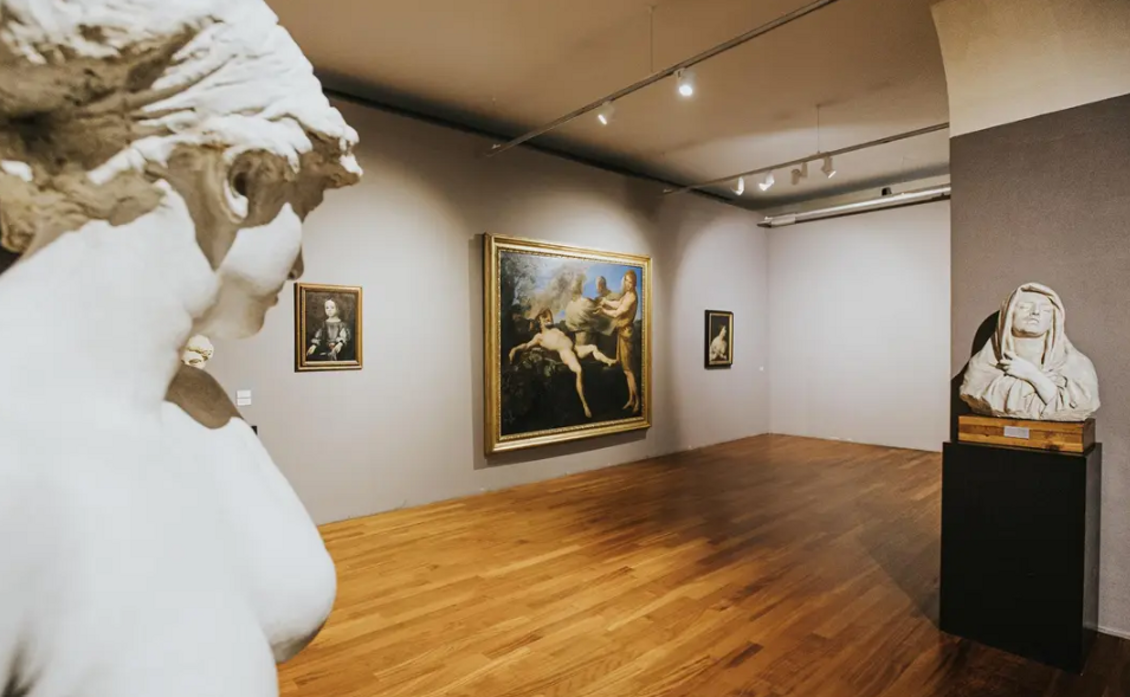
The fourth and final option is visiting the lively city of Catanzaro, the regional capital. Catanzaro is a city that blends history, spirituality, and landscape. Its origins date back to Byzantine times, around the 10th century, when it was fortified to protect the coastline from Saracen incursions. Since then, perched on its hills, it has grown and transformed without losing the charm of its ancient roots.
Day 13 – Art, Villages, Culture, Sea
Crotone, Le Castella, Santa Severina
A few dozen kilometers further north, we leave the province of Catanzaro and enter that of Crotone, along the Coast of the Saracens. Here too, you can choose what to do… so let’s explore it together!
Do you want to relax on red beaches and crystal-clear sea? You’ll be spoiled for choice! You’re in one of the most beautiful and evocative coastlines in Calabria… so take a look here.
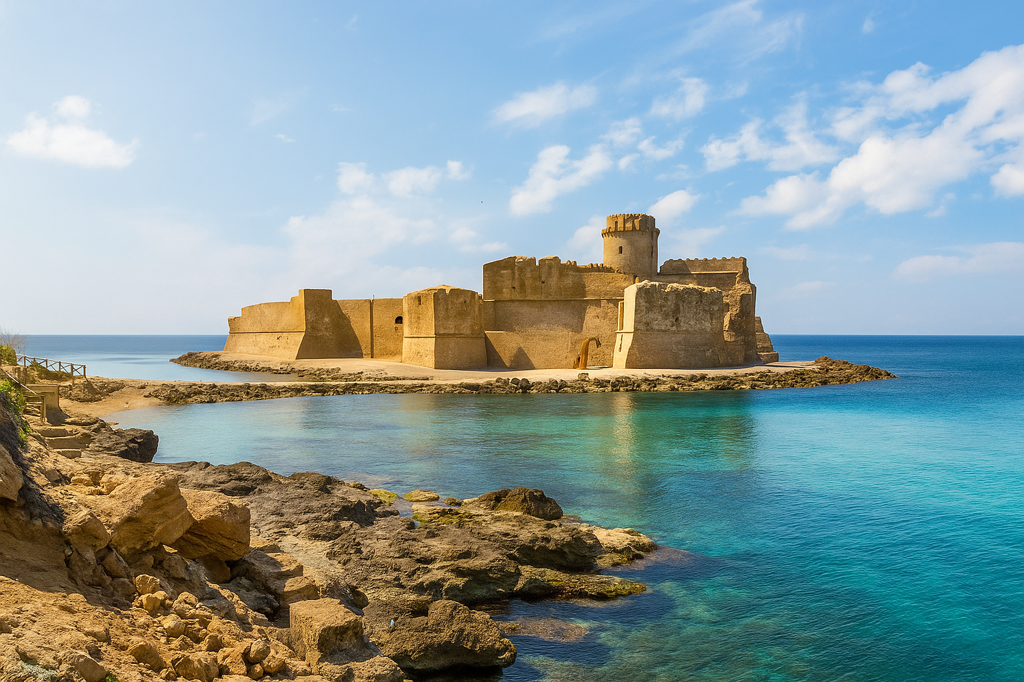
Do you want to feel like you’re in a fairy tale? Then visit the beautiful castle suspended over the water of Le Castella: a concentration of beauty and history that will leave you speechless.
The lively and vibrant Crotone will offer you a bit of everything… sea and relaxation with its beaches and lovely promenade, culture with its museums, and archaeology with the evocative archaeological park of Capo Colonna.
And if you would like to visit one of the most beautiful villages in Italy, then head to Santa Severina, a medieval village among the most charming in Calabria. Santa Severina is known for its imposing Norman Castle, a perfectly preserved fortress that now hosts exhibitions and cultural events. Its construction is attributed to the Norman Robert Guiscard around the 11th century, from whom it takes its name. Among its marvels, one of the most outstanding is the Byzantine Baptistery, one of the oldest in Calabria, which preserves centuries of religious history and maintains its original layout intact. Also worth visiting is the Co-cathedral of Sant’Anastasia, along with the many little churches scattered throughout the old town. Santa Severina is a place where history, art, and culture come together, offering visitors an authentic experience among historic monuments and timeless atmospheres.
Day 14 – Art, Culture, Sea
Corigliano, Rossano, Sibari
I know… you’re sad… it’s the last day! But I invite you not to be sad—rather, think about the amazing trip you’ve had… and about the fact that you’ll certainly return to Calabria, because what you’ve seen is only a small part of what the region has to offer!
So, the final stop of the journey will also give you several options…
The sea is never missing, and the Ionian coast around Cosenza offers wide, equipped beaches and clear waters. Between Corigliano and Rossano (once two separate towns, now a single city), you’ll find long stretches of coastline full of beach clubs, but also areas of free, natural beaches.
You’ll find culture everywhere… in the historic center of Rossano, known as “the Byzantine city,” where you can visit the beautiful Cathedral of Maria SS Achiropita and the nearby diocesan museum that holds the UNESCO heritage manuscript known as the Codex Purpureus, the Oratory of San Marco, and more—anyone looking toward Constantinople feels right at home here. And then there’s the Abbey of the Patire, a splendid church over a thousand years old nestled at the foot of the Sila mountains, which still preserves remarkable treasures inside. But you’ll also find culture in the lovely historic center of Corigliano, which houses one of the most beautiful castles in southern Italy, the Ducal Castle.
And since you’re in the area, you absolutely cannot miss the Archaeological Park of Sibari. Sibari is one of the most fascinating names in the history of Magna Graecia. Founded around 720 B.C. by Achaean colonists from the Peloponnese, it arose on the fertile plain between the Crati and Coscile rivers, a territory so rich and productive that it quickly allowed the new polis to grow extraordinarily. In just two centuries, Sibari became one of the richest and most populated cities of the Mediterranean, to the point that ancient sources speak of three hundred thousand inhabitants and a network of twenty-five controlled cities. Its power was rooted in intensive agriculture, artisanal activities, and especially in commerce, which connected it with the entire Greek and Eastern world.
The city soon became a symbol of luxury and refinement, so much so that still today the adjective “sybaritic” evokes the idea of a lavish and extravagant lifestyle. According to ancient authors, Sibari cultivated the art of well-being: fine clothing, banquets, festivals, performances, and a widespread wealth unmatched in the West. Next to the park, you’ll also find a beautiful museum that preserves the artifacts from this great city of antiquity.
And alas… with the glories of Sibari’s great past… our journey comes to an end, and I truly hope you enjoyed the itinerary!
If you feel like it, write to me and let me know how it went.
See you soon!
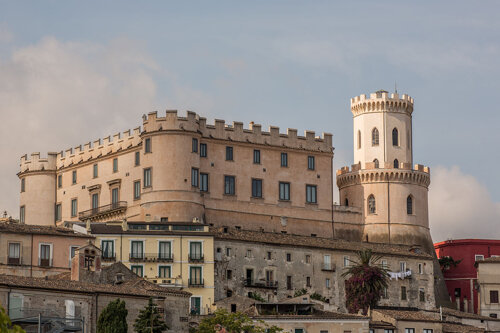
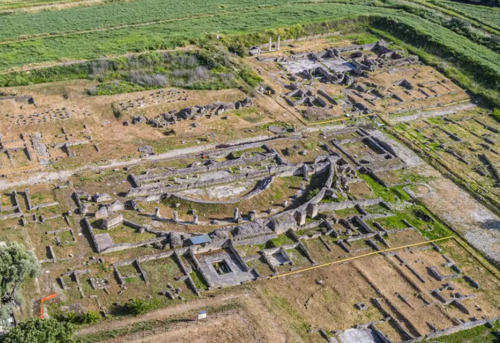
Photo: Calabria Straordinaria - Regione Calabria
Photo: Paolo Musacchio - Own work - wikipedia
Are you interested in this itinerary but would like to customize it?
Fill out the form: I will help you for free to define the perfect itinerary for you!